How to Do Red Light Therapy at Home (Without Overdoing It)
· BiohackList Editorial
Disclaimer: This article is for information only and is not medical advice. Red light devices aren't a substitute for medical care. If you have a skin condition, eye condition, or take medication that makes you sensitive to light, or if you're pregnant, talk to a qualified clinician before using one. BiohackList may earn commissions from qualifying purchases in the future.
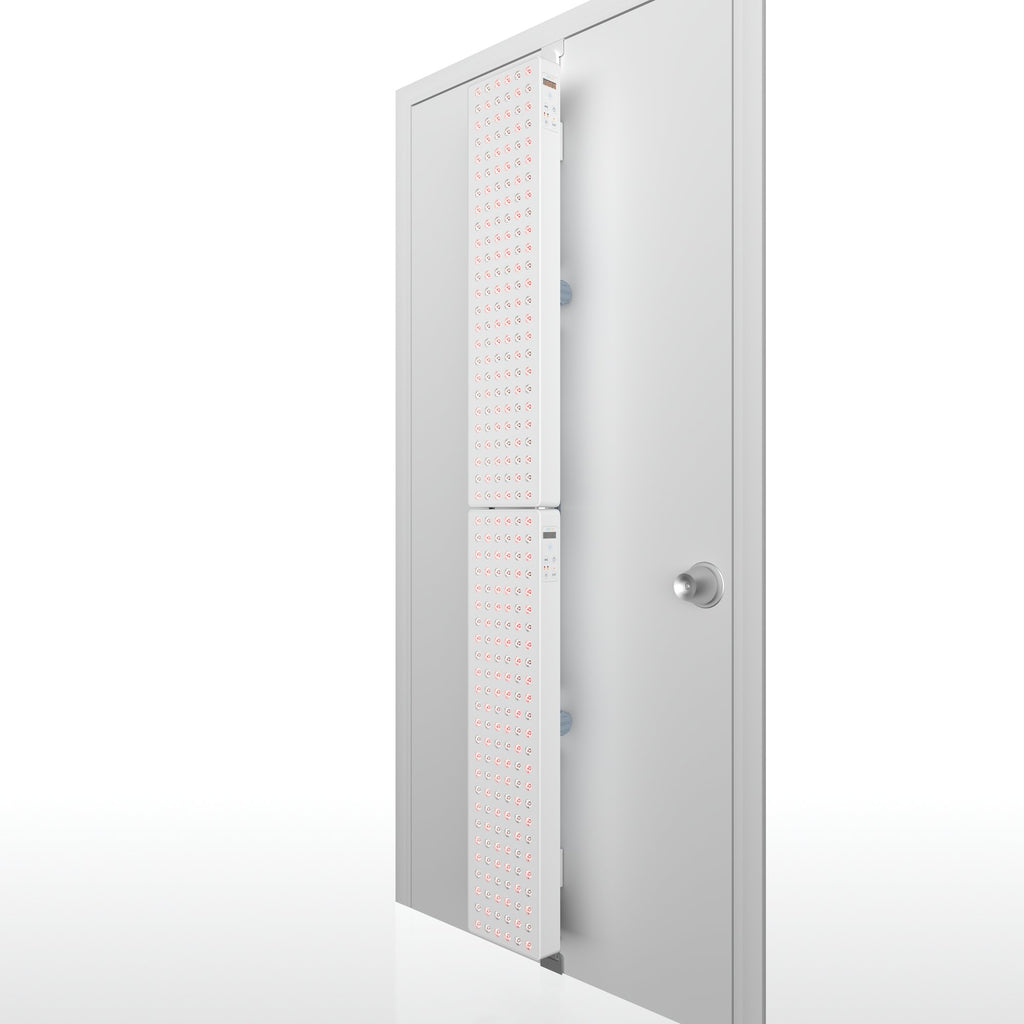
Home red light panels are easy to use: plug in, stand in front, wait. The hard part is knowing how far to stand, for how long, and how often. That's also where most people go wrong, almost always by doing too much.
This guide covers the practical setup, what the research actually used (which is often much less light than you'd guess), and where the evidence is genuinely mixed.
What red light therapy is, briefly
The research term is photobiomodulation (PBM). It means using red or near-infrared light at low intensities to produce physiological effects in cells and tissues. The leading explanation is that photons are absorbed by mitochondrial chromophores in cells, which then affects ATP production, nitric oxide release, blood flow and signaling pathways.
Early research mostly used lasers. Home devices use LEDs. A 2018 review by Heiskanen and Hamblin argues LEDs are a legitimate PBM light source, and lists their advantages as no laser safety concerns, ease of home use, the ability to cover a large area at once, and much lower cost per milliwatt. That's the whole case for the panel on your wall.
What the evidence does and doesn't support
Here's my honest summary: promising for some uses, overhyped for most of what's marketed, and very sensitive to dose.
- Skin. The study cited most often for panels is a 2014 controlled trial with 136 volunteers. It found improvements in skin complexion, skin roughness and ultrasound-measured collagen density after 30 sessions, compared with controls. Two details matter. Broadband light (570–850 nm) did no better than red-only (611–650 nm). And the study was fully funded by the device sponsor, which also paid the principal investigator.
- Muscle performance. A 2018 meta-analysis of 39 trials (861 participants) found some effect in favor of phototherapy on measures like time to exhaustion and repetitions, but the quality of evidence was very low to moderate. The authors cite small samples and wildly varying protocols.
- Joint pain. A 2019 BMJ Open meta-analysis of 22 placebo-controlled trials found low-level laser therapy reduced knee osteoarthritis pain and disability versus placebo, at specific doses per treatment spot. Note that these were lasers aimed at points on the knee, not full-body LED panels. The authors also point out that LLLT isn't recommended in major knee OA guidelines.
The field itself admits the results are uneven. Hamblin's group has written that the therapy "remains controversial in mainstream medicine". Part of the reason, they argue, is that inappropriate choices of parameters such as wavelength, fluence and power density led to negative studies alongside positive ones.
The one idea to understand: dose, and why more isn't better
PBM shows what researchers call a biphasic dose response. Low levels of light have a much better effect on stimulating and repairing tissues than higher levels. Past a certain point, more light does less. The 2011 update describes biphasic patterns in cell studies and in animal experiments.
Here's why that matters at home. Dose is roughly intensity × time. Intensity, or irradiance, is measured in milliwatts per square centimeter (mW/cm²). The total dose is in joules per square centimeter (J/cm²). Brands compete on irradiance:
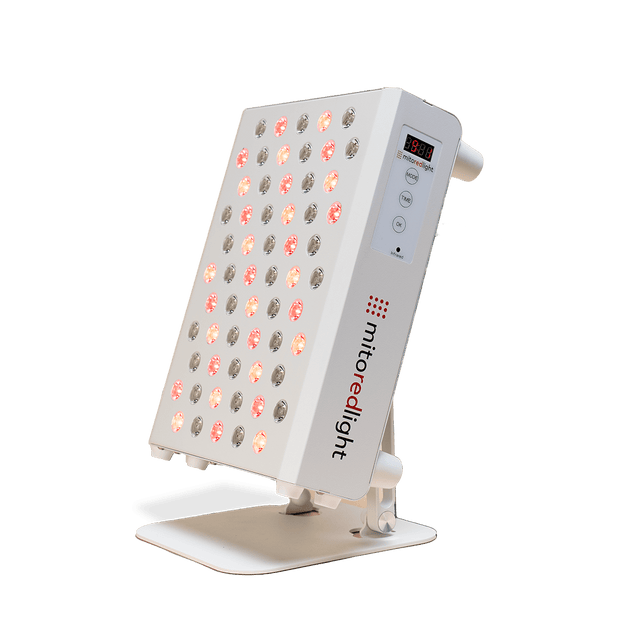
- Mito Red lists the MitoPRO 300+ at ">130 / >60 mW/cm²" at 6 inches. It gives two figures, which tells you measurement method matters a lot.
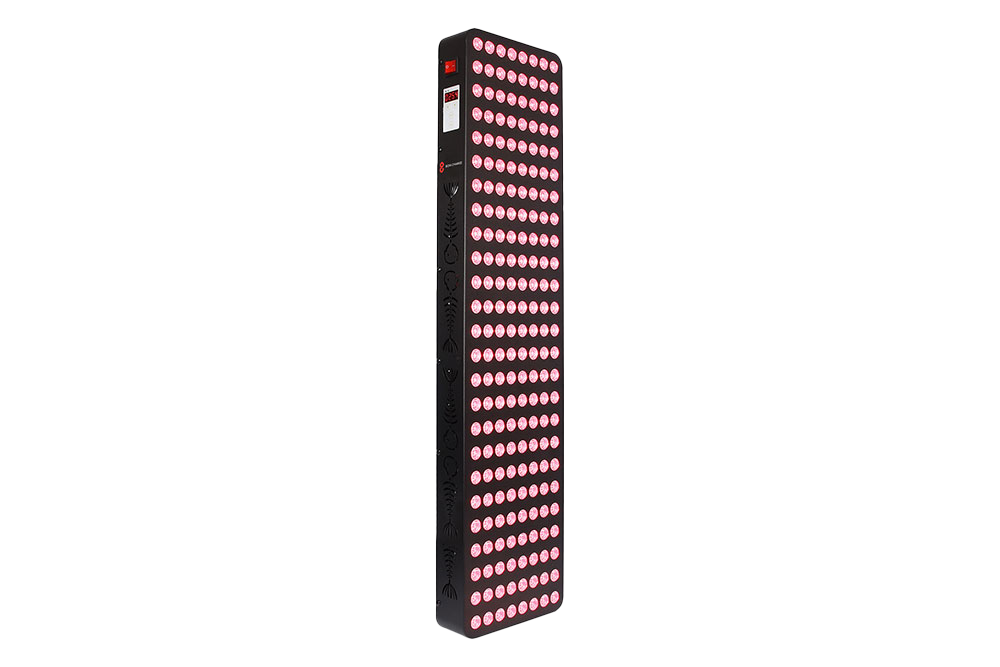
- BON CHARGE lists the Max at >142 mW/cm².
Now compare that with the 2014 skin trial. Its devices ran at about 6–13 mW/cm² in the red band, for 12–25 minutes, delivering about 9 J/cm² per session, twice a week.
Do the arithmetic for a panel at 100 mW/cm² (0.1 W/cm²) for 10 minutes (600 seconds) and you get 60 J/cm². That's several times the red-band dose in the trial most often used to sell these panels. I'm not saying a high-output panel is harmful. I'm saying "closer and longer" isn't automatically "better," and the research doesn't support treating it that way.
A simple at-home routine
Here's what the manufacturers of the panels in our directory recommend, side by side. They don't fully agree, which is useful information in itself.
| Brand / device | Distance | Session length | Frequency |
|---|---|---|---|
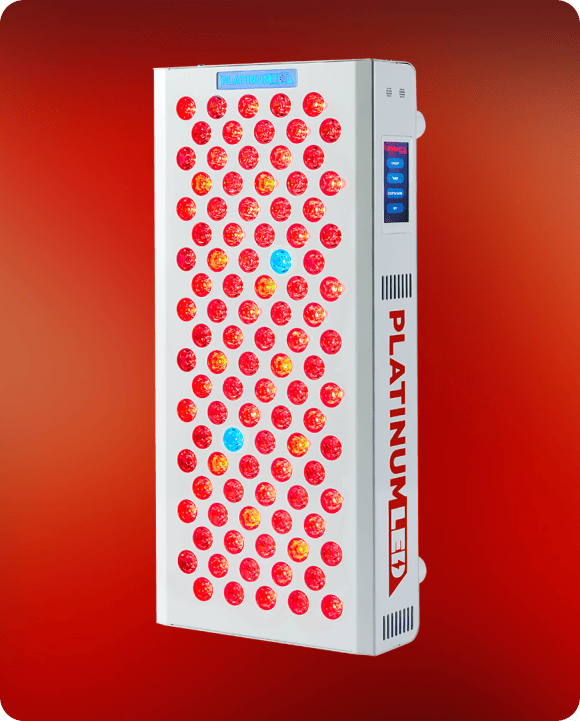
| PlatinumLED BIOMAX | 8–14" for deep tissue, 16–24" for facial skin | 10–20 min per area, max 2–3 areas/day | at least 3–5×/week |
| Mito Red MitoPRO+ | 6–18" | ~10 min per area | 4–6×/week, one day off |
| BON CHARGE Max | 3–12" | 5–30 min selectable | not specified on page |
Taking all of that together with the dose research, this is the routine I'd suggest to a friend:
- Start far and short. Begin at the farther end of your brand's range for about 5–10 minutes. PlatinumLED itself suggests starting slower and farther away, then working up.
- Bare skin, one area at a time. PlatinumLED's guidance assumes bare skin and a maximum of 2–3 treatment areas per day. Point the panel at the area you actually care about.
- Be consistent rather than intense. The skin trial ran 30 sessions at twice a week. Showing up regularly matters more than any single long session.
- Pick one goal and track it. Take photos in the same light every two weeks if you're doing this for skin. Keep a simple log if it's for post-workout soreness. If you can't tell after a couple of months, that's real information.
- Don't stack every mode at once. Many panels let you run red only, near-infrared only, or both. Mito's MitoPRO+, for example, offers red-only (630/660 nm), NIR-only (830/850 nm), or combined. The skin trial found broadband no better than red alone.
Eye safety
This is the one area where I'd be strict.
- Don't look into the LEDs. Every brand says this. PlatinumLED explains that what harms eyes is the intensity of a light, and asks users never to look directly into the panels.
- Use eye protection with near-infrared. Joovv says eye protection should be used when NIR mode is active. Near-infrared is hard to see, so "it doesn't look bright" tells you nothing.
- Check your medications. Joovv recommends that people who are light-sensitive or take medications with a history of causing photosensitivity consult their doctor. Mito Red tells users who are pregnant, nursing, taking medication or under a physician's care to consult a healthcare provider before use.
Choosing a panel: what actually matters
Ignore most of the spec-sheet arms race and look at these:
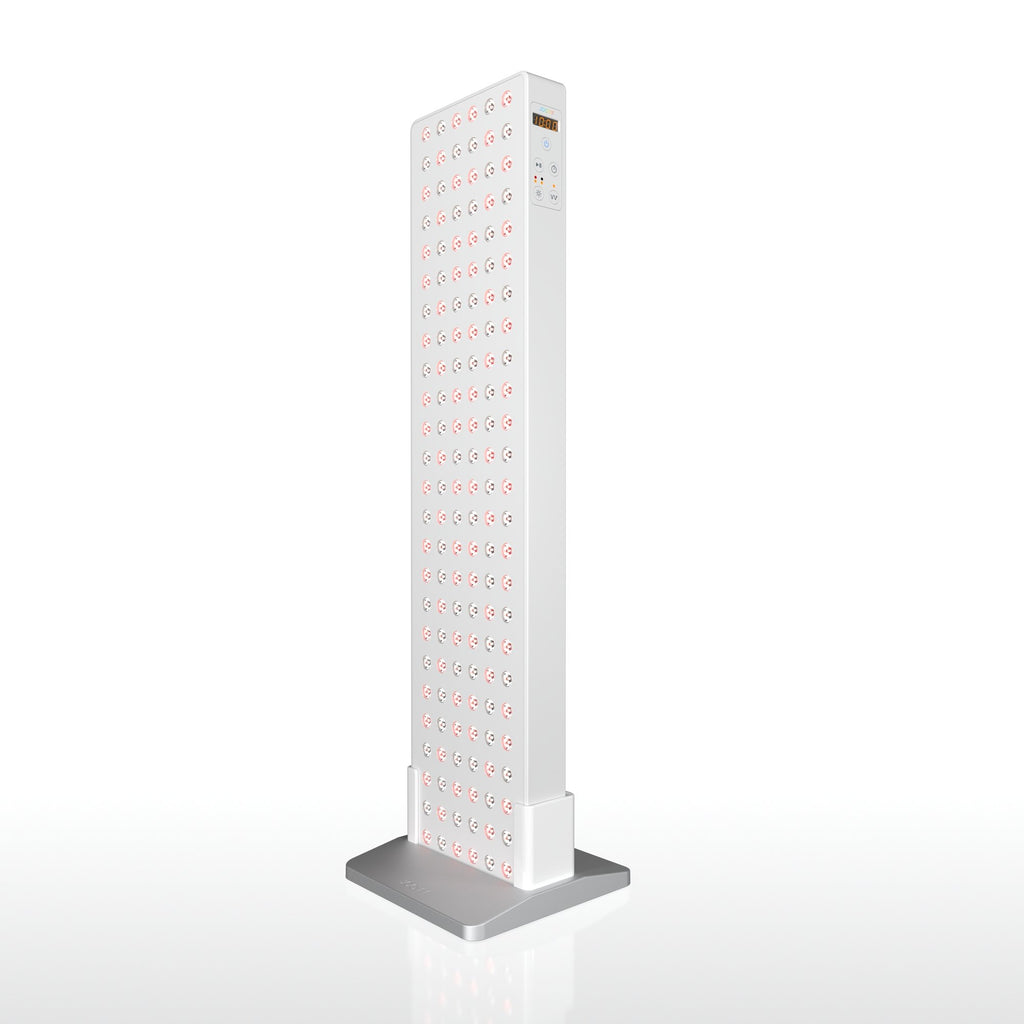
Coverage you'll actually use. A face-and-neck panel and a full-body setup are different purchases. Joovv sells the Solo 3.0 and the larger Duo 3.0 as modular units you can combine.
Wavelengths that match the research. The skin trial above used red light at 611–650 nm, and the muscle-performance meta-analysis found positive results between 655 and 950 nm. PlatinumLED's BIOMAX lists seven wavelengths from 480 nm to 1060 nm. BON CHARGE's Max uses 660 nm and 850 nm. More wavelengths isn't automatically better. The trial evidence for most of the extra bands is thinner.
Safety certification you can check. Joovv says its Gen 3.0 devices are certified by Intertek to medical electrical equipment standards including applicable IEC 60601 requirements. PlatinumLED describes BIOMAX as an FDA Class II medical device with ETL/UL, CE and RoHS electrical safety certification. BON CHARGE says its devices are registered with the FDA, and that the FDA has not evaluated its statements about them. Read the wording carefully. FDA registration and listing does not denote FDA approval or clearance of a firm or its devices, according to a Congressional Research Service summary of FDA's databases.
Third-party irradiance testing. PlatinumLED links to third-party lab intensity testing on its product page. Given how much irradiance claims vary by measurement method, published test data beats a big number on a banner.
The bottom line
Red light therapy at home is low-effort and, used sensibly, low-risk for most people. The research is real but uneven. The best-designed work is in specific uses, often with lasers or with lower doses than a modern panel puts out at close range. Start farther away than you think you need to, keep sessions modest, protect your eyes, and judge it on what you can actually see or feel after a couple of months.
Not medical advice. Talk to a qualified clinician before starting any light therapy, especially if you have an eye or skin condition or take photosensitizing medication. BiohackList may earn commissions from qualifying purchases in the future.
Sources
- Heiskanen V, Hamblin MR. Photobiomodulation: lasers vs. light emitting diodes? Photochem Photobiol Sci 2018. doi:10.1039/c8pp90049c
- Avci P, et al. Low-level laser (light) therapy (LLLT) in skin: stimulating, healing, restoring. Semin Cutan Med Surg 2013. PMID 24049929
- Huang YY, et al. Biphasic dose response in low level light therapy. Dose Response 2009. doi:10.2203/dose-response.09-027.hamblin
- Huang YY, et al. Biphasic dose response in low level light therapy – an update. Dose Response 2011. doi:10.2203/dose-response.11-009.hamblin
- Wunsch A, Matuschka K. A controlled trial to determine the efficacy of red and near-infrared light treatment... Photomed Laser Surg 2014. doi:10.1089/pho.2013.3616
- Vanin AA, et al. Photobiomodulation therapy for muscular performance and fatigue: systematic review and meta-analysis. Lasers Med Sci 2018. doi:10.1007/s10103-017-2368-6
- Stausholm MB, et al. Efficacy of low-level laser therapy on pain and disability in knee osteoarthritis: systematic review and meta-analysis. BMJ Open 2019. doi:10.1136/bmjopen-2019-031142
- Joovv Solo 3.0 product page
- PlatinumLED BIOMAX product page
- Mito Red Light MitoPRO+ product page
- BON CHARGE Max Red Light Therapy Device product page
- Congressional Research Service. Finding Medical Device and Drug Approval Information Through the FDA Databases (R48133, updated May 19, 2025)