What Magnesium Is Best for Sleep? Glycinate, Threonate and What the Trials Show
· Updated · BiohackList Editorial
Disclaimer: This article is for information only and is not medical advice. Talk to a qualified clinician before starting a supplement, especially if you have kidney problems, are pregnant, or take prescription medication. BiohackList may earn commissions from qualifying purchases in the future.
If you want the short answer first: magnesium glycinate (sold as "bisglycinate") has the best human trial behind it for sleep right now, and that trial found a small effect. Magnesium L-threonate has one promising trial, which was funded by the company that sells the ingredient. Everything else is older, smaller, or extrapolated from studies of something other than sleep.
That's less exciting than the internet makes it sound. It's still a useful answer, because magnesium is cheap and well tolerated, and some people seem to respond better than others. Below is what the studies actually tested, the doses they used, and how to read a label so you know what you're getting.
Why magnesium gets linked to sleep at all
There are two separate lines of evidence, and people mix them up.
The first is observational. People who eat more magnesium tend to report better sleep. A 2023 systematic review in Biological Trace Element Research pooled nine studies with 7,582 people. It found an association between magnesium status and sleep quality in observational data, but "contradictory findings" in the randomized trials. Association is a long way from "take this and sleep better." People who eat lots of leafy greens, nuts and legumes differ from other people in plenty of ways.
The second is how common low intake is. According to the NIH Office of Dietary Supplements, an analysis of 2013–2016 NHANES data found that 48% of Americans of all ages get less magnesium from food and drinks than their estimated average requirement. So a lot of people may be topping up a real shortfall when they supplement. That matters for interpreting the trials below.
The trials, form by form
Magnesium bisglycinate (glycinate)
This is the one I'd put first, mostly because of a single well-designed study. In 2025, researchers at Leibniz University Hannover published a randomized, double-blind, placebo-controlled trial in 155 adults with self-reported poor sleep. Participants took 250 mg of elemental magnesium a day as bisglycinate (which also delivered about 1.5 g of glycine), 30–60 minutes before bed, for four weeks.
What they found:
- Insomnia Severity Index scores dropped by 3.9 points on magnesium versus 2.3 on placebo (p = 0.049). The authors call the effect size small (Cohen's d = 0.2).
- The placebo group improved too, by 18% against 28% for magnesium. That's a reminder of how much of the "it worked for me" effect is just expectation and paying attention to your sleep.
- Stress, mood and daytime sleepiness showed no significant differences between groups.
- In an exploratory analysis, people who reported eating less magnesium-rich food seemed to benefit more.
- The magnesium group reported side effects less often than the placebo group.
The authors are upfront about the limits. All the outcomes were self-reported, the trial lasted four weeks, and the average score at the end was still in the "subthreshold insomnia" range. In other words, it helped a bit and didn't fix anyone's sleep.
Magnesium L-threonate
Threonate is marketed as the "brain" form. The case for it starts with a 2010 Neuron paper showing that magnesium L-threonate raised brain magnesium and improved memory measures in rats. That was a rat study about learning, not human sleep.
The human sleep trial is Hausenblas et al., 2024, in Sleep Medicine: X. Eighty adults aged 35–55 with self-reported sleep problems took 1 g/day of magnesium L-threonate (the branded Magtein ingredient) or placebo for 21 days. Sleep was measured with questionnaires and with an Oura ring. The authors report that the threonate group did better than placebo on Oura's deep sleep and REM scores and on several daytime measures, including energy, mood and alertness.
Two caveats, both in the paper itself:
- Funding. The study was funded by AIDP Inc., and the corresponding author lists an AIDP address. AIDP distributes the ingredient. Industry funding doesn't make a result wrong, but you'd want an independent replication before treating it as settled.
- Dose. The study product contains about 75 mg of elemental magnesium per gram, so 1 g/day delivered roughly 75 mg of actual magnesium. That's far less than the glycinate trial. Whatever threonate does in that study, it isn't simply correcting a big intake gap.
Update, October 12, 2026. A randomized, double-blind, placebo-controlled trial published online on October 4, 2026 in the Journal of the International Society of Sports Nutrition tested an evening mix of 2 g magnesium L-threonate (145 mg of magnesium), 200 mg L-theanine and 50 mg apigenin. It included 103 healthy, physically active adults and two weeks of supplementation. The authors report improvements with a separate morning mix of ashwagandha and Rhodiola rosea, and describe minimal effects on the other outcomes in this short study of healthy adults. The evening dose was a three-ingredient mix, not magnesium L-threonate on its own. (Mastrofini et al., 2026)
Magnesium oxide and older trials
The older research mostly used magnesium oxide. The study you'll see cited most is Abbasi et al., 2012: 46 older adults in Tehran took 500 mg of elemental magnesium a day (as magnesium oxide tablets) or placebo for eight weeks. Sleep time, sleep efficiency and insomnia scores improved versus placebo.
A 2021 meta-analysis pulled together three trials in older adults, 151 people in total. It found people fell asleep about 17 minutes faster on magnesium than on placebo. The improvement in total sleep time wasn't statistically significant. The authors rated the evidence low to very low quality and said it was "substandard for physicians to make well-informed recommendations."
The NIH also notes that magnesium oxide and sulfate tend to be absorbed less well than citrate, chloride, lactate and aspartate forms. The oxide trials worked anyway, which suggests the "best form" debate may matter less than whether you were low to begin with.
So which magnesium is best for sleep and anxiety?
Lots of people search this exact phrase. The honest answer: no form has good human evidence for anxiety. The largest sleep trial measured perceived stress and anxiety/depression symptoms and found no difference from placebo. The threonate trial reported better mood scores, with the funding caveat above. If anxiety is what's keeping you up, that's a conversation for a clinician, not a supplement aisle.
How much magnesium glycinate for sleep?
Start by reading the label correctly. US Supplement Facts panels list elemental magnesium, not the weight of the whole compound. "Magnesium (as magnesium bisglycinate) 200 mg" means 200 mg of magnesium.
The numbers to know:
- The trial dose: 250 mg elemental magnesium per night as bisglycinate (Schuster 2025).
- The upper limit: the Tolerable Upper Intake Level for supplemental magnesium in adults is 350 mg/day. It exists because higher doses can cause diarrhea, nausea and cramping. Food magnesium doesn't count toward it.
- Daily needs from all sources: the RDA is 310–320 mg for adult women and 400–420 mg for adult men, depending on age.
The trial dose of 250 mg sits under the 350 mg limit. Going past 350 mg because "more must be better" is how most people end up with stomach trouble. The NIH also notes that very high doses can cause magnesium toxicity, and kidney problems raise the risk. This is the main reason to check with a clinician first if you have kidney disease.
The products we list, and how they line up
Here are the three magnesium products currently in the BiohackList directory, matched to the evidence above. All three label their elemental magnesium clearly, which is the first thing I check.
Thorne Magnesium Bisglycinate. This is a lightly sweetened powder. Thorne lists 200 mg of magnesium (as bisglycinate) per scoop, with citric acid and monk fruit as the other ingredients, and says it's NSF Certified for Sport. It's the same form as the 2025 trial, a little under that dose. A powder makes it easy to take less if your stomach complains.
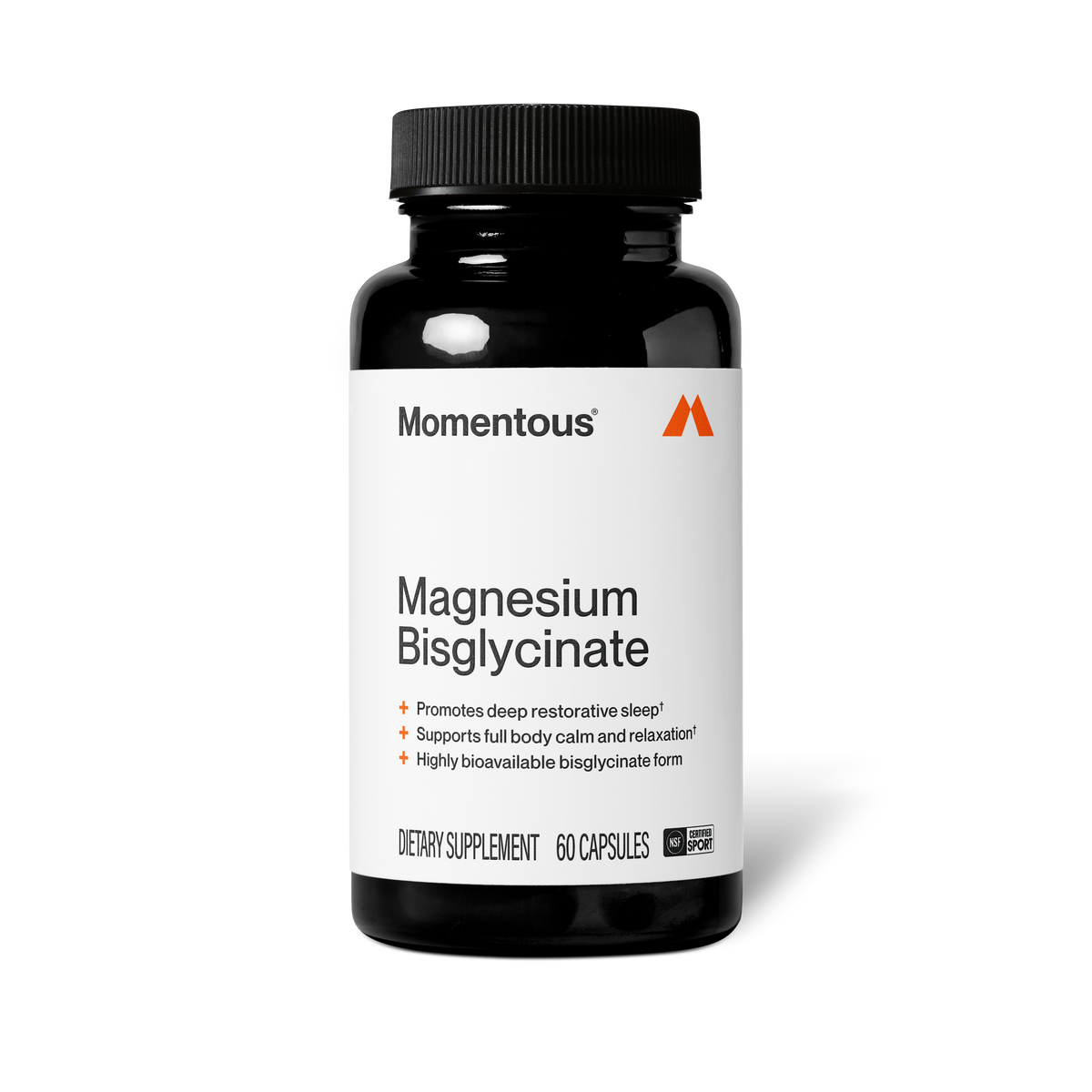
Momentous Magnesium Bisglycinate. Capsules, with 200 mg elemental magnesium per two-capsule serving and the brand recommends taking them 30–60 minutes before bed. That timing matches the trial protocol. Momentous also says it's NSF Certified for Sport. It's the same form and roughly the same dose as Thorne, so pick on format.
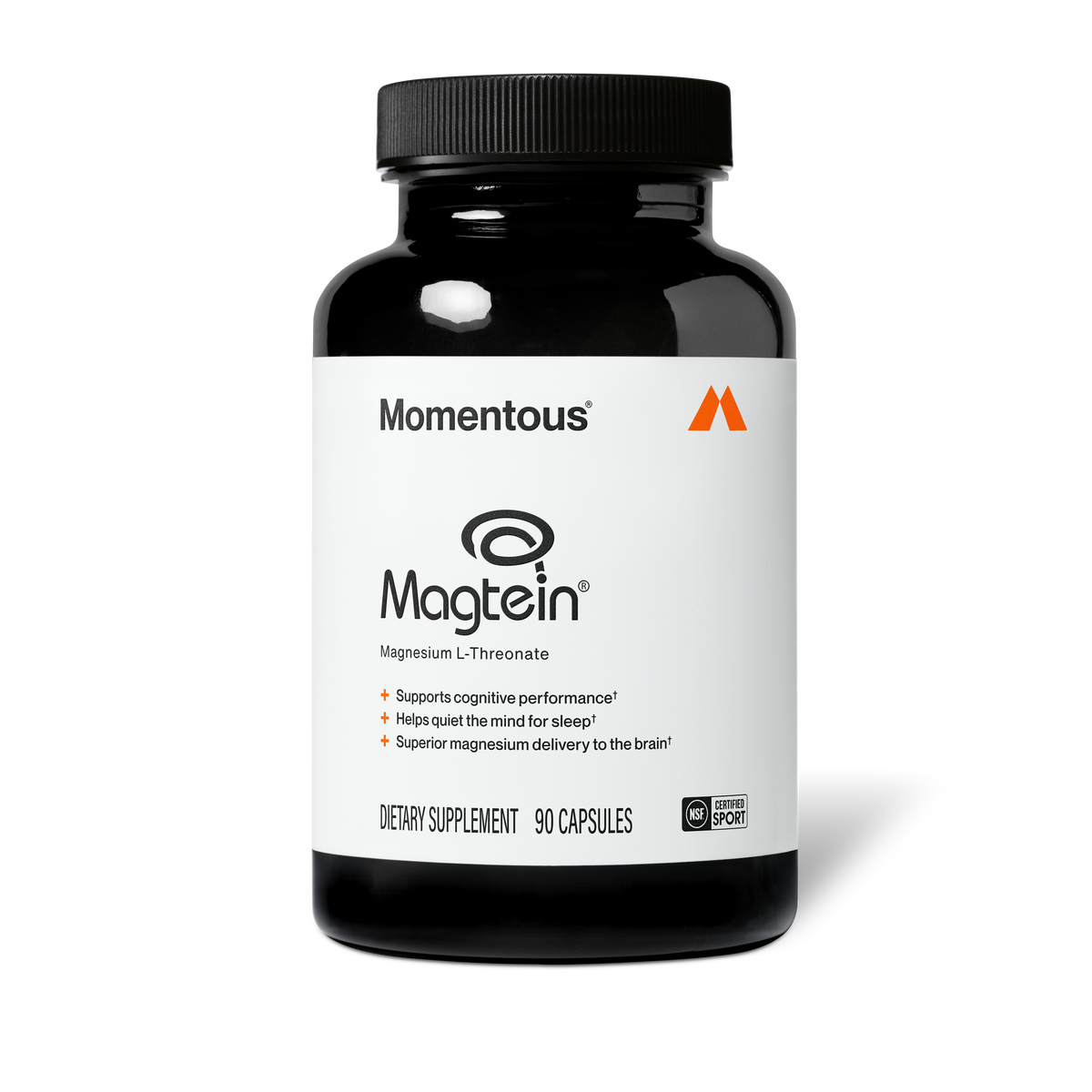
Momentous Magnesium L-Threonate. This uses the Magtein ingredient. Momentous lists 145 mg magnesium from 2 g of Magtein per three-capsule serving, which is twice the Magtein amount used in the 2024 sleep trial. If you're drawn to threonate on its own, the direct sleep evidence is still that one industry-funded study plus animal work. A later trial of an evening mix that included threonate is in the update above.
What I'd actually do
If I were sleeping badly and wanted to try magnesium, I'd do this:
- Look at food first. If your diet is light on greens, beans, nuts, seeds and whole grains, the trials hint that you're the person most likely to notice a difference.
- Pick bisglycinate at or below the trial dose. Around 200–250 mg elemental, taken 30–60 minutes before bed, stays under the 350 mg supplemental limit.
- Give it four weeks and track honestly. In the big trial, most of the improvement came within the first 14 days. If nothing has changed by week four, you've probably got your answer.
- Don't expect it to fix real insomnia. The same paper notes that cognitive behavioral therapy for insomnia (CBT-I) is considered the most effective treatment for chronic insomnia. Magnesium is a small lever. Use it like one.
Threonate is the form I'd most like to see tested independently. Until that happens, I'd treat it as the interesting option, not the default.
Not medical advice. Talk to a qualified clinician before starting any supplement. BiohackList may earn commissions from qualifying purchases in the future.
Sources
- Schuster J, et al. Magnesium bisglycinate supplementation in healthy adults reporting poor sleep: RCT. Nat Sci Sleep 2025;17:2027-2040. doi:10.2147/NSS.S524348
- Hausenblas HA, et al. Magnesium-L-threonate improves sleep quality... RCT. Sleep Med X 2024;8:100121. doi:10.1016/j.sleepx.2024.100121
- Mastrofini GF, et al. Modulating stress and sleep through a multi-compound dietary supplement: a randomized, double-blind, placebo-controlled trial. J Int Soc Sports Nutr. 2026;23(1):2740227. doi:10.1080/15502783.2026.2740227
- Abbasi B, et al. Magnesium supplementation on primary insomnia in elderly. J Res Med Sci 2012;17(12):1161-9. PMID 23853635
- Mah J, Pitre T. Oral magnesium supplementation for insomnia in older adults: systematic review & meta-analysis. BMC Complement Med Ther 2021. doi:10.1186/s12906-021-03297-z
- Arab A, et al. The role of magnesium in sleep health: a systematic review. Biol Trace Elem Res 2023;201:121-128. doi:10.1007/s12011-022-03162-1
- Slutsky I, et al. Enhancement of learning and memory by elevating brain magnesium. Neuron 2010. doi:10.1016/j.neuron.2009.12.026
- NIH Office of Dietary Supplements. Magnesium fact sheet for health professionals (updated Jan 6, 2026)
- Thorne Magnesium Bisglycinate product page
- Momentous Magnesium Bisglycinate product page
- Momentous Magnesium L-Threonate product page