WHOOP vs Oura: Which Recovery Tracker Fits How You Actually Live?
· BiohackList Editorial
Disclaimer: This article is for information only and is not medical advice. Consumer wearables aren't diagnostic tools. If you're worried about your sleep, heart rhythm or blood pressure, talk to a qualified clinician. BiohackList may earn commissions from qualifying purchases in the future.
Both of these track sleep, heart rate, HRV and "recovery," and both charge a subscription. In the studies that have tested them, both are reasonably good at telling sleep from wake and mediocre at sleep stages. Neither has a decisive accuracy lead.
So the choice really comes down to three things: what you're willing to wear 24/7, how you want to pay, and whether you care more about training load or general health trends. Here's how WHOOP 5.0 and Oura Ring 4 stack up on each.
The short version
- Pick Oura if you want something you'll forget you're wearing, care mostly about sleep and readiness, and don't want a strap on your wrist.
- Pick WHOOP if you train a lot, want strain and recovery front and center, want a longer battery, or want the ECG feature on the top tier.
- Pick neither if you'd rather not wear anything to bed. More on that at the end.
What you pay
This is where the two differ most, and where most comparison articles get vague.
Oura sells the ring outright and then charges a membership. Oura lists the membership at $5.99/month or $69.99/year for US members. Oura Ring 5 is now on sale, and PCMag reports (June 2026) that Oura Ring 4 is still sold starting at $349 for silver and stealth finishes, with most features locked behind the membership. Oura's store lists the newer Ring 5 at $399 for black and silver and $499 for other finishes. This article compares Ring 4 because that's the model in our directory.
WHOOP doesn't sell the hardware separately. The device comes with a membership, and the current tiers are $199/yr (One), $239/yr (Peak) and $359/yr (Life). Life swaps in the WHOOP MG device.
Over two years, using those list prices:
| Year 1 | Two-year total | |
|---|---|---|
| Oura Ring 4 + membership | $349 + $69.99 | $488.98 |
| WHOOP One | $199 | $398 |
| WHOOP Peak | $239 | $478 |
| WHOOP Life | $359 | $718 |
That table changes the usual story. WHOOP gets called "the subscription one," but at the One and Peak tiers it costs about the same as Oura over two years, or less. Oura gets cheaper the longer you keep the ring. WHOOP doesn't, but WHOOP says it backs the device with a lifetime warranty as long as you buy direct and keep an active membership. Prices move around and sales are common, so check before you buy.
WHOOP also lists all tiers as HSA/FSA eligible and offers a 30-day return window for a full refund minus shipping.
Form factor and battery
This decides it for most people, so be honest with yourself.
Oura Ring 4 is a titanium ring. Oura lists it at 7.90 mm wide, 2.88 mm thick and 3.3–5.2 g depending on size, water resistant to 100 m. The battery is rated at 5–8 days and charges in 20–80 minutes. PCMag's tester found the ring comfortable day to day but occasionally bothersome when lifting weights. That matches what I'd expect from any ring on a barbell.
WHOOP 5.0 is a sensor worn on a knit band. Every tier lists 14+ days of battery life. The Peak and Life tiers include a wireless PowerPack, and One ships with a wired charger.
If you hate charging, WHOOP wins clearly. If you hate wearing anything on your wrist, Oura wins just as clearly.
What each one is built around
WHOOP organizes everything around three numbers: Recovery, Sleep and Strain. That framing suits people who train and want to know whether today is a push day. Higher tiers add stress monitoring, a "Healthspan" metric and a health monitor. Only Life adds a Heart Screener with ECG and on-demand AFib detection. WHOOP notes the ECG feature is medically regulated, isn't for people under 22, and isn't available in every region. Its Blood Pressure Insights feature is explicitly labeled "not a medical device". WHOOP also now syncs both ways with Strava.
Oura organizes around Sleep, Readiness and Activity scores. It adds temperature trends, nighttime blood-oxygen sensing, daytime stress, and a "Symptom Radar" that looks for signs of strain in your biometrics. Oura says it automatically detects over 40 activities. The weak spot is workouts. PCMag notes the Ring 4 doesn't capture exact heart rate readings during workouts, only generalized zones, though you can pair a third-party heart-rate monitor.
My take: if your main question each morning is "should I train hard today?", WHOOP's framing is more useful. If it's "how am I doing overall, and am I getting sick?", Oura's is.
Sleep accuracy: what the studies show
Everyone wants to know which one is "more accurate." The research doesn't give a clean winner. Most of it also tested older hardware than what's on sale now.
The head-to-head study. Miller, Sargent and Roach (2022) put 53 healthy young adults in a sleep lab for a night, wearing six devices plus polysomnography (PSG), the clinical gold standard. For simple sleep-versus-wake, Oura Gen 2 agreed with PSG 89% of the time (κ = 0.51) and WHOOP 3.0 86% (κ = 0.44). For sleep stages, Oura reached 61% (κ = 0.43) and WHOOP 60% (κ = 0.44). That's essentially a tie. The authors concluded that all six devices were fine for sleep timing and duration but "require improvement" for stages. One disclosure to note: the authors' lab receives research support from WHOOP, though they state WHOOP had no role in the study.
Oura alone. A 2024 single-night lab study of 35 adults compared Oura Gen 3, Fitbit Sense 2 and Apple Watch Series 8 with PSG. It found Oura did not differ significantly from PSG for wake, light, deep or REM sleep estimates, while the Fitbit overestimated light sleep. The lead author sits on Oura's Medical Advisory Board and reports consulting fees from Oura.
Older adults. A 2026 study in Sleep Advances found the devices were less accurate in older people (ages 56–80, n = 19). Oura overestimated deep sleep by about 71 minutes on average in that group. If you're over 55, take the stage breakdown with a large grain of salt.
A multi-night preprint. A not-yet-peer-reviewed study ran 18 people through five nights of home PSG. It reported epoch-by-epoch accuracy of 72.5% (κ = 0.59) for Oura Ring 3 and 68.68% (κ = 0.54) for WHOOP 4. The authors flagged larger errors on fragmented or unusually short or long nights. Treat it as a hint, not a verdict.
My reading: both are good enough to track whether you're sleeping more or less and whether your nights are getting more regular. Neither is good enough to tell you that you got exactly 1 hour 42 minutes of deep sleep. Buy for fit and features, not for a few points of accuracy that may not hold on current hardware.
Who should pick which
Oura Ring 4 makes more sense if you:
- won't wear a wrist strap to bed, or already wear a watch you love during the day
- mostly care about sleep, readiness and general trends
- plan to keep the device for three or more years, since the hardware is a one-time cost
- don't need precise workout heart rate
WHOOP 5.0 makes more sense if you:
- train most days and want strain and recovery to drive decisions
- want two-week battery life
- prefer no upfront hardware cost and a 30-day return window
- want the ECG/AFib screening feature (Life tier only, region-dependent)
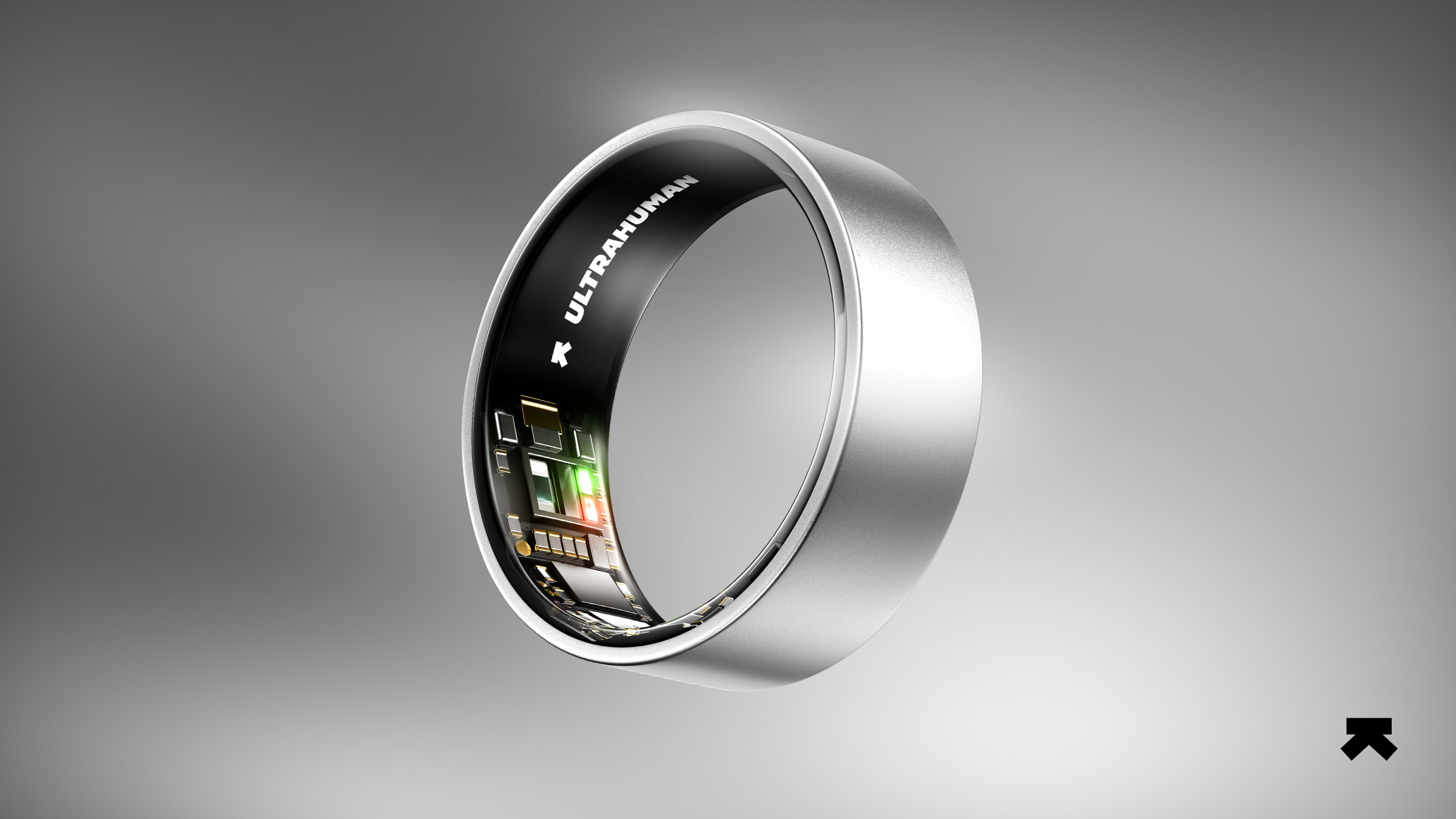
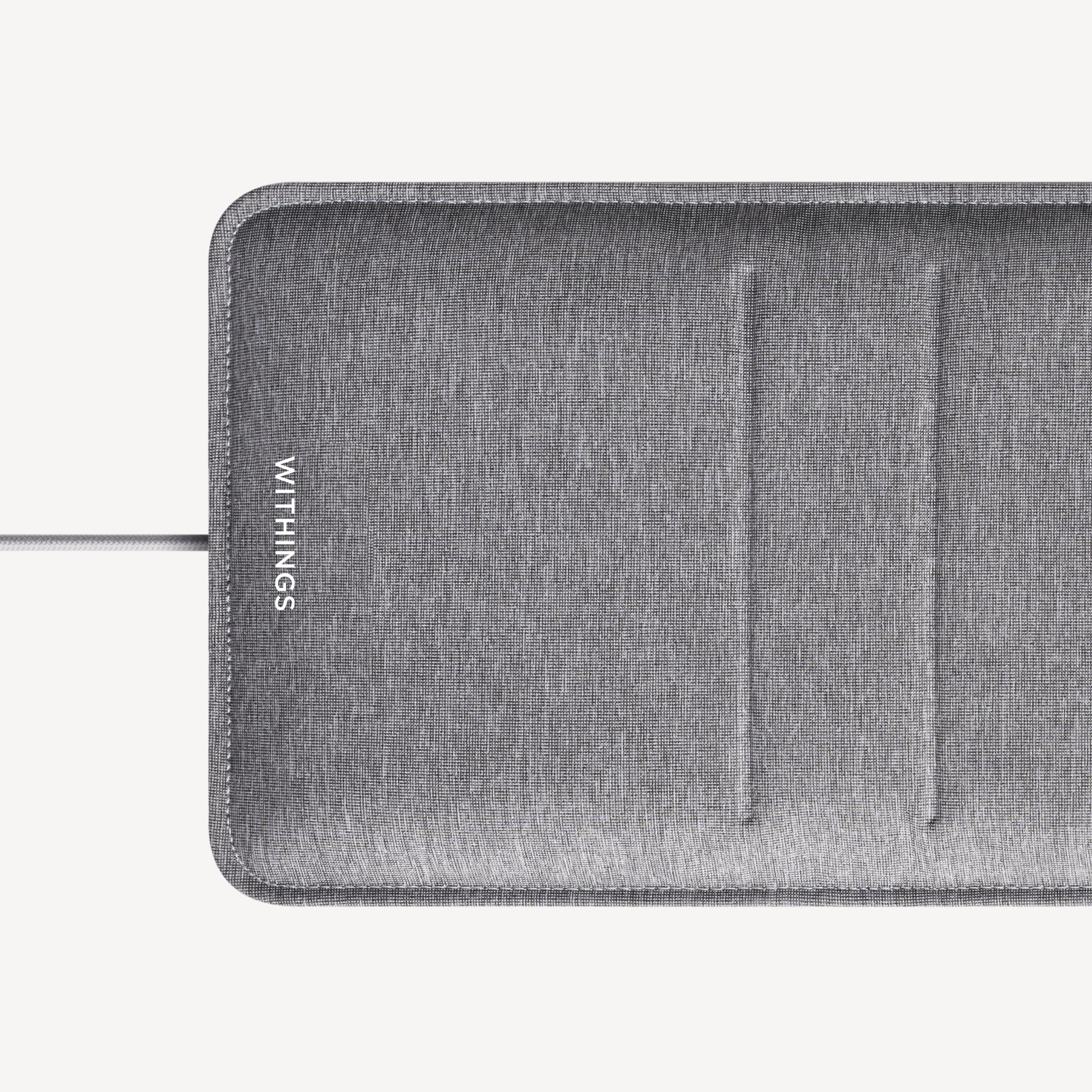
Also worth a look: the Ultrahuman Ring AIR if you want to compare another ring. We haven't covered its pricing or subscription terms here, so check Ultrahuman's site. If you don't want anything on your body at night, under-mattress options like Withings Sleep and the Eight Sleep Pod Cover take a different approach. The 2026 Sleep Advances study found nearables had their own biases in older adults too, so they aren't automatically more accurate.
One last thing
Whichever you buy, the most useful habit is the boring one. Look at weekly trends, not single nights, and let the numbers start a question rather than settle it. A bad sleep score after a late dinner and two glasses of wine tells you what you already knew. If a tracker ever flags something that worries you, like an irregular rhythm, very low blood-oxygen readings or persistent changes, take it to a clinician. Don't take it to a forum.
Not medical advice. Talk to a qualified clinician about any health concern. BiohackList may earn commissions from qualifying purchases in the future.
Sources
- WHOOP membership comparison page
- Oura Ring 4 official store/spec page
- PCMag, Oura Ring 5 vs Oura Ring 4 (updated Jun 5, 2026)
- Oura Ring 5 official store page
- Miller DJ, Sargent C, Roach GD. A validation of six wearable devices for estimating sleep, heart rate and HRV in healthy adults. Sensors 2022;22:6317. doi:10.3390/s22166317
- Robbins R, et al. Accuracy of three commercial wearable devices for sleep tracking in healthy adults. Sensors 2024;24:6532. doi:10.3390/s24206532
- Searles ME, et al. Performance evaluation of consumer sleep-tracking wearables and nearables in healthy young and older adults. Sleep Adv 2026. doi:10.1093/sleepadvances/zpag006
- Topalidis P, et al. Beyond the hype? A standardised real-world evaluation of consumer sleep trackers (preprint, not peer reviewed). doi:10.21203/rs.3.rs-8419739/v1