Best Vitamin D Supplement for Winter (2026 Guide)
On this page
- Do you need vitamin D in winter?
- Vitamin D3 vs D2
- How much vitamin D per day (and the upper limit)
- Test first or just supplement?
- What vitamin D does and doesn't do: evidence check
- How to choose a vitamin D supplement (checklist)
- Best vitamin D3 supplements for winter (picks by category)
- D3 with K2: optional, and watch the dose
- Higher-dose D3 with a BiohackList listing
- Vitamin D and winter mood
- FAQ
- Do I need vitamin D in winter?
- What is the most effective vitamin D to take?
- How much vitamin D should I take a day?
- Should I test my vitamin D before supplementing?
- What vitamin D level is normal?
- Does vitamin D prevent colds?
- Is vitamin D3 with K2 better?
- Can I take vitamin D with statins?
- Can you take too much vitamin D?
- Sources
Disclaimer: This article is for information only and is not medical advice. Vitamin D can interact with some medicines, and high doses can be harmful. If you have a medical condition, are pregnant, or take medication, talk to your doctor before supplementing or exceeding 4,000 IU a day. BiohackList does not accept paid or sponsored placements. We may earn commissions from qualifying purchases in the future.
The best vitamin D supplement for most adults is a plain vitamin D3 softgel of 1,000 to 2,000 IU with a third-party quality mark, taken with food. NIH recommends 600 IU a day for adults up to 70 and 800 IU after that, with an upper limit of 4,000 IU from all sources. Big trials found vitamin D does not prevent cancer or heart disease in people who aren't deficient, so the point of a winter supplement is to avoid running low, not to boost anything.
In 30 seconds
- Most healthy adults need 600 to 800 IU a day. Don't go above 4,000 IU a day from all sources without medical advice.
- At higher latitudes, skin makes little or no vitamin D in midwinter, and blood levels fall.
- Choose D3, a USP Verified or similarly tested product, and 1,000 to 2,000 IU per pill. Take it with food.
- In a trial of almost 26,000 adults, 2,000 IU a day did not lower cancer or major heart events.
- Several high-strength products sold online, including some K2 combinations, contain 5,000 IU per pill, more than the upper limit.
No listing on this page is paid or sponsored.
Do you need vitamin D in winter?
Your skin makes vitamin D from UVB light. At higher latitudes, the winter sun sits too low for much UVB to get through.
- The latitude effect. In a 1988 study by Webb, Kline and Holick, winter sun in Boston (42°N) produced no vitamin D precursor in skin from November through February. In Edmonton (52°N), the gap ran from October through March. At 34°N, the sun still worked in midwinter.
- Who is most likely to run low (NIH ODS): older adults, people with dark skin, people who rarely go outside or keep covered, regular sunscreen users, people with Crohn's disease, celiac disease or ulcerative colitis, and people with obesity or a history of gastric bypass.
- How common is low? NIH says most people in the US have adequate levels, but almost 1 in 4 are too low or inadequate.
What happens over a winter. Australia's Sun-D Trial randomized 628 adults who didn't take vitamin D. Those told to use SPF 50+ sunscreen daily ended with a mean level 5.2 nmol/L lower than those using sunscreen as they liked. At the final measurement, at the end of winter, 45.7% of the daily sunscreen group and 36.9% of the other group were deficient (below 50 nmol/L). The authors concluded regular sunscreen users may need vitamin D supplements.
What this doesn't show: that everyone needs a supplement every winter. Many people stay adequate, and the only way to know your level is a blood test.
Vitamin D3 vs D2
Supplements contain one of two forms:
| Vitamin D3 (cholecalciferol) | Vitamin D2 (ergocalciferol) | |
|---|---|---|
| Effect on blood levels | Higher and longer, per NIH | Raises levels, but less |
| Where you'll see it | Most supplements | Some vegan products and prescriptions |
NIH says both forms raise blood levels, but D3 "might raise it higher and for longer." A 2012 meta-analysis of head-to-head randomized trials in the American Journal of Clinical Nutrition (Tripkovic and colleagues) found D3 raised blood 25-hydroxyvitamin D more effectively than D2.
Vitamin D is fat soluble, so NIH advises taking it with a meal or snack that contains some fat. If you need a vegan product, look for plant- or algae-derived D3 on the label, or use D2 if that is what your clinician prescribes.
How much vitamin D per day (and the upper limit)
From NIH's Office of Dietary Supplements:
| Age | Recommended amount | Upper limit (all sources) |
|---|---|---|
| Adults 19 to 70 | 600 IU (15 mcg) | 4,000 IU (100 mcg) |
| Adults 71 and older | 800 IU (20 mcg) | 4,000 IU (100 mcg) |
| Pregnant or breastfeeding | 600 IU (15 mcg) | 4,000 IU (100 mcg) |
| Children 1 to 8 | 600 IU (15 mcg) | 2,500 to 3,000 IU |
The upper limit includes vitamin D from food, fortified drinks, multivitamins and supplements combined. A clinician may prescribe more for a set period to treat a deficiency.
Why 1,000 to 2,000 IU per pill. A US cup of fortified milk has about 120 IU, and many multivitamins add more. A 1,000 or 2,000 IU pill covers the recommended amount with room to spare, without getting near 4,000 IU. A 5,000 IU pill taken daily goes over the limit on its own.
Daily, not big weekly doses. For people over 50 who take vitamin D, the Endocrine Society's 2024 guideline suggests daily doses rather than occasional high doses.
Test first or just supplement?
The Endocrine Society's 2024 guideline on vitamin D for disease prevention made three points that matter here:
- It suggests against routine blood testing in the general population, including people with obesity or dark skin, because no trials show testing improves outcomes.
- It suggests against taking more than the recommended amount to prevent disease in healthy adults under 75.
- It suggests supplementing without a test for adults over 75, people who are pregnant, people with high-risk prediabetes, and children.
The guideline doesn't apply to people who already have a reason for testing or treatment, such as a malabsorption condition or osteoporosis. If that's you, ask your clinician.
If you want a number anyway, NIH's cut-offs are:
| Blood 25(OH)D | What NIH says |
|---|---|
| Below 30 nmol/L (12 ng/mL) | Too low; might weaken bones |
| 50 nmol/L (20 ng/mL) or above | Adequate for most people |
| Above 125 nmol/L (50 ng/mL) | Too high; might cause problems |
Some membership blood panels include vitamin D. Our Superpower vs Function Health comparison lists which markers each one tests.
What vitamin D does and doesn't do: evidence check
| Claim | What the evidence shows | Our read |
|---|---|---|
| Prevents and corrects deficiency | Supplements raise blood levels (NIH) | Strong |
| Bone health | With calcium, slightly increases bone strength in older adults; unclear whether it reduces falls or fractures (NIH) | Modest |
| Prevents cancer | VITAL: no reduction in invasive cancer over a median 5.3 years | No benefit shown |
| Prevents heart disease | VITAL: no reduction in major cardiovascular events; NIH says trials show no benefit even in people with low levels | No benefit shown |
| Prevents colds and respiratory infections | 2025 meta-analysis of 40 trials: no statistically significant protection | Not clear |
| Treats or prevents depression | NIH: trials show it does not | No benefit shown |
| Weight loss | NIH: does not help | No benefit shown |
VITAL. Manson and colleagues randomized 25,871 US adults (men 50 and older, women 55 and older) to 2,000 IU of vitamin D3 a day or placebo. After a median 5.3 years, invasive cancer (hazard ratio 0.96) and major cardiovascular events (0.97) were no different. Most participants weren't deficient, so the trial doesn't tell us about people who are. VITAL was funded by the US National Institutes of Health, and Pharmavite, the maker of Nature Made, donated the vitamin D, matching placebos and packaging.
Respiratory infections. In 2025, Jolliffe and colleagues updated their meta-analysis to 40 trials and about 61,600 participants. The odds ratio was 0.94, with a confidence interval that included no effect. Their 2021 version had found a small benefit. With more data, it's no longer statistically significant.
How to choose a vitamin D supplement (checklist)
- Form: D3 (cholecalciferol). For vegan diets, a D3 labeled vegan.
- Dose: 1,000 to 2,000 IU per pill or drop. Skip 5,000 and 10,000 IU products unless a clinician has told you to take that much.
- Third-party testing: the USP Verified mark means, in the wording on verified labels, that "USP has tested and verified ingredients, potency and manufacturing process." You can search USP's public list. NSF certification or a published certificate of analysis also work.
- Format: softgels in oil, drops in oil, or tablets taken with a meal.
- Cost per 1,000 IU: divide the price by the total IU in the bottle.
- Red flags: disease claims such as "prevents flu," and high-dose products marketed for everyday use.
Best vitamin D3 supplements for winter (picks by category)
We picked on form, dose, third-party verification and cost. We didn't lab-test these products. We checked prices on official pages on October 30, 2026.
| Pick | Product | Form, dose | Verification | Price | Cost per 1,000 IU |
|---|---|---|---|---|---|
| Best everyday value | Nature Made Vitamin D3 2000 IU softgels, 250 count | D3, 2,000 IU | USP Verified | $23.69 | About $0.05 |
| Best small bottle | Nature Made Vitamin D3 2000 IU softgels, 90 count | D3, 2,000 IU | USP Verified | $10.99 | About $0.06 |
| Best lower dose | Nature Made Vitamin D3 1000 IU softgels, 300 count | D3, 1,000 IU | USP Verified (per brand page) | $19.29 | About $0.06 |
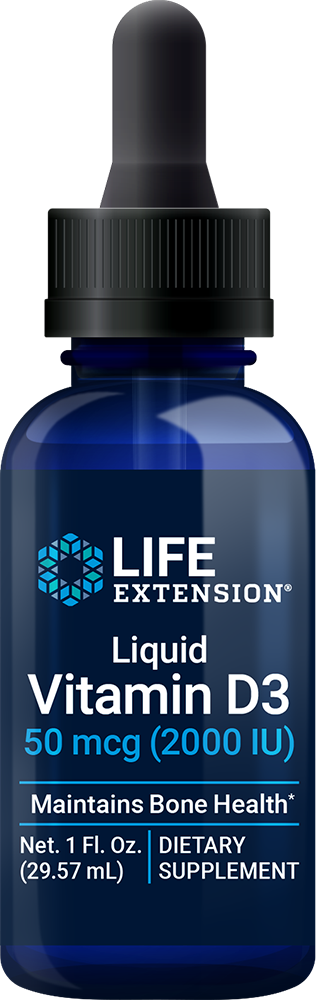
| Best drops | Life Extension Liquid Vitamin D3 | D3, 2,000 IU per drop, about 850 drops (brand-stated) | Not USP Verified | $21.00 | About $0.012 |
- Nature Made 2000 IU is on USP's Verified product list. Its maker, Pharmavite, donated the vitamin D pills for the VITAL trial described above. Costco's Kirkland Signature Extra Strength D3 (2,000 IU) is on the list too, but costco.com showed it as unavailable online when we checked, so we couldn't confirm a price.
- The drops are the cheapest per IU in this guide, about $0.012 per 1,000 IU. Life Extension states each drop is 2,000 IU, so one drop a day is enough for most adults; two drops would be 4,000 IU, right at the upper limit. The brand says the base is MCT oil from coconut.
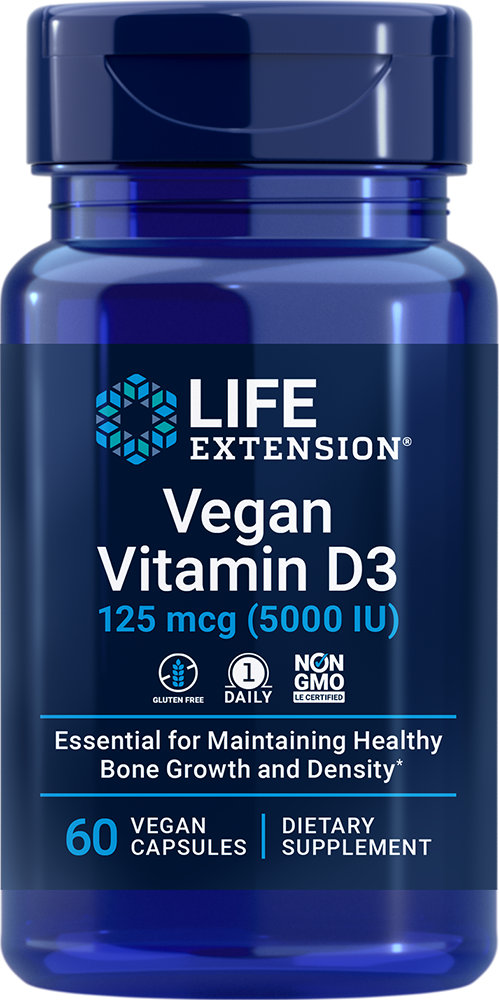
- Vegan. The vegan D3 with a BiohackList listing, Life Extension Vegan Vitamin D3 ($16.50 for 60), uses D3 from algae but contains 5,000 IU per capsule, above the upper limit for daily use. Look for a 1,000 to 2,000 IU vegan D3, or ask about a lower-dose schedule.
- D2. If your clinician prescribes D2, use what they prescribe. We don't pick a D2 product.
D3 with K2: optional, and watch the dose
Vitamin K is needed for blood clotting and bones. NIH says some studies found vitamin K supplements improve bone strength and others did not, and we found no outcome trial showing D3 plus K2 beats D3 alone in healthy adults. The combinations we checked were also high in D:
- Nature Made Vitamin D3 + K2 softgels (USP Verified): 5,000 IU D3 and 100 mcg K2, $16.79 for 30.
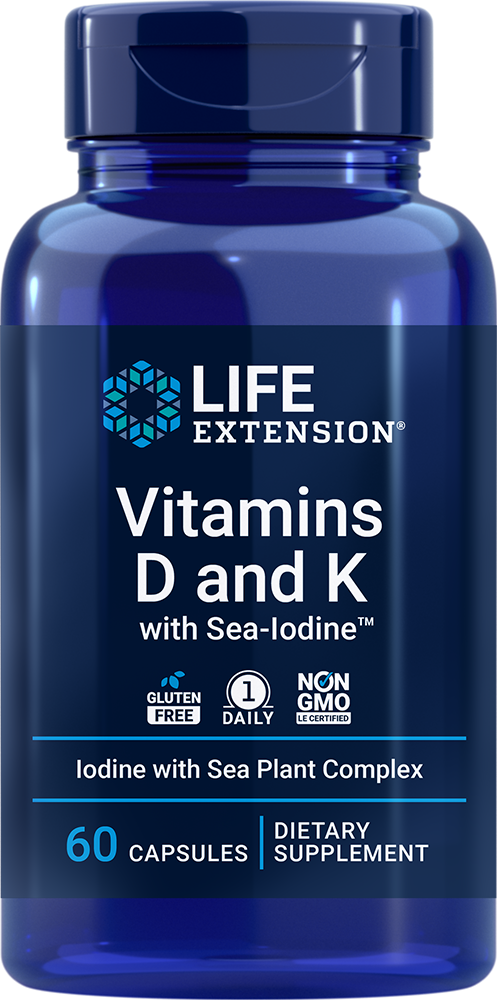
- Life Extension Vitamins D and K with Sea-Iodine: 5,000 IU D3, K1, two forms of K2 and 100 mcg iodine per capsule, $18.00 for 60.
Both put you above the 4,000 IU limit on their own. If you take warfarin, NIH says your vitamin K intake should stay about the same each day, so talk to your clinician first.
Higher-dose D3 with a BiohackList listing
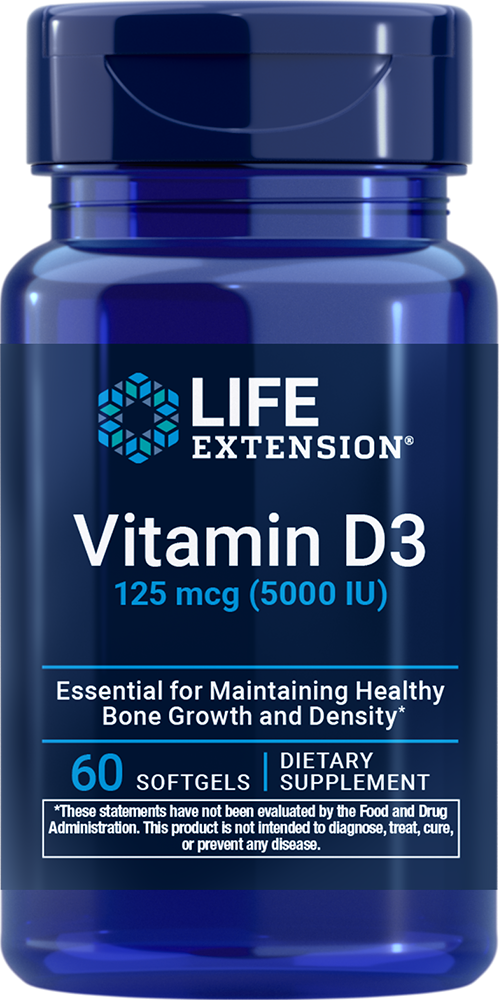
Life Extension Vitamin D3 costs $7.50 for 60 softgels, about $0.025 per 1,000 IU, second only to the drops, but each softgel is 5,000 IU. It suits a clinician-directed plan, not unsupervised daily use.
Vitamin D and winter mood
Low vitamin D has been linked with depression in some studies, but NIH says clinical trials show vitamin D supplements do not prevent or ease depression. So a higher dose won't fix dark-morning blues. For light-based options, see our SAD lamp vs sunrise alarm clock guide. If low mood lasts for weeks, talk to a clinician.
FAQ
Do I need vitamin D in winter?
Possibly, if you live far from the equator. In a classic study, winter sun in Boston (42°N) produced no vitamin D precursor in skin from November through February. Older adults, people with darker skin, little time outdoors, obesity or conditions that limit fat absorption are most likely to run low.
What is the most effective vitamin D to take?
Vitamin D3 (cholecalciferol). NIH says both D2 and D3 raise blood levels, but D3 might raise them higher and for longer, and a 2012 meta-analysis of head-to-head trials agreed. Take it with a meal or snack that contains some fat.
How much vitamin D should I take a day?
NIH's recommended amount is 600 IU a day for adults 19 to 70 and 800 IU over 70. The upper limit is 4,000 IU a day from all sources, including food, unless a clinician advises more for a set period.
Should I test my vitamin D before supplementing?
For healthy adults, the Endocrine Society's 2024 guideline suggests against routine testing because no trials show it helps. Testing makes sense if a clinician advises it, for example if you have a condition that affects absorption or bone health.
What vitamin D level is normal?
NIH says 50 nmol/L (20 ng/mL) or above is adequate for most people, below 30 nmol/L (12 ng/mL) is too low, and above 125 nmol/L (50 ng/mL) is too high and might cause problems.
Does vitamin D prevent colds?
Not clearly. A 2025 update of the largest meta-analysis, covering 40 trials and about 61,600 people, found no statistically significant protection against respiratory infections.
Is vitamin D3 with K2 better?
We found no outcome trial showing a D3 plus K2 combination is better than D3 alone for healthy adults. If you take warfarin, NIH says to keep vitamin K intake steady, so ask your clinician before adding K2.
Can I take vitamin D with statins?
NIH says high-dose vitamin D might make atorvastatin, lovastatin and simvastatin work less well. It does not list rosuvastatin. If you take any statin, ask your pharmacist before going above everyday doses.
Can you take too much vitamin D?
Yes. Blood levels above 375 nmol/L (150 ng/mL) can cause nausea, vomiting, confusion, excessive thirst and kidney stones, and extremely high levels can cause kidney failure and an irregular heartbeat. NIH says this is almost always caused by too many supplements, not sun.
Disclaimer: This article is for information only and is not medical advice. Vitamin D can interact with some medicines, and high doses can be harmful. If you have a medical condition, are pregnant, or take medication, talk to your doctor before supplementing or exceeding 4,000 IU a day. BiohackList does not accept paid or sponsored placements. We may earn commissions from qualifying purchases in the future.
Affiliate note: There are no affiliate links on this page at launch. No listing is paid or sponsored. See our disclosure.
How we chose: We compared form, dose per unit, third-party verification on USP's public list, and cost per 1,000 IU from official prices. We did not lab-test these products. We linked only products with a live BiohackList listing.
Last checked: Oct 30, 2026.
Sources
- NIH Office of Dietary Supplements. Vitamin D fact sheet for consumers (recommended amounts, upper limits, blood levels, D2 vs D3, interactions, health effects)
- NIH Office of Dietary Supplements. Vitamin K fact sheet for consumers
- Webb AR, Kline L, Holick MF. Influence of season and latitude on the cutaneous synthesis of vitamin D3. J Clin Endocrinol Metab 1988 (PMID 2839537)
- Tran V et al. Effect of daily sunscreen application on vitamin D: the Sun-D Trial. Br J Dermatol 2025 (PMID 40927943)
- Tripkovic L et al. Comparison of vitamin D2 and vitamin D3 supplementation in raising serum 25-hydroxyvitamin D status. Am J Clin Nutr 2012 (PMID 22552031)
- Demay MB et al. Vitamin D for the prevention of disease: an Endocrine Society clinical practice guideline. J Clin Endocrinol Metab 2024 (PMID 38828931)
- Manson JE et al. Vitamin D supplements and prevention of cancer and cardiovascular disease (VITAL). N Engl J Med 2019 (PMID 30415629)
- Jolliffe DA et al. Vitamin D supplementation to prevent acute respiratory infections: systematic review and meta-analysis of stratified aggregate data. Lancet Diabetes Endocrinol 2025 (PMID 39993397)
- USP. Verified products search, "D3"
- Nature Made product pages: https://www.naturemade.com/products/vitamin-d3-50-mcg-2000-iu-softgels; https://www.naturemade.com/products/vitamin-d3-25-mcg-1000-iu-softgels; https://www.naturemade.com/products/vitamin-d3-k2-softgels
- Life Extension product pages: https://www.lifeextension.com/vitamins-supplements/item02244/liquid-vitamin-d3; https://www.lifeextension.com/vitamins-supplements/item01713/vitamin-d3; https://www.lifeextension.com/vitamins-supplements/item02422/vegan-vitamin-d3; https://www.lifeextension.com/vitamins-supplements/item02040/vitamins-d-and-k-with-sea-iodine
- Costco. Kirkland Signature Extra Strength D3 50 mcg, 600 softgels
FAQ
Do I need vitamin D in winter?
Possibly, if you live far from the equator. In a classic study, winter sun in Boston (42°N) produced no vitamin D precursor in skin from November through February. Older adults, people with darker skin, little time outdoors, obesity or conditions that limit fat absorption are most likely to run low.
What is the most effective vitamin D to take?
Vitamin D3 (cholecalciferol). NIH says both D2 and D3 raise blood levels, but D3 might raise them higher and for longer, and a 2012 meta-analysis of head-to-head trials agreed. Take it with a meal or snack that contains some fat.
How much vitamin D should I take a day?
NIH's recommended amount is 600 IU a day for adults 19 to 70 and 800 IU over 70. The upper limit is 4,000 IU a day from all sources, including food, unless a clinician advises more for a set period.
Should I test my vitamin D before supplementing?
For healthy adults, the Endocrine Society's 2024 guideline suggests against routine testing because no trials show it helps. Testing makes sense if a clinician advises it, for example if you have a condition that affects absorption or bone health.
What vitamin D level is normal?
NIH says 50 nmol/L (20 ng/mL) or above is adequate for most people, below 30 nmol/L (12 ng/mL) is too low, and above 125 nmol/L (50 ng/mL) is too high and might cause problems.
Does vitamin D prevent colds?
Not clearly. A 2025 update of the largest meta-analysis, covering 40 trials and about 61,600 people, found no statistically significant protection against respiratory infections.
Is vitamin D3 with K2 better?
We found no outcome trial showing a D3 plus K2 combination is better than D3 alone for healthy adults. If you take warfarin, NIH says to keep vitamin K intake steady, so ask your clinician before adding K2.
Can I take vitamin D with statins?
NIH says high-dose vitamin D might make atorvastatin, lovastatin and simvastatin work less well. It does not list rosuvastatin. If you take any statin, ask your pharmacist before going above everyday doses.
Can you take too much vitamin D?
Yes. Blood levels above 375 nmol/L (150 ng/mL) can cause nausea, vomiting, confusion, excessive thirst and kidney stones, and extremely high levels can cause kidney failure and an irregular heartbeat. NIH says this is almost always caused by too many supplements, not sun.
Products in this article
Supplements
Life Extension Liquid Vitamin D3
Life Extension
Liquid with 50 mcg Vitamin D3 (as cholecalciferol) per serving (1 drop, approx. 0.04 mL); 29.57 ml. Price: $21.00 for 29.57 ml ($18.75 with AutoShip), checked Oct 4, 2026; also sold as 50 mcg (2000 IU), 29.57 ml (Mint) at $21.00; no third-party certification is stated. Dietary supplements are not FDA-approved: FDA does not approve dietary supplements or their labeling before sale.
Supplements
Life Extension Vitamin D3
Life Extension
Softgel with 125 mcg Vitamin D3 (as cholecalciferol) per serving (1 softgel); 60 softgels. Price: $7.50 for 60 softgels ($6.50 with AutoShip), checked Oct 4, 2026; also sold as 175 mcg (7000 IU), 60 softgels at $10.50; 25 mcg (1000 IU), 250 softgels at $9.75; 25 mcg (1000 IU), 90 softgels at $5.25; no third-party certification is stated. Dietary supplements are not FDA-approved: FDA does not approve dietary supplements or their labeling before sale.
Supplements
Life Extension Vegan Vitamin D3
Life Extension
Vegan capsule with 125 mcg Vitamin D3 (as cholecalciferol from algae) per serving (1 vegetarian capsules); 60 vegan capsules. Price: $16.50 for 60 vegan capsules ($14.50 with AutoShip), checked Oct 4, 2026; no third-party certification is stated. Dietary supplements are not FDA-approved: FDA does not approve dietary supplements or their labeling before sale.
Supplements
Life Extension Vitamins D and K with Sea-Iodine
Life Extension
Capsule with 125 mcg Vitamin D3 (as cholecalciferol), 2,100 mcg Vitamin K activity from, 1,000 mcg Vitamin K1 (as phytonadione) and 1,000 mcg Vitamin K2 (as menaquinone-4), plus 2 other listed ingredients per serving (1 capsule); 60 capsules. Price: $18.00 for 60 capsules, checked Oct 4, 2026; no third-party certification is stated. Dietary supplements are not FDA-approved: FDA does not approve dietary supplements or their labeling before sale.