CO2 Monitors (2026): Aranet4 vs Airthings vs Qingping vs SwitchBot, Plus What Your ppm Numbers Mean
· BiohackList Editorial
Disclaimer: This article is for information only and is not medical advice. CO2 monitors measure carbon dioxide as a guide to ventilation. They don't detect carbon monoxide and don't replace a CO alarm. If you have headaches, dizziness or nausea at home, leave and get help, as these can be signs of carbon monoxide poisoning. BiohackList may earn commissions from qualifying purchases in the future.
Verdict in 30 seconds: A CO2 monitor tells you when a room needs fresh air. Buy one with an NDIR sensor: the SwitchBot Meter Pro or the Qingping CO2 monitor for about $70, the Aranet4 HOME if you want years on two AA batteries, or an Airthings model if you also want radon. The evidence that CO2 itself harms sleep or thinking at normal home levels is mixed. Treat a high reading as "open a window", not as a health alarm.
A CO2 monitor is not a carbon monoxide alarm. Carbon dioxide (CO2) is what you breathe out. Carbon monoxide (CO) is a poisonous gas from fuel-burning appliances, engines and fireplaces. CO2 monitors are consumer environmental sensors, not medical devices, and aren't FDA-cleared. They aren't carbon monoxide alarms: for CO safety, use a CO alarm certified to UL 2034. Shops often list both side by side.
What a CO2 monitor does (and doesn't)
A CO2 monitor measures how much carbon dioxide is in the room, in parts per million (ppm). Because people exhale CO2, the number climbs when a room is occupied and the air isn't being replaced. That makes it a cheap, useful gauge of ventilation. Most also show temperature and humidity, and some add PM2.5, VOCs or radon.
What it doesn't do:
- It doesn't detect carbon monoxide. That needs a separate CO alarm. UL 2034, the standard for single and multiple station CO alarms, covers alarms meant to sound before CO reaches levels that stop people reacting to the danger (ULSE, Edition 5, published June 3, 2024). The NFPA advises choosing a CO alarm listed by a qualified testing laboratory (NFPA).
- It isn't an overall air quality score. ASHRAE's 2025 position document says: "Indoor CO2 concentrations are not overall indicators of IAQ, but they can be a useful tool" for judging ventilation (ASHRAE, approved Feb 12, 2025).
- It isn't a medical device. We found no FDA 510(k) clearance or device listing for Aranet, Airthings, SwitchBot or Qingping on openFDA (checked Oct 4, 2026).
What your CO2 numbers mean
There is no single official "safe" indoor CO2 number for homes. Here is where the common figures come from.
| CO2 (ppm) | What it means | Source |
|---|---|---|
| About 428 | Outdoor background. The Mauna Loa monthly average was 427.55 ppm in August 2026 (425.48 in August 2025). Air near traffic or in cities can read higher. | NOAA Global Monitoring Laboratory, updated Sep 5, 2026 |
| Under 800 | "Excellent" on Airthings' color scale | Airthings (brand guidance, not a standard) |
| 800 to 1,000 | "Fair": the air is getting stale, time to ventilate | Airthings (brand guidance) |
| 1,000 to 2,000 | "Poor" on Airthings' scale. Often called "the ASHRAE limit", but ASHRAE says its ventilation standard "does not provide a limit value for indoor CO2" and that many people "incorrectly attribute a 1000 ppmv limit to ASHRAE" | Airthings; ASHRAE position document |
| Above 2,000 | "Very poor" on Airthings' scale, which notes this is common in closed bedrooms overnight. The low-ventilation bedrooms in one Danish study averaged 2,395 to 2,585 ppm | Airthings; Strøm-Tejsen 2016 |
| 5,000 | OSHA's permissible exposure limit for workplaces, as an 8-hour average | OSHA Table Z-1 |
ASHRAE explains the 1,000 ppm figure left its ventilation standard after the 1989 edition and is at best an indicator of outdoor air per person, not a health threshold. Brand color scales are a "time to air out" prompt, not medical cut-offs.
CO2, sleep and focus: what the research shows
The short answer: rooms with high CO2 are usually poorly ventilated, and better ventilation has been linked with better sleep in small studies. Whether CO2 itself is the cause is not settled. ASHRAE calls the evidence for direct effects of CO2 on health, sleep and performance at common indoor levels "inconsistent".
The cognition studies (and the replication)
- Satish et al., 2012. 22 participants spent 2.5-hour sessions at 600, 1,000 and 2,500 ppm, with pure CO2 added and ventilation held constant. Compared with 600 ppm, decision-making scores fell on six of nine scales at 1,000 ppm and on seven at 2,500 ppm. The authors wrote that "confirmation of these findings is needed" (Environ Health Perspect, PMID 23008272).
- Allen et al., 2016. 24 office workers spent six workdays in a controlled office. Cognitive scores were higher on days with more ventilation and fewer VOCs, and both VOCs and CO2 were independently associated with scores (Environ Health Perspect, PMID 26502459).
- Zhang et al., 2017. 25 people spent 255 minutes in each of five conditions. Adding pure CO2 up to 3,000 ppm produced no significant effect on perceived air quality, symptoms or cognitive performance. Restricting ventilation so that CO2 from people reached 3,000 ppm did: more reported headache, fatigue and sleepiness, and slower responses on some tasks. The authors concluded that "moderate concentrations of bioeffluents, but not pure CO2" affect occupants (Indoor Air, PMID 26825447).
ASHRAE counts six studies reporting effects around 1,000 ppm and others, including Zhang's, finding none.
Bedroom ventilation and sleep
- Strøm-Tejsen et al., 2016. Two small experiments in single-occupancy student rooms, each comparing two weeks. In the first (14 people), an open window cut average CO2 from 2,585 to 660 ppm. In the second (16 people), a quiet fan cut it from 2,395 to 835 ppm. The authors report that sleep quality measured on wrist actigraphs, perceived air freshness, next-day sleepiness, self-rated concentration and one logical-thinking test improved when CO2 was lower. The abstract doesn't break results down by experiment (Indoor Air, PMID 26452168).
- Fan et al., 2023. 29 bedrooms with exhaust ventilation, with fan speed changed covertly for a week at a time. In the 12 bedrooms where the conditions clearly differed, participants had less deep sleep, more light sleep and more awakenings at the lowest ventilation rate, as measured by wrist trackers. Next-day cognitive performance didn't differ. The authors call for larger, better-controlled studies. Three of the co-authors work in the R&D department of a ventilation manufacturer (Sci Total Environ, PMID 37142023).
Bottom line
Higher bedroom CO2 usually means less fresh air. Small studies that increased ventilation found modestly better sleep on wrist trackers. In the most careful test of CO2 alone, adding pure CO2 had no effect, while stale air from people did. Use a CO2 monitor as a ventilation gauge.
NDIR vs eCO2 sensors (and calibration)
Buy a monitor with an NDIR sensor. NDIR (non-dispersive infrared) sensors shine infrared light through a small chamber and measure how much is absorbed at the wavelength CO2 absorbs, so they measure CO2 directly (Aranet). Every monitor in our picks uses one.
Avoid "eCO2" or "CO2eq" readings. Many cheap "air quality monitors" have no CO2 sensor at all. They use a gas sensor that reacts to VOCs and hydrogen and calculate a "CO2 equivalent" from that. Sensirion's own datasheet for one such chip says its CO2eq signal is "calculated from Ethanol and H2 measurements" (Sensirion SGP30 datasheet). If a listing says eCO2 or doesn't name the CO2 sensor type, assume it doesn't measure CO2.
Calibration matters. NDIR sensors can drift over time. Many use automatic baseline correction (ABC), which assumes the sensor regularly sees fresh outdoor air. Aranet says its automatic mode needs about 8 hours of exposure to roughly 420 ppm air in every 30-day period. Its monitors ship with automatic calibration switched off, and it recommends calibrating once a year. Its 420 ppm figure is approximate; today's outdoor level of about 428 ppm is within the sensor's stated accuracy (Aranet FAQ; default settings). Airthings states the View Plus accuracy applies after about seven days of calibration. In a bedroom that never airs out, auto-calibration has no fresh-air baseline, so calibrate manually now and then.
The best CO2 monitors (2026)
All prices are from official stores, checked Oct 4, 2026 (PT). None were on sale. We didn't test these monitors ourselves. Specs are the makers' own.
| Monitor | Sensor | CO2 range and accuracy | Also measures | Power | Price (checked Oct 4, 2026) |
|---|---|---|---|---|---|
| SwitchBot Meter Pro (CO2 Monitor) | NDIR | 400 to 9,999 ppm, ±5% | Temp, humidity | USB-C or batteries (about 12 months) | $69.99 |
| Qingping CO2 & Temp & RH Monitor | Sensirion NDIR | 400 to 9,999 ppm | Temp, humidity | USB-C, 2,600 mAh battery | $69.99 |
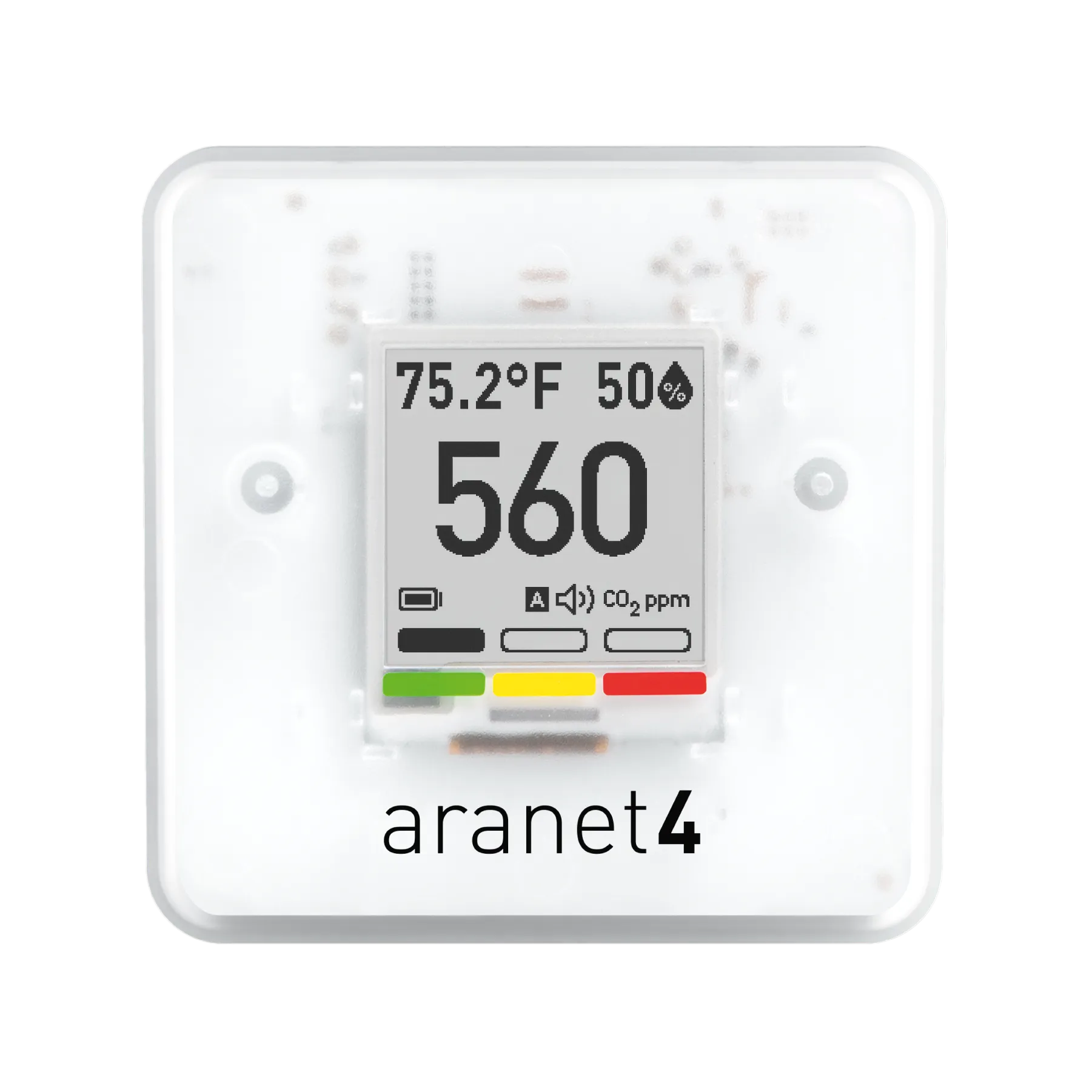
| Aranet4 HOME | NDIR | 0 to 9,999 ppm, ±(30 ppm + 3% of reading) | Temp, humidity, pressure | 2 AA | $189.00 |
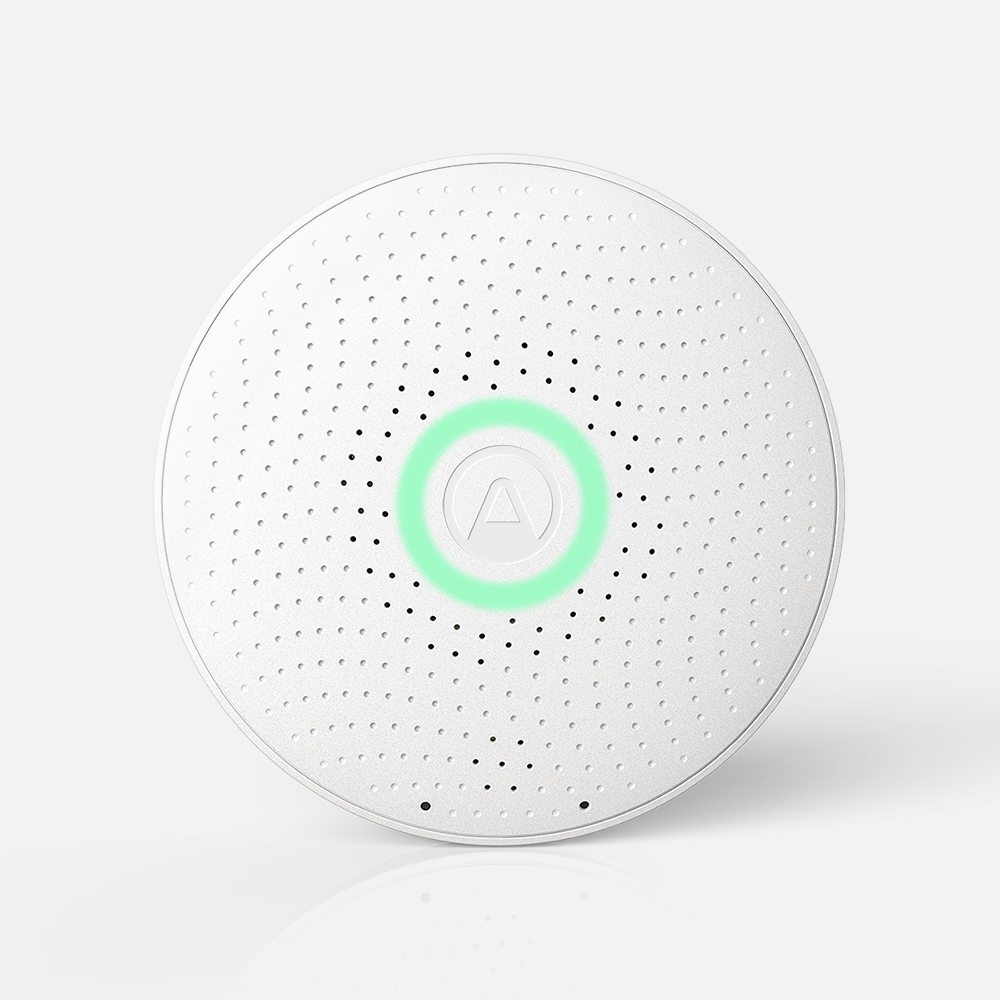
| Airthings Wave Plus | NDIR | 400 to 5,000 ppm, ±30 ppm ±3% | Radon, VOCs, temp, humidity, pressure | Batteries (16 months on Bluetooth) | $249.99 |
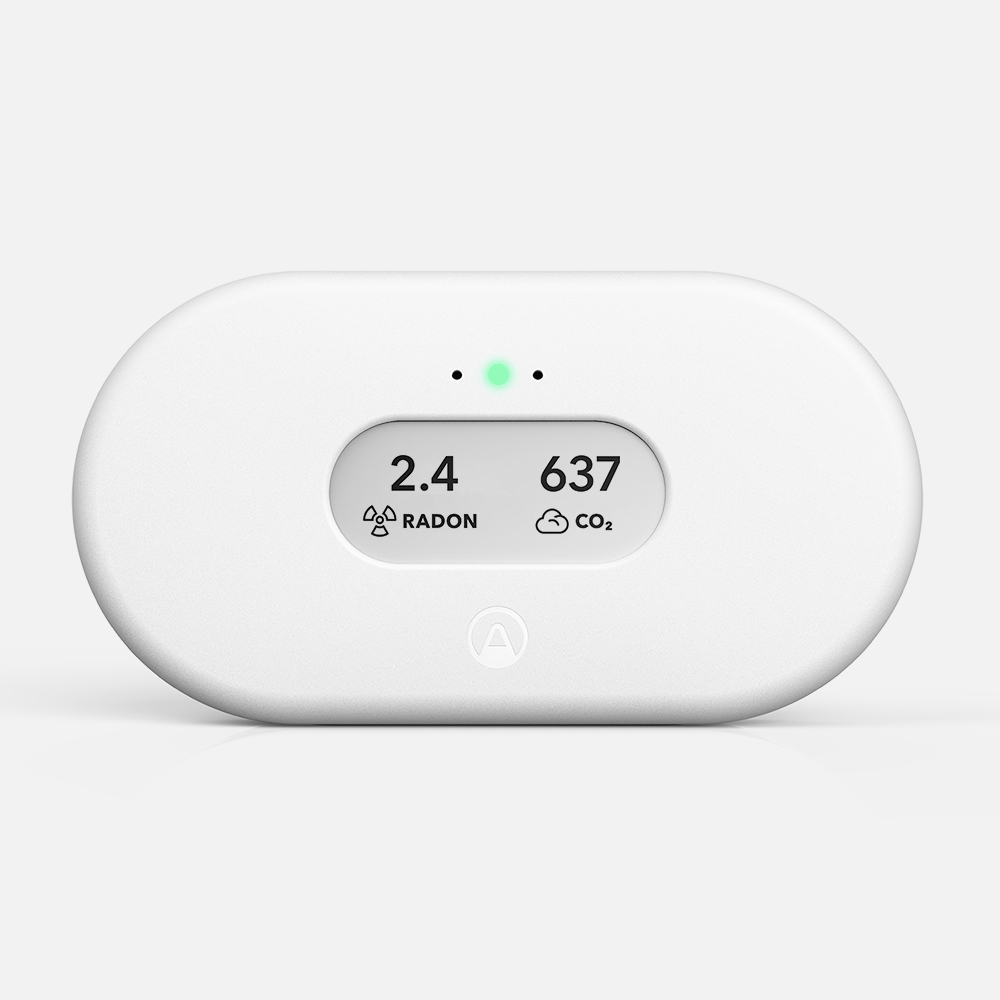
| Airthings View Plus | NDIR | 400 to 5,000 ppm, ±50 ppm ±3% | Radon, PM2.5, VOCs, temp, humidity, pressure | 6 AA (up to 2 years) or USB-C | $329.99 |
Best budget pick: SwitchBot Meter Pro (CO2 Monitor), $69.99
For the SwitchBot Meter Pro (CO2 Monitor), SwitchBot lists an NDIR sensor, a 400 to 9,999 ppm range and ±5% accuracy, with readings every second on USB-C power or every 5 seconds on batteries. Battery life is about 12 months. But app alerts and smart-home features need a SwitchBot Hub, sold separately. Warranty is one year.
Best budget pick with Wi-Fi: Qingping CO2 & Temp & RH Monitor, $69.99
The Qingping CO2 & Temp & RH Monitor uses a Sensirion NDIR sensor (400 to 9,999 ppm) and connects over Wi-Fi, so you can view history in the Qingping IoT app or on the web without a hub. It has a built-in buzzer for high readings and a 2,600 mAh battery with USB-C. Qingping's product page showed it in stock on Oct 4, 2026.
Best battery-powered pick: Aranet4 HOME, $189.00
The Aranet4 HOME is a small E-Ink unit that runs on two AA batteries. Aranet's datasheet (version 3.6, Aug 28, 2026) gives a 0 to 9,999 ppm range and ±(30 ppm + 3% of reading) accuracy, specified from 0 to 5,000 ppm (datasheet). At the default 5-minute interval with Bluetooth on, Aranet estimates 2.8 years on alkaline batteries, and 4 years with Bluetooth off. It syncs to the Aranet Home app. Aranet sells it directly to US buyers at $189.00 on aranet.com, and it's also $189.00 on Amazon US, sold by ARANET USA (both checked Oct 4, 2026).
Best if you also want radon: Airthings View Plus ($329.99) or Wave Plus ($249.99)
Airthings is the only brand here that also measures radon. The View Plus adds PM2.5 and a screen, runs up to two years on six AA batteries or on USB-C, and connects over Wi-Fi. Airthings gives ±50 ppm ±3% CO2 accuracy after about seven days of calibration and offers a free 5-year extended warranty if you register the device. The Wave Plus has no PM2.5, shows status with a red, yellow or green glow ring, pairs over Bluetooth and lists ±30 ppm ±3%. Both cap CO2 at 5,000 ppm. You pay extra for radon and particles, not better CO2 readings.
Also considered
- Qingping Air Monitor 2 ($149.99): adds PM2.5, PM10, noise and eTVOC (an estimated VOC reading). Qingping's store page lists a 400 to 9,999 ppm CO2 range but doesn't name the CO2 sensor type, so we left it out of the picks.
- Qingping Air Monitor Lite ($76.00): CO2 sensor type not stated; Qingping lists up to 7 hours of battery life and recommends keeping it plugged in. Not recommended for CO2.
- Awair Element and IQAir AirVisual Pro: current US status or specs unconfirmed on Oct 4, 2026; not included.
CO2 monitor for home: where to put it and what to do about high readings
Placement. Aranet suggests putting the monitor where you spend the most time, at a spot you can see it. Breathing directly on it pushes readings up, and a spot by a window or outside door can read low because of airflow. Keep it out of direct sunlight, away from splashes and out of very humid rooms such as bathrooms, and don't cover the side vents (Aranet placement guide).
What lowers CO2. Mainly bringing in outdoor air. The EPA lists opening windows and doors, window or attic fans, and bathroom or kitchen fans that exhaust outdoors as ways to raise the outdoor air rate, and notes that most home heating and cooling systems don't bring in fresh air mechanically (EPA). In practice:
- Open a window a crack, or leave the bedroom door open.
- Run a bathroom or kitchen exhaust fan that vents outside.
- For a whole-home fix, ask an HVAC contractor about a heat recovery ventilator, which the EPA describes as an energy-efficient way to bring in outdoor air.
Near heavy traffic or wildfire smoke, a monitor that also reads PM2.5 can help you decide when to open up.
CO2 levels in the bedroom
A closed bedroom is often where people see their highest readings. Airthings calls closed bedrooms "the most common problem spot", and the low-ventilation bedrooms in the Danish study averaged about 2,400 to 2,600 ppm with one sleeper each.
If your monitor logs history, check the overnight curve, then change one thing at a time (door ajar, window cracked) and compare a few nights.
Temperature matters too, and opening a window can make a room too cold or too warm. See our bed cooling guide for options. For the wider routine, see our sleepmaxxing guide.
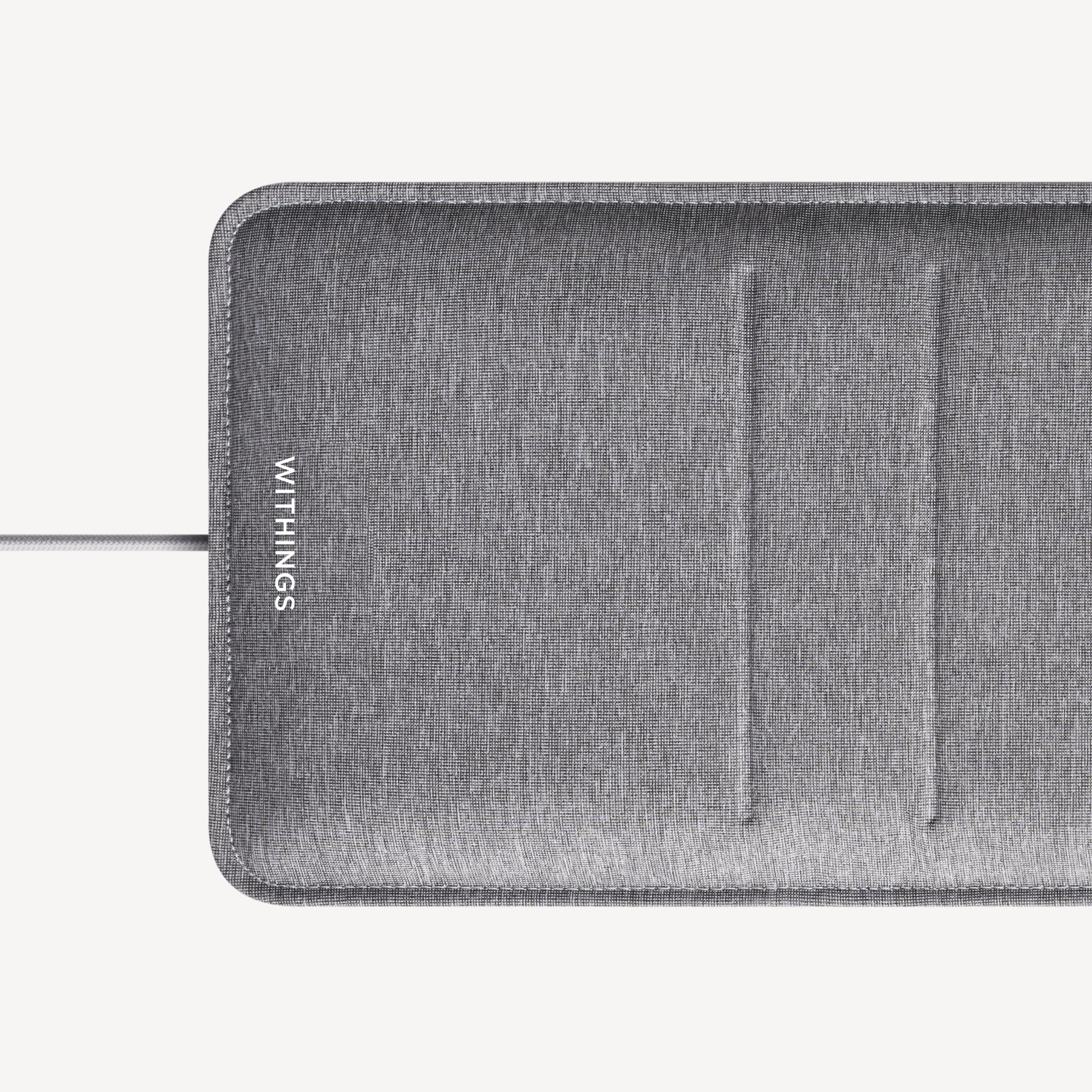
If you track sleep with a Withings Sleep mat, an Oura Ring 4, a WHOOP 5.0 or an Eight Sleep Pod, you can compare your nights against your CO2 log. One person's tracker data isn't evidence, though, and none of these devices measure air quality.
Do air purifiers lower CO2?
No. Standard air purifiers use mechanical filters for particles and sometimes carbon for odors, and neither removes CO2. ASHRAE notes that removing CO2 from air takes chemical sorption-type air cleaners, and warns that cutting CO2 that way doesn't deal with other pollutants. For purifier picks, see our Dyson air purifier review.
FAQ
Can I check my CO2 levels at home?
Yes. An NDIR CO2 monitor from about $70 gives a direct ppm reading. Phone apps can't measure CO2, and "air quality" gadgets that report eCO2 estimate it from other gases.
Is a CO2 monitor worth it?
For a bedroom or home office that feels stuffy, a monitor cheaply shows when the air needs replacing. It isn't a health device, and it won't tell you about carbon monoxide, smoke or mold.
What CO2 level is bad for sleep?
There is no established threshold. The bedroom studies compared averages of roughly 660 to 835 ppm with roughly 2,400 to 2,600 ppm, and found modestly better tracker-measured sleep at the lower levels. Keeping the overnight reading closer to the low end is a reasonable target, not a medical rule.
Is a CO2 monitor the same as a carbon monoxide detector?
No. A CO2 monitor doesn't detect carbon monoxide. For CO safety, use a CO alarm certified to UL 2034.
Why does my monitor read above 400 ppm outdoors?
Outdoor background is now about 428 ppm at Mauna Loa (NOAA, August 2026), and readings near roads and in cities run higher. ASHRAE notes outdoor CO2 varies by place and time of day. Also allow for the sensor's stated accuracy.
Are CO2 monitors FDA-cleared?
No. They're consumer environmental sensors. We found no FDA records for Aranet, Airthings, SwitchBot or Qingping on openFDA (Oct 4, 2026).
How we researched this
On Oct 4, 2026 (PT), we checked official product pages and datasheets, Amazon US, NOAA, OSHA, the EPA, ASHRAE, ULSE and openFDA. Study details come from published abstracts. We didn't test any monitor and received no products.
BiohackList has no affiliate relationship with any brand mentioned here. Read our disclosure and about BiohackList.
Disclaimer: This article is for information only and is not medical advice. CO2 monitors measure carbon dioxide as a guide to ventilation. They don't detect carbon monoxide and don't replace a CO alarm. If you have headaches, dizziness or nausea at home, leave and get help, as these can be signs of carbon monoxide poisoning. BiohackList may earn commissions from qualifying purchases in the future.
Last checked: Oct 4, 2026 (PT).
Sources
- NOAA Global Monitoring Laboratory, Trends in CO2 (Mauna Loa monthly mean; updated Sep 5, 2026): https://gml.noaa.gov/ccgg/trends/
- OSHA Annotated Table Z-1: https://www.osha.gov/annotated-pels/table-z-1
- ASHRAE Position Document on Indoor Carbon Dioxide (approved Feb 12, 2025): https://www.ashrae.org/file%20library/about/position%20documents/pd-on-indoor-carbon-dioxide-english.pdf
- Airthings, What is carbon dioxide: https://www.airthings.com/contaminants/what-is-carbon-dioxide
- ULSE, UL 2034 Single and Multiple Station Carbon Monoxide Alarms (Edition 5): https://www.shopulstandards.com/ProductDetail.aspx?productId=UL2034_5_S_20240603
- NFPA, Carbon monoxide safety: https://www.nfpa.org/education-and-research/home-fire-safety/carbon-monoxide
- EPA, Improving Indoor Air Quality: https://www.epa.gov/indoor-air-quality-iaq/improving-indoor-air-quality
- Sensirion SGP30 datasheet: https://sensirion.com/media/documents/984E0DD5/61644B8B/Sensirion_Gas_Sensors_Datasheet_SGP30.pdf
- Aranet4 HOME datasheet, version 3.6 (Aug 28, 2026): https://assets.aranet.com/documents/Aranet_Datasheet_TDSPC0H3_Aranet4_HOME_3.pdf
- Aranet Help: FAQ, Default Settings, Where to Place the Device in a Room: https://help.aranet.com/aranet4/aranet4-home/faq
- Aranet4 HOME, aranet.com store (US price $189.00, Oct 4, 2026): https://aranet.com/en/home/products/aranet4-home
- Aranet4 HOME on Amazon US (sold by ARANET USA): https://www.amazon.com/dp/B07YY7BH2W
- Airthings View Plus: https://www.airthings.com/view-plus
- Airthings Wave Plus: https://www.airthings.com/wave-plus
- SwitchBot Meter Pro (CO2 Monitor): https://us.switch-bot.com/products/switchbot-meter-pro-co2-monitor
- Qingping CO2 & Temp & RH Monitor: https://shop.qingping.co/products/qingping-co2-temp-rh-monitor
- Qingping Air Monitor 2: https://shop.qingping.co/products/qingping-air-monitor
- openFDA 510(k) API: https://api.fda.gov/device/510k.json
- Satish U, et al. Environ Health Perspect. 2012;120(12):1671-7. doi:10.1289/ehp.1104789. PMID 23008272. Full text: https://pmc.ncbi.nlm.nih.gov/articles/PMC3548274/
- Allen JG, et al. Environ Health Perspect. 2016;124(6):805-12. doi:10.1289/ehp.1510037. PMID 26502459. Full text: https://pmc.ncbi.nlm.nih.gov/articles/PMC4892924/
- Zhang X, Wargocki P, Lian Z, Thyregod C. Indoor Air. 2017;27(1):47-64. doi:10.1111/ina.12284. PMID 26825447.
- Strøm-Tejsen P, et al. Indoor Air. 2016;26(5):679-86. doi:10.1111/ina.12254. PMID 26452168.
- Fan X, et al. Sci Total Environ. 2023;884:163805. doi:10.1016/j.scitotenv.2023.163805. PMID 37142023.