Garmin Cirqa vs WHOOP 5.0 (2026): The Best WHOOP Alternatives With No Subscription, Compared (Fitbit Air, Polar Loop, Amazfit Helio Strap)
· BiohackList Editorial
Disclaimer: This article is for information only and is not medical advice. Fitness trackers are wellness devices; they don't diagnose sleep disorders or heart conditions. If you have symptoms such as chest pain, palpitations, fainting or loud snoring with daytime sleepiness, see a clinician. BiohackList may earn commissions from qualifying purchases in the future.
Yes, you can get WHOOP-style sleep and recovery tracking without a yearly fee. The Garmin Cirqa ($199.99), Polar Loop ($199.99), Fitbit Air ($99.99) and Amazfit Helio Strap ($99.99) are screenless bands you pay for once. WHOOP 5.0 still has the longest battery and the most guided coaching, but you pay yearly: $398 to $718 over two years, depending on the tier.
Quick picks (prices checked Oct 4, 2026):
- Already in the Garmin ecosystem, want training metrics, no fee: Garmin Cirqa, $199.99.
- Lowest price you can buy right now, Android or Pixel user: Fitbit Air, $99.99 (the AI coach is paid after 3 months). (The $99.99 Helio Strap was sold out Oct 4.)
- Want zero subscriptions, ever: Polar Loop, $199.99.
- Want an upper-arm strap that broadcasts heart rate to gym gear: Amazfit Helio Strap, $99.99 (sold out on Amazfit's US store on Oct 4, 2026).
- Want the longest battery and recovery-first coaching, and don't mind paying yearly: WHOOP 5.0, from $199 a year.
The short answer: is there a good WHOOP alternative with no subscription?
Yes. If you mainly want sleep, heart rate variability (HRV) and recovery data, every band here covers the basics for a one-time price. None is "medical-grade" overall.
WHOOP doesn't sell the hardware separately. The band comes with a membership at $199, $239 or $359 a year, so two years cost $398, $478 or $718.
The Garmin Cirqa costs $199.99 once, and Garmin's optional Connect+ plan adds AI insights and guided workouts for $69.99 a year. The Polar Loop is $199.99 and has no paid tier at all. The Fitbit Air is $99.99 and includes 3 months of Google Health Premium. At $99.99, the Amazfit Helio Strap has an optional $69.99-a-year sleep content plan.
Leaving WHOOP costs you its 14-plus-day battery, which DC Rainmaker and Lifehacker's reviewer both reached or beat in testing, and a coaching model built around one daily Recovery score. In return, there's no renewal bill, and Cirqa adds Garmin's training metrics and a physical button.
Garmin Cirqa vs WHOOP 5.0 at a glance
Official US pages, checked Oct 4, 2026 (PT). "Claimed" battery is the maker's figure.
| Band | Price | Subscription | Battery (claimed) | Sensors | Water rating | Button / GPS | Weight | FDA status | HSA/FSA |
|---|---|---|---|---|---|---|---|---|---|
| WHOOP 5.0 | Included with membership | Required: One $199/yr, Peak $239/yr, Life (WHOOP MG) $359/yr | 14+ days | Not listed on the pages we checked | Not on WHOOP's spec pages; WHOOP staff on its forum say IP68, 10 m for up to 2 hours | No button; GPS via Strava sync | Not listed | ECG feature FDA-cleared (K243236), on WHOOP MG only. Everything else wellness | "HSA/FSA eligible" (WHOOP) |
| Garmin Cirqa | $199.99 | Not required. Connect+ optional: $6.99/mo or $69.99/yr | Up to 10 days | Wrist heart rate, Pulse Ox, skin temperature, accelerometer | 5 ATM (swim) | One physical button; connected GPS via phone | 14.8 g module; 20.7 to 21.2 g with band | Wellness device. No clearance | Not stated |
| Fitbit Air | $99.99 | Not required for tracking. Google Health Premium: 3 months included, then $9.99/mo | Up to 7 days | Optical heart rate, red and infrared SpO2, skin temperature, accelerometer, gyroscope | Water resistant to 50 m | No button; phone GPS | 12 g with band | AFib alert software FDA-cleared (K212372). Everything else wellness | Pay, then submit receipt to your plan (Google) |
| Polar Loop | $199.99 | None: "No monthly fees. No locked features." | Up to 8 days | Optical heart rate (Gen 3.5), accelerometer | WR30 | No button; phone GPS via Flow app | 29 g | Polar: "not for medical purposes." No clearance | Not stated |
| Amazfit Helio Strap | $99.99 (sold out, Oct 4, 2026) | Not required. Zepp Aura optional: $11.99/mo or $69.99/yr | Up to 10 days | PPG heart rate, SpO2, accelerometer, gyroscope, temperature | 5 ATM | No button; heart rate broadcast | 20 g | Amazfit: "not medical devices." No clearance | Not stated |
What 2 years really costs
Prices are US list prices, checked Oct 4, 2026, before tax and shipping.
| Band | Free tier, 2 years | With the optional plan, 2 years | Formula |
|---|---|---|---|
| WHOOP One | n/a (membership required) | $398 | $199 × 2 |
| WHOOP Peak | n/a | $478 | $239 × 2 |
| WHOOP Life (WHOOP MG) | n/a | $718 | $359 × 2 |
| Garmin Cirqa | $199.99 | $339.97 | $199.99 + ($69.99 × 2) Connect+ annual |
| Fitbit Air | $99.99 | $309.78 | $99.99 + ($9.99 × 21) Premium monthly after the 3 free months |
| Polar Loop | $199.99 | $199.99 | No paid tier |
| Amazfit Helio Strap | $99.99 | $239.97 | $99.99 + ($69.99 × 2) Zepp Aura annual |
WHOOP's membership includes a lifetime warranty for as long as it's active. The other brands sell the hardware outright.
Garmin Cirqa vs WHOOP 5.0, head to head
Battery
WHOOP claims 14-plus days, and DC Rainmaker says he "very regularly and consistently" gets that. Lifehacker's Beth Skwarecki, testing the WHOOP MG, found a week drained about 35%. Garmin claims up to 10 days for Cirqa, and reviewers disagree. Tom's Guide's Dan Bracaglia wore it for 10 days straight and still had 20% left. DC Rainmaker, after 30 days, reported many days burning about 20% of the battery and some up to 30%, and wrote, "don't expect 10 days of battery life here."
Expect WHOOP to win on battery.
Fit and comfort
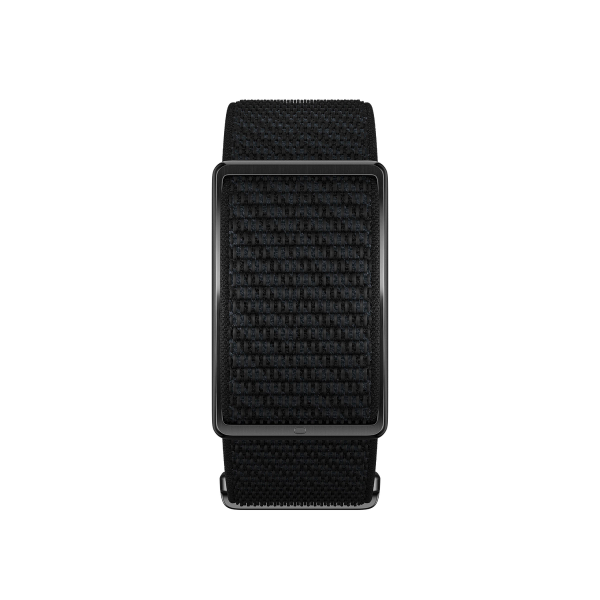
Cirqa's pod measures 27 × 47 × 9 mm and weighs 14.8 g, per Garmin. The fabric band goes on your wrist, or on your bicep with Garmin's $59.99 upper arm band. Tom's Guide found it lighter and comfier than WHOOP 5.0 but not as small or comfortable as the Fitbit Air. WHOOP can also be worn in several spots with its own bands and garments.
Sleep and recovery insights
WHOOP builds the day around three scores: Recovery, Sleep and Strain. Cirqa gives you Garmin's sleep score, sleep stages, sleep coach, HRV status, Body Battery and a nightly health status, all in the free Garmin Connect app. Both use HRV and resting heart rate overnight. Neither score is a medical measurement, and neither can tell you whether you're getting sick.
Training
This is Cirqa's clearest edge. You get Garmin's training readiness, training status, VO2 max (run), training load and recovery time. It also has a single button to start a favorite activity, connected GPS through your phone, and heart rate broadcast over ANT+ or Bluetooth to bikes and apps. WHOOP measures Strain and pulls GPS, pace and power in from Strava. If you already own a Garmin watch, Cirqa's data merges into the same Connect account.
App and ecosystem
Garmin Connect is free, and Connect+ ($6.99 a month or $69.99 a year) adds AI insights, guided workouts and a performance dashboard. On Cirqa, the coached cardio, strength and yoga workouts are Connect+ only. WHOOP's app is the product. Peak and Life add Healthspan, Stress Monitor and Health Monitor, and Life adds the ECG-based Heart Screener and Blood Pressure Insights.
Water resistance
Cirqa is rated 5 ATM, which Garmin defines as suitable for swimming. WHOOP's product pages don't list a water rating, but a WHOOP staff reply on WHOOP's community forum says WHOOP 5.0 is IP68, good for 10 meters for up to 2 hours, and not for diving.
The other no-subscription screenless bands
Fitbit Air
- Price: $99.99 (Special Edition $129.99; extra bands from $34.99).
- Subscription: Basic tracking is free: steps, sleep score and stages, heart rate, HRV, SpO2 and Readiness. The Gemini-built Google Health Coach needs Google Health Premium. Three months are included, then it renews at $9.99 a month.
- Battery: Up to 7 days, and a 5-minute charge gives about a day.
- Sensors: Optical heart rate, red and infrared SpO2 sensors, skin temperature and a gyroscope, in a 12 g package with the band.
- Who it fits: Pixel Watch owners who want something lighter for bed, and anyone after the lowest price among bands in stock. It needs a Google account and the Google Health app (Android 11 or iOS 16.4 and up). Premium is 18-plus.
Polar Loop
- Price: $199.99.
- Subscription: None. Polar's page says "No monthly fees. No locked features."
- Battery: Up to 8 days, with 4 weeks of onboard memory.
- Sensors: Polar's Precision Prime optical heart rate (Gen 3.5) and an accelerometer. Polar's spec sheet doesn't list SpO2. Nightly Recharge combines sleep, heart rate, HRV and breathing into a recovery read.
- Who it fits: People who want to pay once and never see an upsell. One catch: Polar says Loop can't broadcast heart rate to other devices, because its single Bluetooth connection is reserved for the Flow app.
Amazfit Helio Strap
- Price: $99.99, but Amazfit's US store showed it as sold out on Oct 4, 2026. The newer Helio Strap Pro is $199.99 and adds a waist motion sensor for HYROX-style training, with up to 11 days of battery.
- Subscription: Not required. Zepp Aura ($11.99 a month or $69.99 a year) adds sleep content, detailed sleep reports and AI recommendations.
- Battery: Up to 10 days.
- Sensors: PPG heart rate every second, SpO2, accelerometer, gyroscope and temperature.
- Who it fits: Gym and team-sport athletes. It's designed for the upper arm during training, broadcasts live heart rate to watches, treadmills and bike computers, and stores up to 21 days of heart rate offline. Amazfit doesn't include a USB-C cable.
Garmin Cirqa vs Fitbit Air
Pick Cirqa if you train and want Garmin's metrics. Pick Fitbit Air if you mostly want sleep tracking for the lowest price and like the idea of an AI coach.
Cirqa costs twice as much, but it adds a button, training readiness, VO2 max, heart rate broadcast and a longer claimed battery (10 days vs 7). Tom's Guide found Cirqa's battery better and its insights more detailed, but the Air smaller and more comfortable. The Air's coaching costs $9.99 a month after the trial, while Cirqa's core features are free. The Air also supports an FDA-cleared AFib alert feature, which Cirqa doesn't offer.
Are any of these "medical-grade"? (FDA status explained)
Mostly no. Two specific features have FDA clearance, and one feature drew an FDA warning letter.
WHOOP's ECG feature is FDA-cleared (510(k) K243236) as over-the-counter ECG software. FDA cleared it on April 4, 2025. It runs only on the WHOOP MG device, which comes with the $359 Life tier. That doesn't make WHOOP "FDA approved," and it doesn't cover WHOOP 5.0. You can check the record in FDA's 510(k) database.
Blood Pressure Insights is not FDA-cleared; FDA closed its 2025 warning letter after WHOOP changed the feature into a wellness feature. In a July 14, 2025 warning letter, FDA said the feature made WHOOP's product a medical device being marketed without clearance. In a June 17, 2026 close-out letter, quoted by MDDI Online, FDA said it "does not intend to enforce" device requirements for the feature "as modified," citing its updated general wellness guidance. That's a decision not to enforce, not a clearance. WHOOP's own page says the feature "is not a medical device."
Fitbit Air supports Google's Irregular Rhythm Notifications, which Google lists as available on Fitbit Air. FDA cleared this AFib alert software for compatible wrist-worn devices in 2022 (510(k) K212372). It isn't meant for people under 22 or anyone already diagnosed with AFib. Google's launch post labels the Air's heart rate tracking "not intended for medical purposes."
Garmin Cirqa, Polar Loop and Amazfit Helio Strap are consumer wellness devices; none is FDA-cleared. Polar says Loop "is not for medical purposes." Amazfit says the strap and Zepp App "are not medical devices." Cirqa's manual says, "This is not a medical device." Garmin's FDA-cleared ECG App (K221774) runs on certain Garmin watches with electrodes, and Cirqa's spec sheet doesn't list it.
What the terms mean: "FDA-cleared" means FDA reviewed a 510(k) for a specific feature. "FDA-registered" only means a company registered a facility and listed a product. A "wellness" product makes no medical claims and isn't reviewed.
How accurate are screenless trackers for sleep?
They're good at telling sleep from wake and much weaker at sleep stages. That's what lab studies of earlier models found, and as of our Oct 4, 2026 search, no one has published validation of these new bands.
In a 2022 lab study, 53 healthy adults slept one night wearing six devices alongside polysomnography (the clinical gold standard). For sleep vs wake, agreement ranged from 86% to 89%, including 86% for WHOOP 3.0, 89% for a Garmin Forerunner 245 and 87% for a Polar Vantage V. For individual sleep stages, agreement fell to 50% to 65%. The authors' research group receives support from WHOOP, which they say had no role in the study. (Miller et al., Sensors 2022)
Those were older models, so the results don't carry over to these bands. We searched PubMed and Europe PMC on Oct 4, 2026 and found no published sleep validation for any of the four.
Tracking can also backfire. In a 2025 American Academy of Sleep Medicine survey of 2,007 US adults, 48% had used a sleep tracker. AASM says 55% of adults act on what a tracker tells them (without saying whether that's all respondents or tracker users) and 76% have lost sleep worrying about sleep problems. The AASM's advice is to check your data only in the morning. (AASM) See sleepmaxxing, fact-checked.
Who should stick with WHOOP
Stay with WHOOP if battery life matters most, if you like one daily Recovery score telling you how hard to go, or if you want the ECG feature on WHOOP MG. WHOOP also sells blood panels to members, and our comparison of Superpower, Function Health and WHOOP's Advanced Labs blood panels covers what they test and cost. And if your real interest is stress, a wearable's "stress" score isn't the same as tracking stress with a cortisol test.
You can cancel WHOOP and return the device for a full refund, minus shipping, within 30 days of receipt.
What about a smart ring?
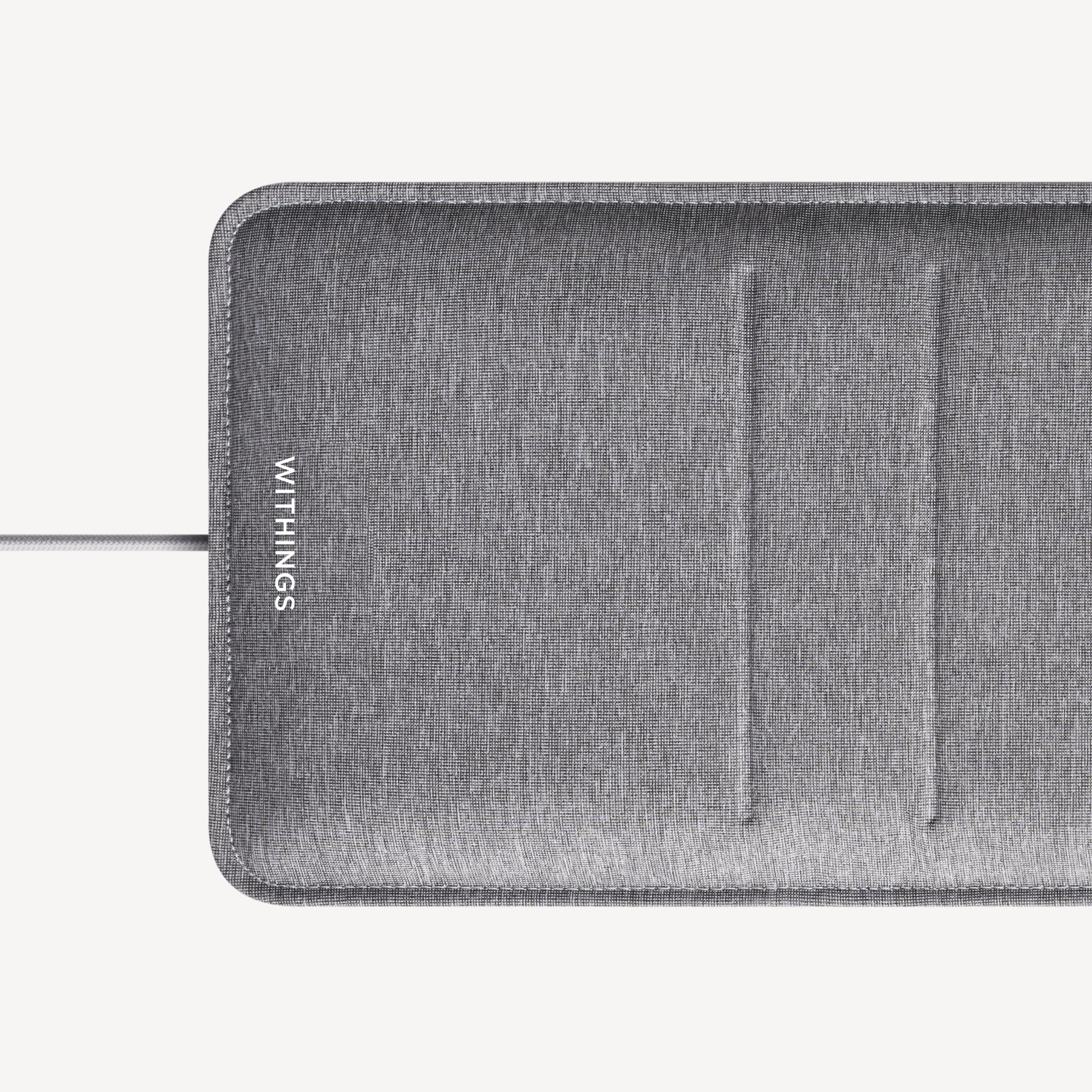
A ring does the same overnight job without a wrist strap. Oura sells the Oura Ring 4 and Oura Ring 5, both with a paid membership. Ultrahuman's Ring AIR isn't sold on its US store, which offered only a Ring PRO pre-order ($479, shipping "October 10th onwards") on Oct 4, 2026. If you'd rather wear nothing to bed, under-mattress options such as Withings Sleep or the Eight Sleep Pod Cover track from the bed instead. See WHOOP vs Oura.
FAQ
What is the best WHOOP alternative with no subscription?
It depends on what you use WHOOP for. For training metrics, consider the Garmin Cirqa ($199.99), and for no paid tier at all, the Polar Loop ($199.99). The Fitbit Air and Amazfit Helio Strap ($99.99 each) cost the least, though the Helio Strap was sold out in the US on Oct 4, 2026. WHOOP still leads on battery.
Does Garmin Cirqa need a subscription?
No. Sleep, recovery and training features work in the free Garmin Connect app. Connect+ is optional at $6.99 a month or $69.99 a year and adds AI insights and coached workouts.
Does Fitbit Air need a subscription?
Not for basic tracking. The Google Health Coach needs Google Health Premium, which is included for 3 months and then costs $9.99 a month, unless you have Google AI Pro or Ultra.
Is WHOOP FDA approved?
No. WHOOP's ECG feature is FDA-cleared (510(k) K243236) and runs on WHOOP MG only. Blood Pressure Insights isn't cleared; FDA closed its warning letter in June 2026 after WHOOP modified the feature.
What is the WHOOP controversy?
In July 2025, FDA warned WHOOP that Blood Pressure Insights was an uncleared medical device. WHOOP pushed back, arguing it was a wellness feature, then modified it. FDA closed the matter in June 2026 without clearing it.
Is WHOOP useless without a membership?
Mostly, yes. WHOOP doesn't sell the band separately, and its terms say you need an active membership to use the service. You can request a copy of your data after it ends.
Can I pay with HSA or FSA funds?
WHOOP says its memberships are HSA/FSA eligible. Google says to pay for Fitbit Air normally, then submit the receipt to your plan. Garmin, Polar and Amazfit don't say on the pages we checked. Your plan administrator decides.
Is the Amazfit Helio Strap good for the gym?
Yes, that's its design: upper-arm wear during training, live heart rate broadcast and recognition of 25 strength movements. It was sold out on Amazfit's US store on Oct 4, 2026; the Helio Strap Pro is $199.99.
How we researched this
We used official US product pages, help centers and terms from WHOOP, Garmin, Google, Polar and Amazfit, checked Oct 4, 2026 (PT). We queried FDA's openFDA 510(k) and registration databases the same day. Hands-on impressions come from Tom's Guide and DC Rainmaker, credited above. We haven't tested these bands, and there are no affiliate links on this page. See our affiliate disclosure and how listings are added.
Last checked: Oct 4, 2026.
Disclaimer: This article is for information only and is not medical advice. Fitness trackers are wellness devices; they don't diagnose sleep disorders or heart conditions. If you have symptoms such as chest pain, palpitations, fainting or loud snoring with daytime sleepiness, see a clinician. BiohackList may earn commissions from qualifying purchases in the future.
Sources
- Garmin, 'Garmin announces CIRQA, a screenless health & fitness tracker' (Jul 21, 2026)
- Garmin CIRQA Smart Band product and spec page ($199.99; 27 x 47 x 9 mm; 14.8 g module; 5 ATM; up to 10 days) (checked 2026-10-04)
- Garmin CIRQA Upper Arm Band ($59.99) (checked 2026-10-04)
- Garmin, 'Elevate your health and fitness goals with Garmin Connect+' (Mar 27, 2025; $6.99/month or $69.99/year)
- WHOOP membership page (One $199/yr, Peak $239/yr, Life $359/yr; HSA/FSA eligible; 14+ day battery; 30-day return; lifetime warranty with active membership) (checked 2026-10-04)
- WHOOP, 'Introducing WHOOP 5.0 and WHOOP MG' (May 8, 2025; ECG 'available exclusively on WHOOP MG')
- WHOOP Terms of Use (active membership required to use the Services) (checked 2026-10-04)
- WHOOP Community, WHOOP staff reply on WHOOP 5.0 water resistance (IP68, 10 m for up to 2 hours); no water rating found on WHOOP's membership, launch or compliance pages (checked 2026-10-04)
- Lifehacker, Beth Skwarecki, 'Whoop 5.0 Review' (Nov 6, 2025; tested the WHOOP MG; one week drained about 35% of the battery)
- Ultrahuman US ring buy page (Ring PRO only, $479 pre-order, shipping 'October 10th onwards'; no Ring AIR) (checked 2026-10-04)
- Ultrahuman, 'Ultrahuman is back in the U.S. - Ring PRO open for pre-orders' (Mar 24, 2026)
- Google, 'Introducing the all-new Fitbit Air' (May 7, 2026)
- Google Store, Fitbit Air product and tech specs pages (from $99.99; up to 7 days; 50 m; 12 g with band) (checked 2026-10-04)
- Google Health Help, Irregular Rhythm Notifications supported devices (lists Google Fitbit Air) (checked 2026-10-04)
- Polar Loop product page ($199.99; up to 8 days; WR30; 29 g; 'not for medical purposes') (checked 2026-10-04)
- Amazfit Helio Strap product page ($99.99, shown as sold out on 2026-10-04 at 1:41 PM PT re-check; up to 10 days; 5 ATM; 20 g; 'not medical devices') (checked 2026-10-04)
- Amazfit Helio Strap Pro product page ($199.99; up to 11 days) (checked 2026-10-04)
- Amazfit, Zepp Aura page ($11.99/month or $69.99/year) (checked 2026-10-04)
- FDA 510(k) K243236, WHOOP ECG Feature
- FDA 510(k) K212372, Fitbit Irregular Rhythm Notifications
- FDA Warning Letter to WHOOP, Inc., CMS 709755 (Jul 14, 2025)
- MDDI Online, 'FDA Closes Warning Letter Against Whoop's Blood Pressure Feature' (quotes the Jun 17, 2026 close-out letter)
- Boston Globe, 'FDA drops enforcement against Whoop after it tweaks blood pressure feature' (Jun 24, 2026)
- FDA, General Wellness: Policy for Low Risk Devices
- Tom's Guide, Dan Bracaglia, Garmin Cirqa review (two weeks of wear)
- DC Rainmaker, 'Garmin Cirqa In-Depth Review: Reality vs Expectations (After 30 Days)' (Aug 2026)
- Miller DJ, Sargent C, Roach GD. A validation of six wearable devices for estimating sleep, heart rate and heart rate variability in healthy adults. Sensors 2022;22:6317. doi:10.3390/s22166317
- American Academy of Sleep Medicine, 2025 Sleep Prioritization Survey release