Sauna Blanket Guide 2026: Best Picks, Safety and EMF
On this page
- What a sauna blanket is (and how it differs from an infrared sauna)
- Do sauna blankets work? What the evidence says
- Sauna blanket EMF: what "low EMF" really means
- The units, in one minute
- The official exposure limits
- What brands claim
- What the health evidence says
- What's unknown
- The best sauna blankets compared
- HigherDOSE Infrared Sauna Blanket
- Bon Charge Infrared Sauna Blanket
- Saunny and SaunaBox
- MiHIGH
- A note on FDA status
- How to use a sauna blanket safely
- Sauna blanket vs infrared sauna cabin
- FAQ
- Sources
Disclaimer: This article is for information only and is not medical advice. Heat exposure can be risky. Talk to a clinician before using a sauna blanket if you are pregnant, have heart disease, low or high blood pressure, diabetes, or another chronic condition, or take medicines that affect heat tolerance or sweating. Don't use one after drinking alcohol. Stop if you feel dizzy or unwell. BiohackList didn't measure EMF itself; the limits and figures here come from the official sources cited. BiohackList may earn commissions from qualifying purchases in the future (disclosure).
A sauna blanket is a heated wrap, shaped like a sleeping bag, that costs about $180 to $700. It can get you hot and sweaty in a small space. The health research on sauna bathing is mostly on traditional Finnish saunas, not blankets. WHO says electric and magnetic fields (EMF) exist close to any appliance that carries electricity, so every blanket gives off some, but no brand we checked publishes measured values, so "low EMF" can't be verified from the outside.
No listing on this page is paid or sponsored.
What a sauna blanket is (and how it differs from an infrared sauna)
A sauna blanket is a padded, zip-up bag with flat heating elements in its layers. You lie inside with your head out, and a controller sets temperature and timer. Most are marketed as "far infrared", meaning they warm you mainly by radiant heat.
An infrared sauna cabin is a small wooden room with heater panels in the walls; you sit upright, some distance from the heaters. A pop-up tent sauna is a fabric enclosure with panels inside and your head out the top. A traditional sauna heats the air.
The practical difference is distance. In a blanket, the heating elements sit in the layers around you for the whole session; in a cabin, the panels are farther away. That matters for comfort and for EMF.
Do sauna blankets work? What the evidence says
Sauna blankets do what they're designed for. They can raise your body temperature and make you sweat. We found no study testing whether they deliver the health effects linked to sauna bathing.
The study most people quote is a Finnish cohort published in JAMA Internal Medicine in 2015. Researchers followed 2,315 men aged 42 to 60 for a median of 20.7 years. Men who used a sauna 4 to 7 times a week had a lower rate of sudden cardiac death than men who went once a week (adjusted hazard ratio 0.37). This was an observational study of traditional saunas. It shows an association, not cause and effect, and it says nothing direct about blankets.
A 2018 systematic review of the clinical effects of regular dry sauna bathing found 40 studies, only 13 of them randomized trials, most of them small. It reported one adverse finding: reversible disruption of sperm production in a study of 10 men.
We searched PubMed for trials of consumer sauna blankets and found none in healthy people, only studies of Waon therapy, a Japanese clinical warm-sauna treatment for patients.
Keep expectations simple. A blanket can give you sustained heat and sweat at home. Treat claims about detox, calories burned, weight loss or stress hormones as unproven, because we found no good blanket data behind them.
Sauna blanket EMF: what "low EMF" really means
Every sauna blanket gives off some EMF, because WHO notes that these fields exist close to any appliance that carries electricity. The brands we checked all call theirs low, but none publishes a measured value, a distance or a test standard.
The units, in one minute
Mains power runs at 60 Hz in the US and 50 Hz in Europe: extremely low frequency (ELF), which the National Cancer Institute (NCI) defines as up to 300 Hz.
The NCI describes two fields:
- Electric fields come from voltage, are measured in volts per meter (V/m), and exist whenever the device is plugged in, even if switched off (NCI).
- Magnetic fields come from current, are measured in microtesla (µT), and exist only while current flows (NCI). WHO notes that some countries use gauss, where 10,000 G equal 1 T, so 1 µT equals 10 milligauss (mG).
WHO says both fields diminish with distance from the source. NIEHS says magnetic field strength "decreases dramatically with increasing distance from the source", and the NCI says fields from most appliances "drop precipitously" about 1 foot away. In a blanket, though, you lie inside the layers that hold the heating elements, far closer than a foot.
For scale, WHO puts average home magnetic fields at about 0.07 µT (0.7 mG) in Europe and 0.11 µT (1.1 mG) in North America, and says fields right next to some appliances can reach a few hundred µT.
The official exposure limits
The main international guideline is from the International Commission on Non-Ionizing Radiation Protection (ICNIRP), published in 2010. ICNIRP's site still lists them, and a June 2026 news item mentions a revision under way. For the general public at power frequencies, the 2010 reference levels are:
| Frequency | Electric field | Magnetic field |
|---|---|---|
| 50 Hz (Europe) | 5 kV/m (5,000 V/m) | 200 µT (2,000 mG) |
| 60 Hz (US) | about 4.17 kV/m (250/f kV/m) | 200 µT (2,000 mG) |
Two caveats matter. First, ICNIRP says: "For a very localized source with a distance of a few centimeters from the body, the only realistic option for the exposure assessment is to determine dosimetrically the induced electric field, case by case." In our reading, a blanket is that kind of source. Second, "body voltage", a reading some EMF sellers use, is not an ICNIRP quantity and can't be compared with these limits.
There is a test standard for household appliances, IEC 62233 (edition 1.0, 2005), which sets measuring methods, distance and position from 10 Hz to 400 kHz. IEC lists it with a stability date of 2026, when it is due for review, and we found no newer edition. A brand could back a low EMF claim with a test to it.
What brands claim
From each brand's official product page, Oct 7, 2026:
| Brand | What it says about EMF | Number, distance or lab given? |
|---|---|---|
| HigherDOSE | Describes "a charcoal layer to mitigate EMF and ELF"; spec line reads "Electrical Field: Low EMF" | No |
| Bon Charge | "Low EMF design" and "Low EMF Infrared Heating" | No |
| Saunny | "Ultra-low EMF technology, well below safety thresholds. It has been independently tested" | No lab, standard or result named |
| MiHIGH | "Our blankets have been made specifically with low EMF heating" | No |
| SaunaBox | No EMF claim on the blanket page. Its IEC 62233 claims cover its cabin saunas, not the blanket | Not for the blanket |
We found no official definition of "low EMF" for consumer products, and no independent, standardized measurement of these blankets from a regulator, standards body or journal. We left out review sites' meter readings because methods and distances vary. We didn't measure anything ourselves.
What the health evidence says
In 2002 the International Agency for Research on Cancer (IARC) classified ELF magnetic fields as "possibly carcinogenic to humans" (Group 2B). WHO explains that this category is used for limited evidence in humans and less than sufficient evidence in animals, and that other examples include coffee and welding fumes. The classification rests mainly on pooled studies that found about twice the rate of childhood leukemia when long-term average home exposure was above 0.3 to 0.4 µT (3 to 4 mG).
WHO's 2007 fact sheet, the newest on ELF fields we found, says that evidence "is not strong enough to be considered causal", citing possible selection bias, no accepted biological mechanism, and largely negative animal studies. The NCI says no mechanism by which ELF fields could cause cancer has been identified.
That research concerns round-the-clock home exposure, mostly in children. Blanket sessions are shorter, with timers of up to 60 minutes on the models we checked, though at close range. The NCI notes that appliances add less to total exposure because they are used for short periods.
What's unknown
- Actual field strength inside each blanket. No brand we checked publishes it, and we found no independent standardized measurement.
- How a blanket compares with ICNIRP limits. We found no published case-by-case calculation for any sauna blanket.
- Health effects of sauna blanket EMF. We found no study that has examined them.
To keep exposure low anyway, keep the controller and cord away from your body, unplug when done, and ask brands for measured values.
The best sauna blankets compared
We haven't tested these blankets. The details below come from each brand's official page, checked Oct 7, 2026. Prices change often, and sale prices are labeled.
| Blanket | Price | Power | Temperature | Timer | EMF claim | Notes |
|---|---|---|---|---|---|---|
| HigherDOSE | $699 | 350 to 420 W | Up to 175°F | 1 hour | "Low EMF", charcoal layer; no numbers | 1-year limited warranty; variant includes a towel insert |
| Bon Charge | $699 (US 110 to 120V model) | 600 W | 77 to 176°F | 5 to 60 min | "Low EMF design"; no numbers | 30-day returns, 1-year warranty; brand says HSA/FSA eligible |
| Saunny | $599 sale (was $899) | 600 W | 77 to 176°F | 5 to 60 min | "Independently tested"; no details | Site says "FDA Cleared"; we found no K-number |
| SaunaBox | $399 sale (was $499) | 600 W | 77 to 176°F | 5 to 60 min | None on blanket page | Lowest current price in our check |
| MiHIGH | $179 to $199 (unavailable) | Not checked | Not checked | Not checked | "Low EMF heating"; no numbers | Both colors still sold out on Oct 31 |
Prices checked Oct 31, 2026. Sale prices can end without notice.
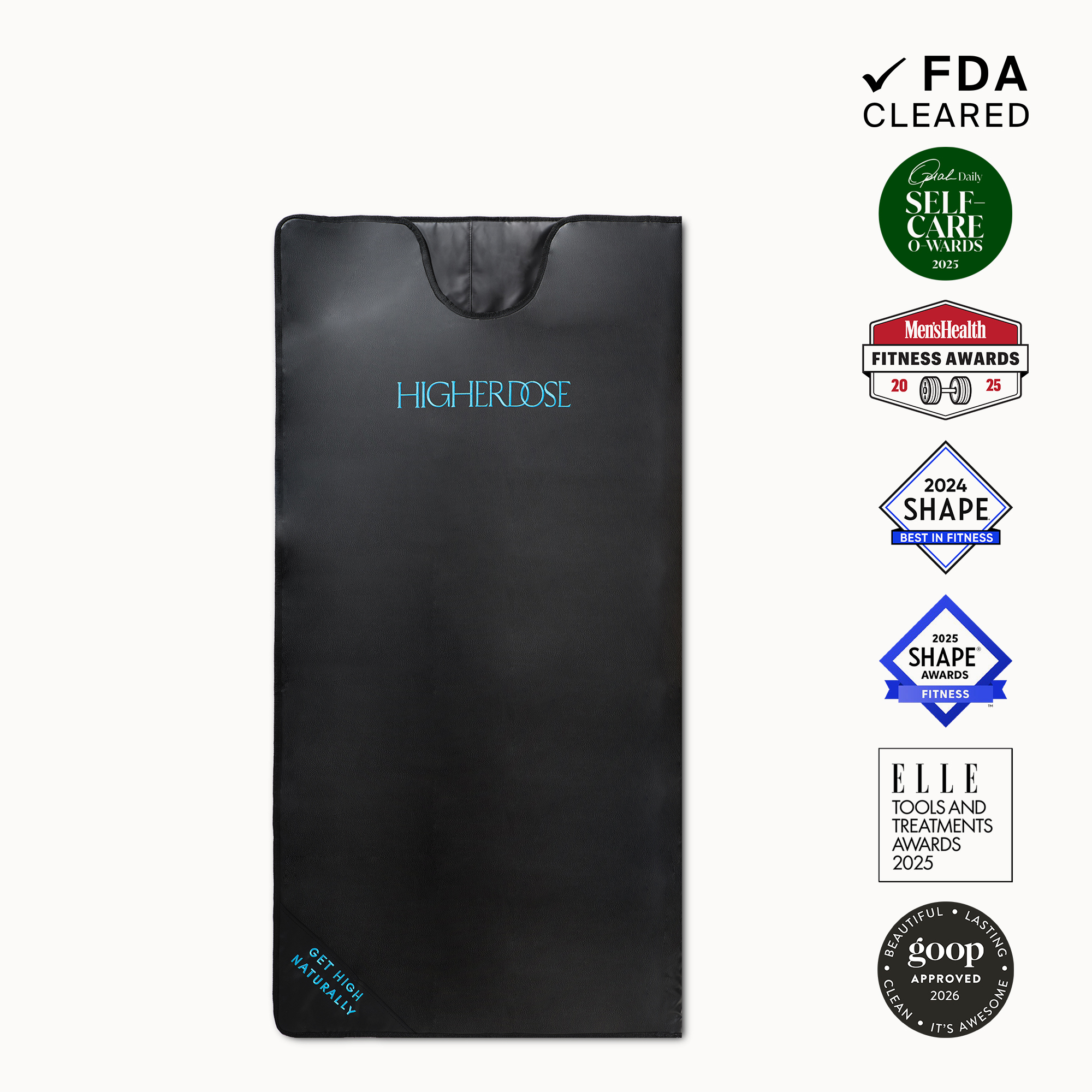
HigherDOSE Infrared Sauna Blanket
HigherDOSE is the only blanket here with a live BiohackList listing. Its page describes a charcoal layer meant to reduce EMF and ELF but gives no measurements. The FDA's registration database lists Higher Dose LLC under the product code for therapeutic infrared heating lamps. A listing is a registration step, not FDA clearance, and we found no 510(k) for the company.
Bon Charge Infrared Sauna Blanket
Bon Charge matches HigherDOSE on price at $699 for the US model, with 600 W and 77 to 176°F. It says it holds SAA certification, an Australian electrical safety mark, which is about electrical safety rather than EMF levels.
Saunny and SaunaBox
Saunny and SaunaBox list nearly identical specs, and SaunaBox is cheaper. Saunny's site says the blanket is "FDA Cleared" and a "Class II Medical Device". We searched the FDA's 510(k) and registration databases and found no entry under the Saunny name, so we can't confirm either claim.
MiHIGH
MiHIGH's blanket was listed at $179 (Cream) and $199 (Black) but both were still unavailable when we checked on Oct 31, 2026. Its FAQ says the blankets are made with low EMF heating and are "CE approved". CE marking is the manufacturer's own declaration that a product meets EU requirements; the European Commission says it does not mean the EU or another authority has approved the product as safe.
A note on FDA status
Sauna blankets are sold as consumer wellness products. We found no FDA 510(k) clearance for one. Several are registered and listed under the code for powered heating pads, with no K-number. Registration and listing are not clearance or approval.
How to use a sauna blanket safely
These are general precautions, not medical advice. Follow your blanket's manual first.
- Start short and low. HigherDOSE suggests 30 to 40 minute sessions to start.
- Keep your head out. Bon Charge's instructions say to keep your head and neck outside the blanket.
- Hydrate. Drink water before and after. An electrolyte drink such as LMNT is an option if you sweat heavily.
- Skip alcohol. Don't use a blanket after drinking.
- Stop if you feel unwell. Dizziness, nausea, a racing heart or a headache are reasons to get out and cool down.
- Check with a clinician first if you are pregnant, have heart disease, blood pressure problems, diabetes or another chronic condition, or take medicines that affect heat tolerance or sweating.
- If you're trying to conceive, note that the 2018 review linked regular sauna use with reversible changes in sperm production in a small study.
Sauna blanket vs infrared sauna cabin
A blanket wins on price and space: it folds into a closet and costs a fraction of a cabin. A cabin wins on comfort and distance, since you sit upright and the panels are farther from your body.
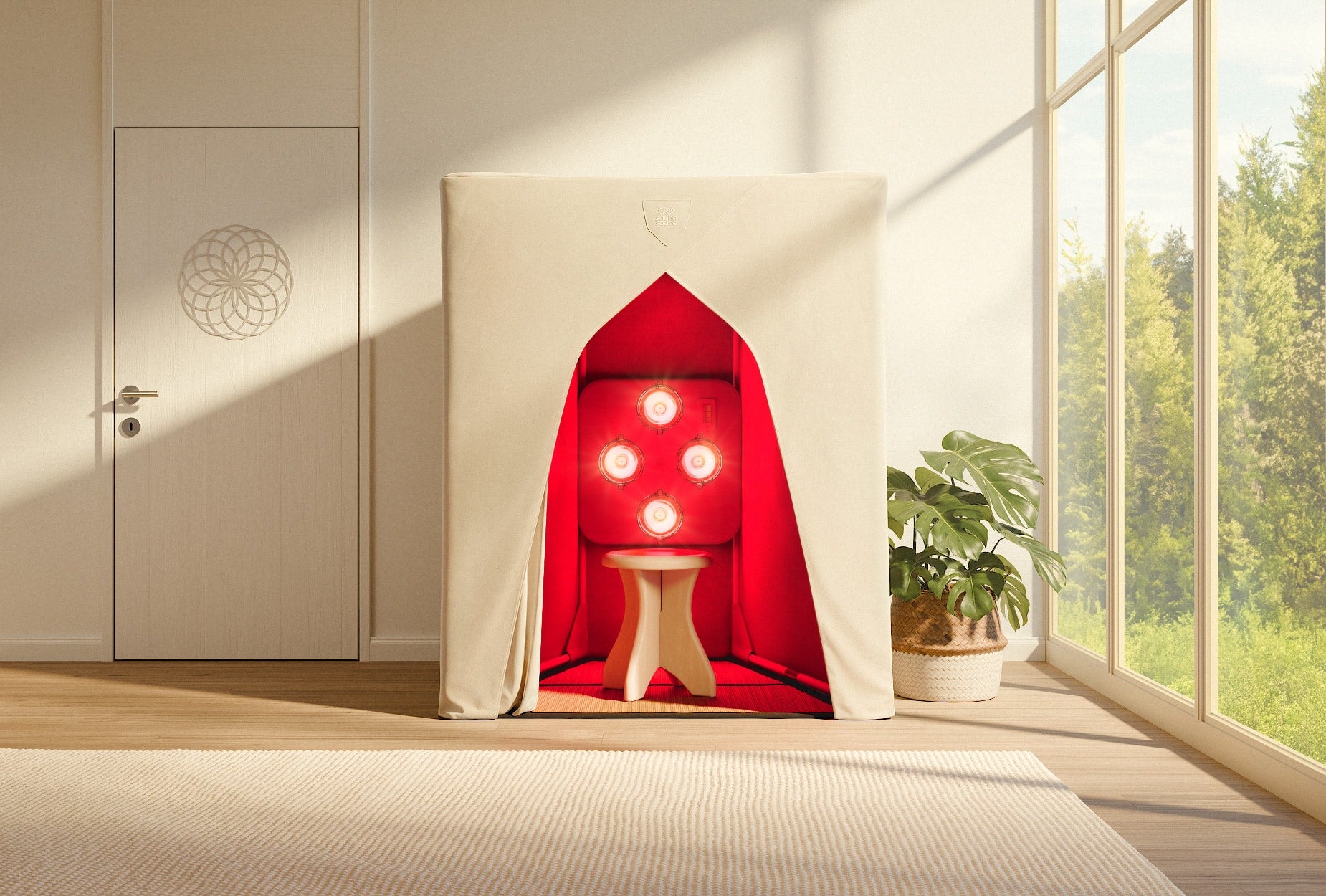
BiohackList lists several cabins: the Clearlight Sanctuary 1 and Sanctuary 2, the Sunlighten mPulse Aspire, and the SaunaSpace Firelight, which uses incandescent near-infrared bulbs instead of panels. Ask cabin brands for measured EMF values too. If you are thinking of pairing heat with cold, see our sauna and cold plunge guide.
Infrared heat also differs from red light therapy, which uses visible red and near-infrared LEDs at much lower power. Our red light therapy guide covers that.
FAQ
Do sauna blankets really work? They make you hot and sweaty, which is what they are built to do. Whether that brings health benefits is unproven. The best-known sauna research was observational and followed Finnish men using traditional saunas. We found no published trials of consumer sauna blankets in healthy people.
How long should you stay in a sauna blanket? Follow the manufacturer's instructions and start short. HigherDOSE suggests starting with 30 to 40 minute sessions, and the timers on the blankets we checked run up to 60 minutes. Get out sooner if you feel dizzy, sick or overheated.
Do sauna blankets emit EMF? Yes. WHO says electric and magnetic fields exist close to any appliance that carries electricity. How strong they are at your skin depends on the design and the distance. None of the brands we checked published measured values, a distance or a test standard.
What does low EMF mean on a sauna blanket? It has no official definition and works as a marketing term. A meaningful claim gives the magnetic field in µT or mG, the electric field in V/m, the measuring distance, and the lab and standard used, such as IEC 62233.
Is EMF from a sauna blanket harmful? We found no study of sauna blanket EMF specifically, so that is unknown. IARC classed low-frequency magnetic fields as possibly carcinogenic in 2002, based on limited evidence from children with long-term home exposure. WHO's 2007 fact sheet says that evidence is not strong enough to be considered causal.
Are sauna blankets FDA-cleared? We found no FDA 510(k) clearance for any sauna blanket in the FDA's public database. Some makers are registered with the FDA and list a device, which is not clearance or approval. One brand's site says FDA cleared, but we found no K-number to support it.
Disclaimer: This article is for information only and is not medical advice. Heat exposure can be risky. Talk to a clinician before using a sauna blanket if you are pregnant, have heart disease, low or high blood pressure, diabetes, or another chronic condition, or take medicines that affect heat tolerance or sweating. Don't use one after drinking alcohol. Stop if you feel dizzy or unwell. BiohackList didn't measure EMF itself; the limits and figures here come from the official sources cited. BiohackList may earn commissions from qualifying purchases in the future (disclosure).
Sources
- National Cancer Institute. Electromagnetic Fields and Cancer (fact sheet, reviewed May 30, 2022)
- World Health Organization. Electromagnetic fields and public health: exposure to extremely low frequency fields (Fact Sheet 322, 2007)
- National Institute of Environmental Health Sciences. Electric and Magnetic Fields (reviewed June 17, 2026)
- ICNIRP. Guidelines for limiting exposure to time-varying electric and magnetic fields (1 Hz to 100 kHz). Health Phys. 2010;99(6):818-836
- IEC 62233:2005 (edition 1.0, stability date 2026). Measurement methods for electromagnetic fields of household appliances and similar apparatus with regard to human exposure
- ICNIRP. Low frequency (1 Hz to 100 kHz) overview page, listing the 2010 guidelines and 2026 revision news (checked Oct 7, 2026)
- European Commission. CE marking
- IARC Monographs Volume 80 (2002). Non-ionizing radiation, Part 1: static and extremely low-frequency (ELF) electric and magnetic fields.
- Laukkanen T, Khan H, Zaccardi F, Laukkanen JA. Association between sauna bathing and fatal cardiovascular and all-cause mortality events. JAMA Intern Med. 2015;175(4):542-548. doi:10.1001/jamainternmed.2014.8187
- Hussain J, Cohen M. Clinical effects of regular dry sauna bathing: a systematic review. Evid Based Complement Alternat Med. 2018. PMID 29849692
- U.S. FDA. 510(k) Premarket Notification and Establishment Registration and Device Listing databases (searched via openFDA, Oct 7, 2026)
- HigherDOSE Infrared Sauna Blanket product page (checked Oct 7, 2026)
- Bon Charge Infrared Sauna Blanket product page (checked Oct 7, 2026)
- Saunny Infrared Sauna Blanket product page (checked Oct 31, 2026)
- SaunaBox Sauna Blanket product page (checked Oct 31, 2026)
- MiHIGH Infrared Sauna Blanket product page (checked Oct 31, 2026)
FAQ
Do sauna blankets really work?
They make you hot and sweaty, which is what they are built to do. Whether that brings health benefits is unproven. The best-known sauna research was observational and followed Finnish men using traditional saunas. We found no published trials of consumer sauna blankets in healthy people.
How long should you stay in a sauna blanket?
Follow the manufacturer's instructions and start short. HigherDOSE suggests starting with 30 to 40 minute sessions, and the timers on the blankets we checked run up to 60 minutes. Get out sooner if you feel dizzy, sick or overheated.
Do sauna blankets emit EMF?
Yes. WHO says electric and magnetic fields exist close to any appliance that carries electricity. How strong they are at your skin depends on the design and the distance. None of the brands we checked published measured values, a distance or a test standard.
What does low EMF mean on a sauna blanket?
It has no official definition and works as a marketing term. A meaningful claim gives the magnetic field in µT or mG, the electric field in V/m, the measuring distance, and the lab and standard used, such as IEC 62233.
Is EMF from a sauna blanket harmful?
We found no study of sauna blanket EMF specifically, so that is unknown. IARC classed low-frequency magnetic fields as possibly carcinogenic in 2002, based on limited evidence from children with long-term home exposure. WHO's 2007 fact sheet says that evidence is not strong enough to be considered causal.
Are sauna blankets FDA-cleared?
We found no FDA 510(k) clearance for any sauna blanket in the FDA's public database. Some makers are registered with the FDA and list a device, which is not clearance or approval. One brand's site says FDA cleared, but we found no K-number to support it.
Products in this article
Home sauna
HigherDOSE Infrared Sauna Blanket
HigherDOSE
Portable far-infrared sauna blanket designed for home plug-in heat sessions.
Home sauna
Clearlight Sanctuary 1 Infrared Sauna
Clearlight
One-person full-spectrum infrared home sauna cabin from Clearlight.
Home sauna
Clearlight Sanctuary 2 Infrared Sauna
Clearlight
Two-person full-spectrum infrared home sauna cabin from Clearlight.

Home sauna
Sunlighten mPulse Aspire
Sunlighten
One-person mPulse infrared sauna with separately controlled red, near-, mid-, and far-infrared.
Home sauna
SaunaSpace FireLight Infrared Sauna
SaunaSpace
Portable near-infrared and red light sauna enclosure using FireLight incandescent bulbs.
Supplements
LMNT Recharge Electrolyte Drink Mix
LMNT
Zero-sugar electrolyte drink mix stick packs with sodium, potassium, and magnesium.