Sauna and Cold Plunge: Order, Timing and What Studies Show
On this page
- What is contrast therapy (hot cold therapy)?
- Sauna or cold plunge first? The order question
- Does stacking work? What the data shows
- Wearable data: Terra's analysis
- Contrast water therapy trials
- Long-term sauna studies
- Cold plunge before or after a workout? The muscle-growth caveat
- How long and how cold: cold plunge temperature and timing
- Who should not do sauna and cold plunge
- Home setups by budget
- Heat
- Cold
- Combos
- FAQ
- Is it good to do sauna then cold plunge?
- Should you do sauna or cold plunge first?
- What is contrast therapy?
- Does contrast therapy work?
- How cold should a cold plunge be, and for how long?
- Should I cold plunge after lifting weights?
- How often should you do a sauna and cold plunge?
- Who should not do sauna and cold plunge?
- Sources
Disclaimer: This article is for information only and is not medical advice. Saunas and cold plunges put real stress on your heart and blood vessels. Talk to a clinician first if you have heart or blood pressure problems, are pregnant, have Raynaud's, or take medicines that affect heat or cold tolerance. Don't use either after drinking alcohol, don't cold plunge alone, and stop if you feel dizzy or unwell. BiohackList may earn commissions from qualifying purchases in the future.
Doing a sauna and cold plunge together is usually fine for healthy adults, and a common order is heat, then cold. But no trial shows the combination beats a sauna alone. The largest dataset we found, about 31,000 days of wearable data in a company-run, observational analysis that isn't peer-reviewed, did not show extra benefit from adding cold on the overnight measures it tracked. If you lift weights to build muscle, keep cold plunges away from your sessions.
In 30 seconds
- Sauna and cold plunge are often stacked, but no trial we found has tested the combination against a sauna alone.
- In 31,424 days of wearable data (company-run, observational, not peer-reviewed), sauna days lined up with small overnight HRV and heart rate changes. Adding cold did not show extra benefit on these measures.
- Contrast water therapy reduces post-exercise soreness compared with rest, about as well as other recovery methods.
- If you lift for muscle, don't plunge straight after training.
- Talk to a clinician first if you have heart or blood pressure issues.
No listing on this page is paid or sponsored.
What is contrast therapy (hot cold therapy)?
Contrast therapy means alternating heat and cold, also called hot cold therapy. A few terms are worth separating:
- Traditional sauna. A hot, dry room heated by a stove, often with water thrown on rocks for steam. The long-term Finnish research below studied this kind.
- Infrared sauna. A cabin or blanket that warms you with infrared heaters. The home cabins listed below are infrared models.
- Cold plunge. Sitting in cold water up to the chest or neck, in an ice bath or a tub with a chiller.
- Contrast water therapy. The research version: alternating hot and cold baths, usually after exercise. Most of the controlled evidence on "contrast" is about this, not about saunas.
Heat and light are different things. Our red light therapy at home guide covers that difference.
Sauna or cold plunge first? The order question
A common order is sauna then cold plunge, sometimes repeated a few times. It has not been tested against the reverse order in any trial we found, so treat it as habit, not evidence.
One reason given for going heat first is that you enter the cold already warm. A cold plunge after sauna can also cool you down before you get dressed. Finishing warm or cold is a matter of comfort. We found no study that compares the two.
Two safety points matter more than order:
- Move slowly between the two. Heat widens blood vessels and cold narrows them. Standing up fast after a hot sauna can make you lightheaded. Sit for a moment before you get into the water.
- Enter the cold carefully. The first minutes in cold water bring on a gasp and fast breathing (more on this in the safety section).
Does stacking work? What the data shows
Short answer: we found no controlled trial of sauna plus cold plunge versus either one alone. What exists is one large observational dataset, a body of small contrast water trials, and long-term sauna cohort studies.
Wearable data: Terra's analysis
Terra, a company that handles wearable data, published an analysis in June 2026 of 31,424 days from people who logged a sauna (22,088 days), a cold plunge (7,195 days), or both (2,141 days). This is company-run observational work. It has not been peer-reviewed, and it is not a controlled trial.
What it reported:
- Sauna alone: heart rate variability (HRV) rose by about 0.85 ms the night of the sauna and 0.69 ms the night after. Resting and sleeping heart rate fell by about half a beat per minute. Terra reports all six measures as statistically significant.
- Cold alone: HRV rose about 0.3 ms, but only one of six measures reached significance.
- Both: heart rate fell by about as much as with sauna alone, but the HRV change was not statistically significant, unlike with sauna alone.
Terra compared each person with their own baseline and adjusted for factors such as activity, illness, alcohol, caffeine, stress and travel. Even so, people choose when to sauna, and that choice can line up with other things that affect sleep. The effects are also small: under 1 ms of HRV and half a beat per minute. The data covers overnight heart metrics only, not soreness, mood or performance.
The fair reading: in this dataset, the sauna days showed the overnight changes, and adding cold did not show extra benefit on these measures.
Contrast water therapy trials
The best summary of controlled trials is a 2013 systematic review and meta-analysis by Bieuzen, Bleakley and Costello in PLoS One. It included 18 trials, and all 18 had a high risk of bias.
Pooled results showed contrast water therapy reduced muscle soreness and strength loss after exercise compared with passive rest, at every follow-up point up to 96 hours. When compared with other recovery methods, such as cold water immersion, warm water immersion, compression, active recovery and stretching, the authors found little evidence that any one was better.
So contrast therapy seems to help soreness more than doing nothing, and about as much as other common options. These trials used alternating baths, not saunas, so apply them to a sauna and cold plunge routine with care.
Long-term sauna studies
The sauna research most people quote comes from Finland. In a 2015 JAMA Internal Medicine study, Laukkanen and colleagues followed 2,315 middle-aged men from Eastern Finland for a median of about 21 years. Men who reported more frequent sauna sessions had lower rates of sudden cardiac death, fatal heart disease and death from any cause, after adjusting for known risk factors.
Two limits matter. It is an observational study, so it shows an association, not cause. And it studied traditional Finnish saunas in men, not infrared cabins, blankets, women, or cold plunges. None of it tells you what adding cold does.
Cold plunge before or after a workout? The muscle-growth caveat
If your goal is building muscle, don't plunge straight after lifting. This is probably the clearest practical finding in the cold research.
- The 12-week trial. Roberts and colleagues (Journal of Physiology, 2015) had 21 active men strength train twice a week for 12 weeks. After each session, they did either 10 minutes of cold water immersion at about 10°C (50°F) or active recovery on a bike. Muscle mass and strength rose more in the active recovery group. A second experiment in the same paper found that cold water dampened markers of muscle growth signaling in the days after a workout.
- The meta-analysis. Piñero and colleagues (European Journal of Sport Science, 2024) pooled 8 studies and found cold water immersion right after resistance training likely reduces muscle growth by a small amount. People still gained muscle, just less. The authors rated the studies fair to poor in quality.
What about waiting a few hours? Nobody knows yet. The 2024 authors note that the studies applied cold soon after training, and that it is unknown whether using it several hours later, or only now and then, changes the result. Until better data exists, the cautious choice is to plunge on rest days or well apart from strength sessions.
This caveat is about muscle growth from strength training. We did not find enough evidence to give separate advice for endurance training or for recovery between two sessions on the same day, so we don't.
How long and how cold: cold plunge temperature and timing
There is no standard dose for a cold plunge or a sauna. The ranges below come from research settings, not prescriptions.
Cold plunge temperature and how long to cold plunge. A 2016 meta-analysis in Sports Medicine by Machado and colleagues looked at nine randomized trials of cold water immersion versus passive recovery after exercise. The benefit for soreness was slight. The best results came at water temperatures of 11 to 15°C (about 52 to 59°F) and immersion times of 11 to 15 minutes. The authors flagged the studies as at risk of bias and called for better ones. The Roberts trial used 10 minutes at about 10°C (50°F).
Those are study protocols for trained people after exercise. If you're new, start warmer and shorter, and build up only if it feels fine.
Sauna session length. In the Finnish cohort, men reported sessions of under 11 minutes, 11 to 19 minutes, or more than 19 minutes. Longer sessions were linked with lower rates of fatal heart events, but again this is an association. It is not a recommended duration. Leave whenever you feel too hot, dizzy or unwell.
How often. No study we found sets a frequency for combining the two. The Finnish study grouped men by one, two to three, or four to seven sessions a week. Terra's analysis counted days, not weekly totals.
Who should not do sauna and cold plunge
Heat and cold both put stress on your heart and blood vessels. In heat, your heart rate goes up and blood pressure can drop. Cold triggers what researchers call the cold shock response: an involuntary gasp, fast breathing, a jump in heart rate and a rise in blood pressure. A review by Datta and Tipton describes these responses peaking within about 30 seconds and settling over the first 3 minutes for most people. The US National Weather Service warns that the gasp and fast breathing raise the risk of drowning, even for strong swimmers.
Ask a clinician first, or skip it, if you:
- have heart disease, a history of heart attack, or an arrhythmia
- have high or low blood pressure
- are pregnant
- have Raynaud's or other circulation problems
- take medicines that affect heat or cold tolerance, heart rate or blood pressure
Rules for everyone:
- Never use a sauna or cold plunge after drinking alcohol.
- Don't cold plunge alone, and keep your head above water.
- Get in slowly and control your breathing for the first minutes.
- Get out if you feel dizzy, numb, confused, or start shivering hard.
- Drink water after the sauna.
- Stand up slowly when you leave the heat.
Home setups by budget
These are the products in our directory as of October 2026. Prices come from official product pages on Oct 13 and 14, 2026. Where we couldn't confirm a price, we left it out.
| Budget | Heat | Cold |
|---|---|---|
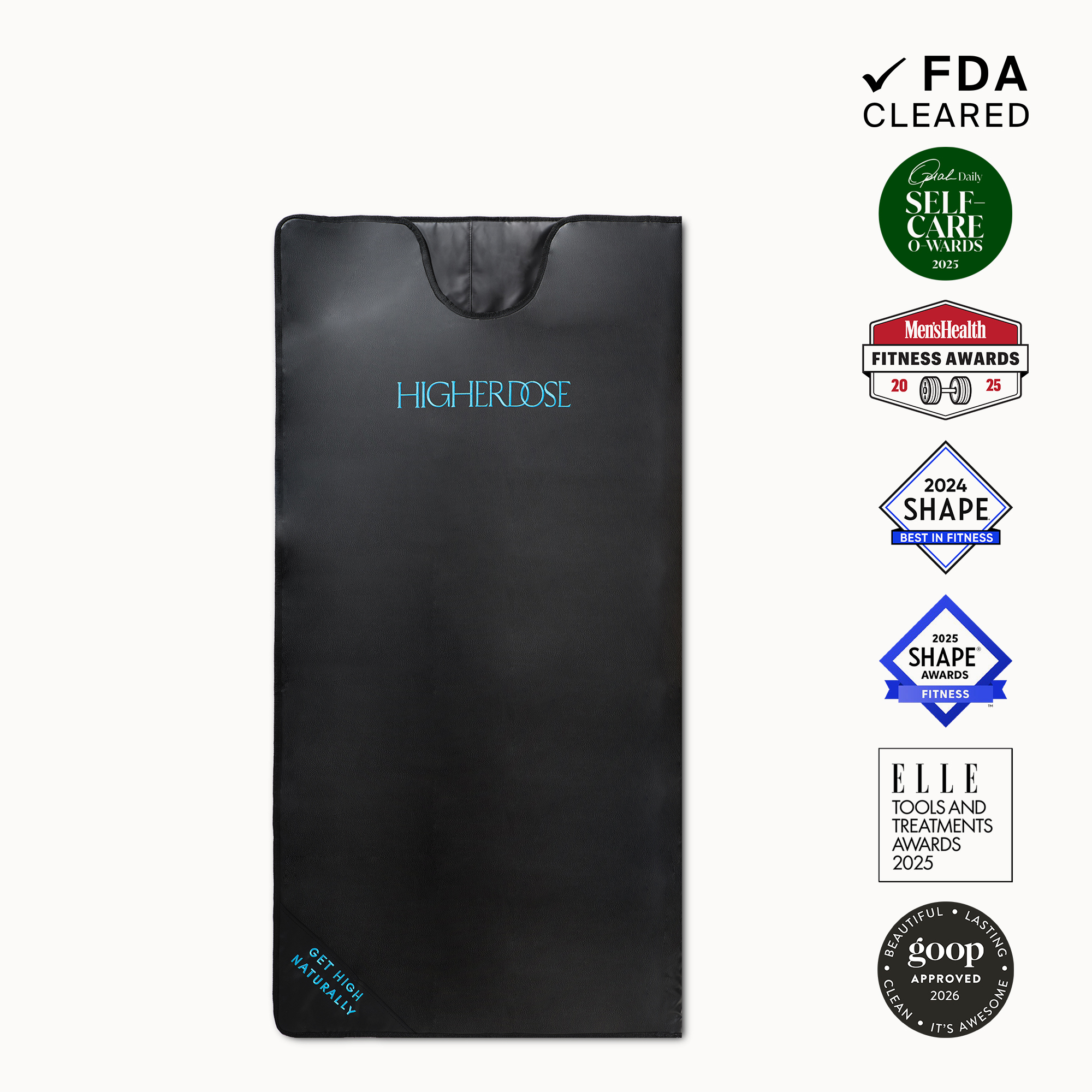
| Entry | HigherDose Infrared Sauna Blanket, $699 | Ice Barrel 300, $1,149.99 |
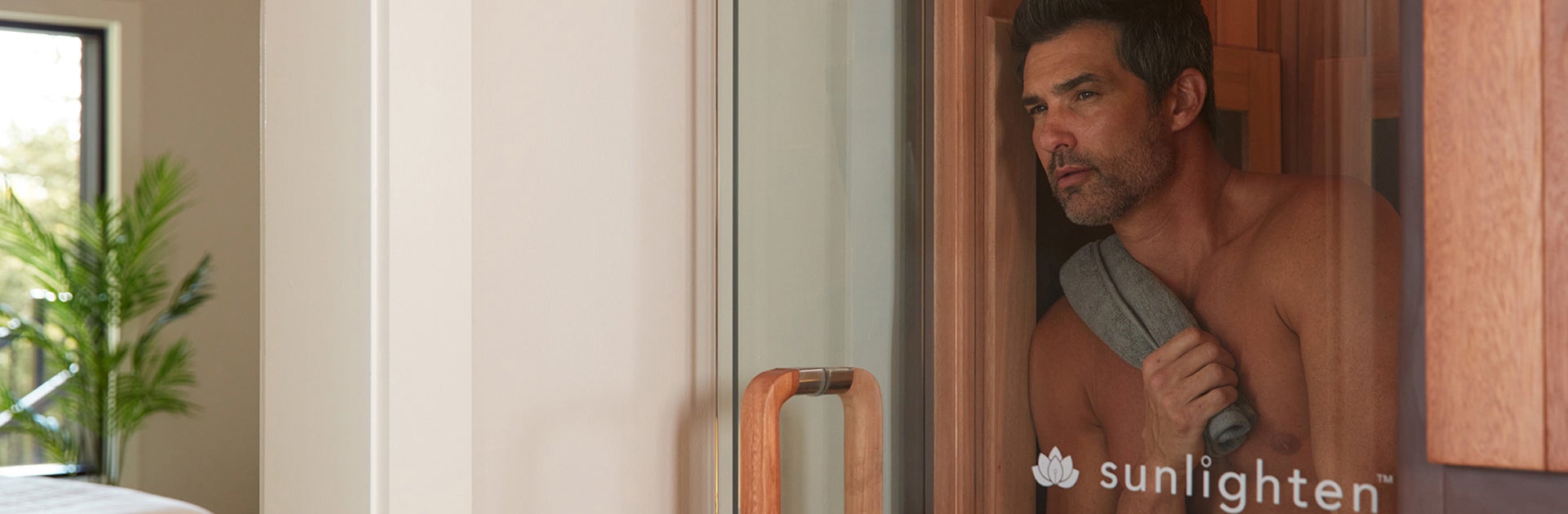
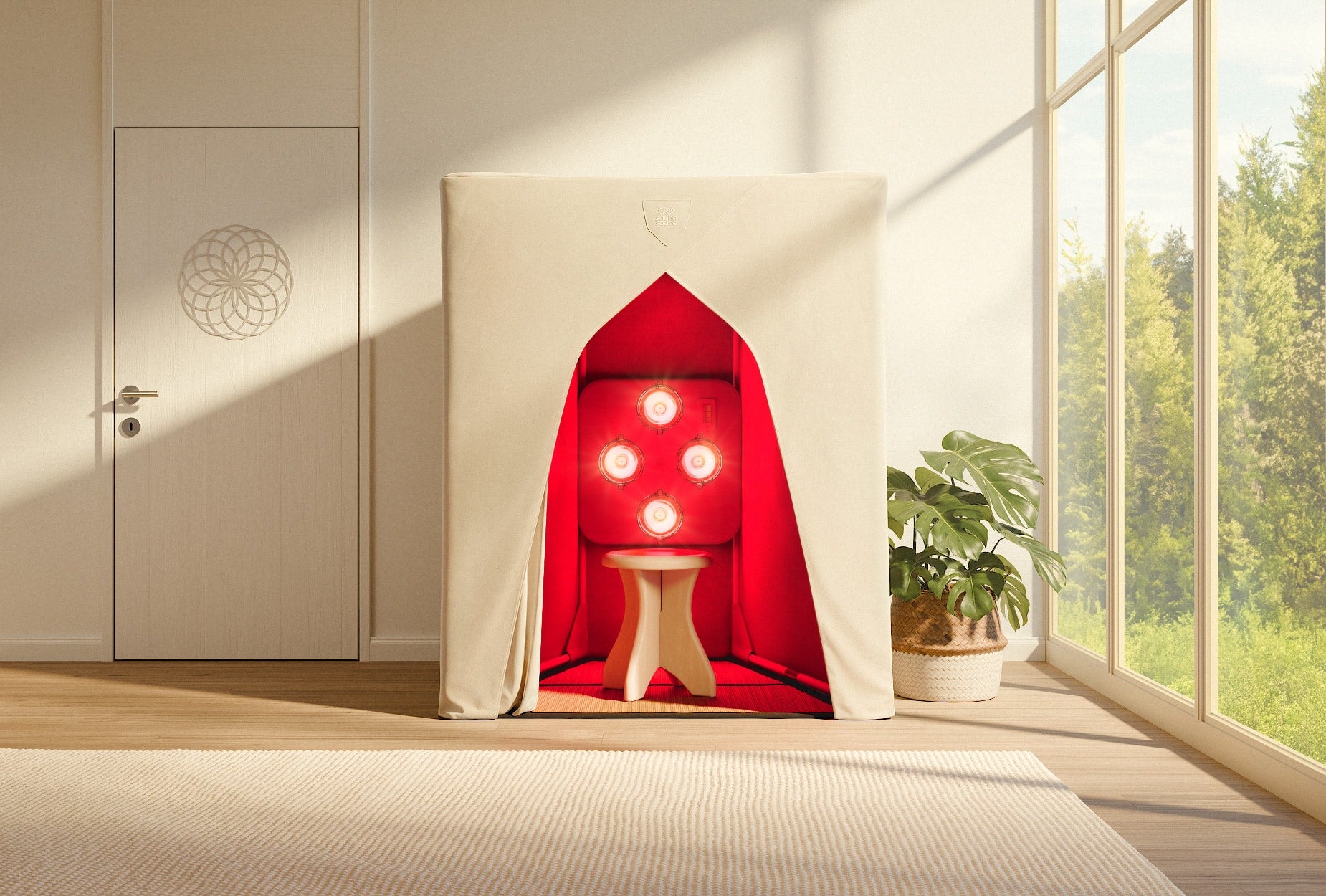
| Mid | Sunlighten mPulse Aspire, Clearlight Sanctuary 1, Clearlight Sanctuary 2, SaunaSpace Firelight from $4,995 | Plunge Air, $1,190 tub only; Ice Barrel 500, $1,749.99 |
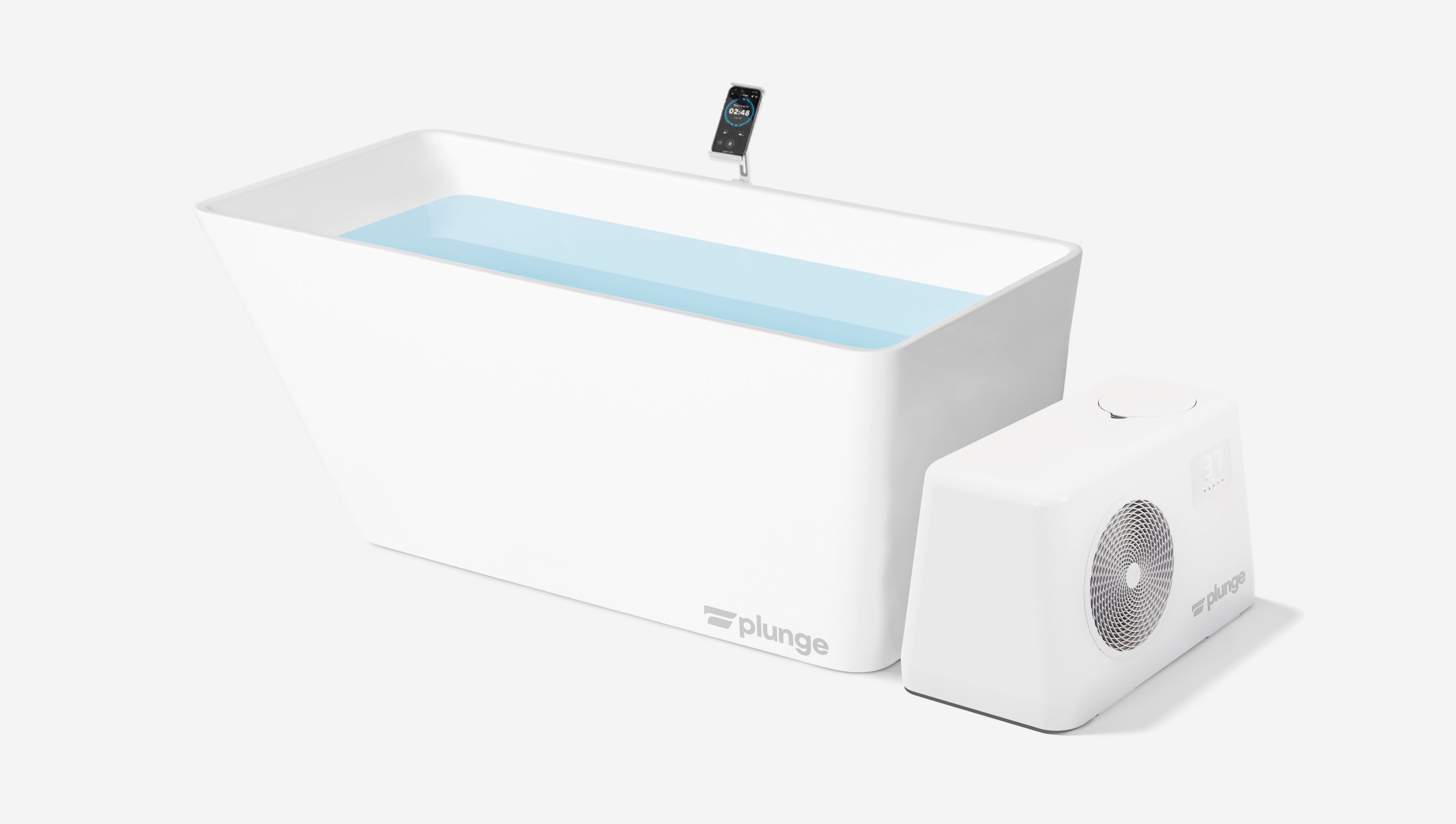
| Premium | Almost Heaven Salem 2-Person, from $4,485 | The Plunge Original, $8,490; Plunge All-In, $9,990 |
| Combo | Redwood Outdoors Fire & Ice, $12,199 to $16,699; Plunge All-In + The Sauna, $18,030; Polar Monkeys Contrast Edition, $28,880 | (included) |
Heat
- HigherDose blanket: fold-up, for small spaces.
- Sunlighten and Clearlight: full-size infrared cabins; Sanctuary 1 seats one, Sanctuary 2 seats two. We couldn't confirm their prices.
- SaunaSpace Firelight: incandescent near-infrared bulbs. Price rises with options.
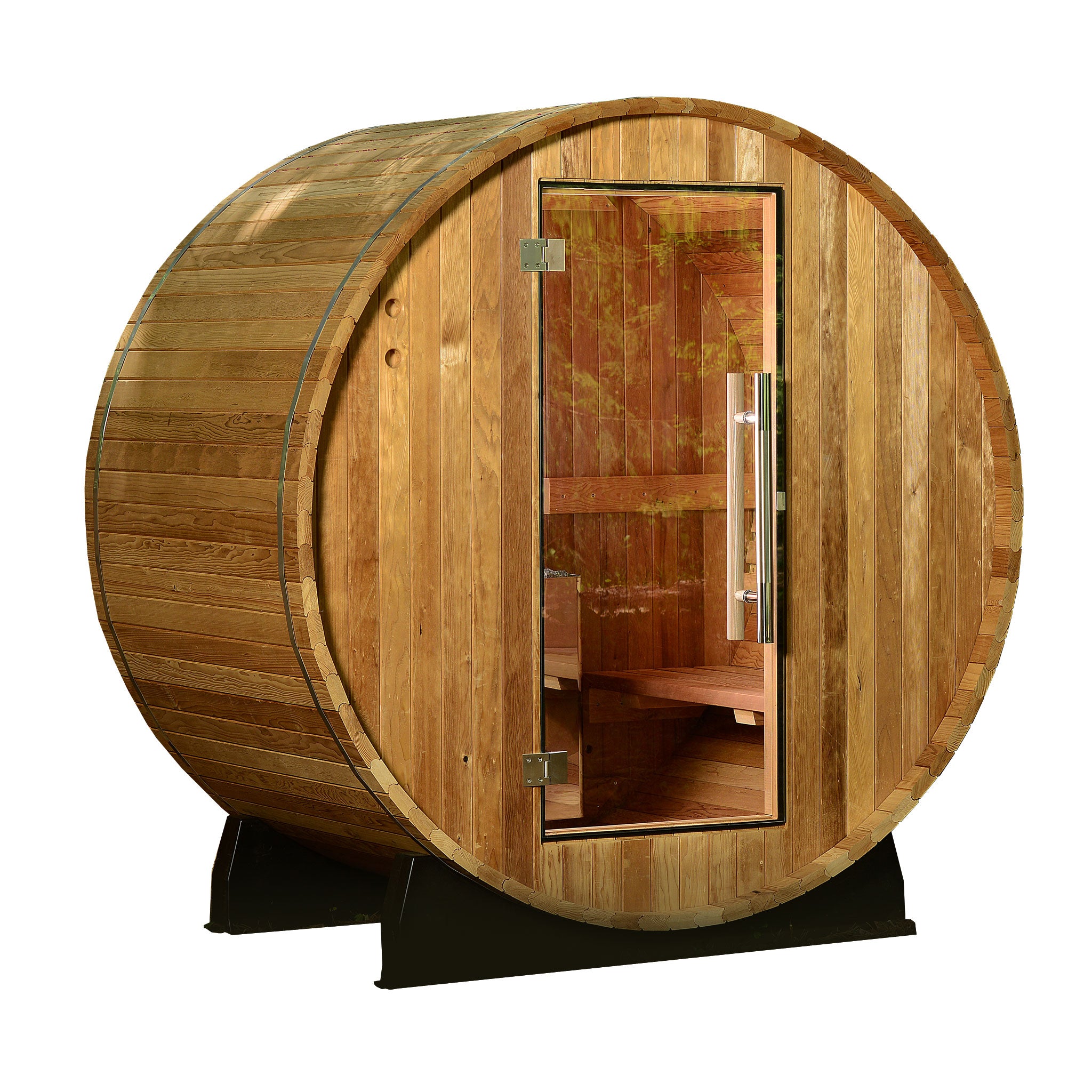
- Almost Heaven Salem: a traditional outdoor barrel sauna. Price depends on heater and window.
Cold
- Ice Barrel 300 and 500: upright barrels you fill with water and ice; no chiller in these prices.
- Plunge Air: an inflatable tub. The $1,190 price is for the tub without a chiller.
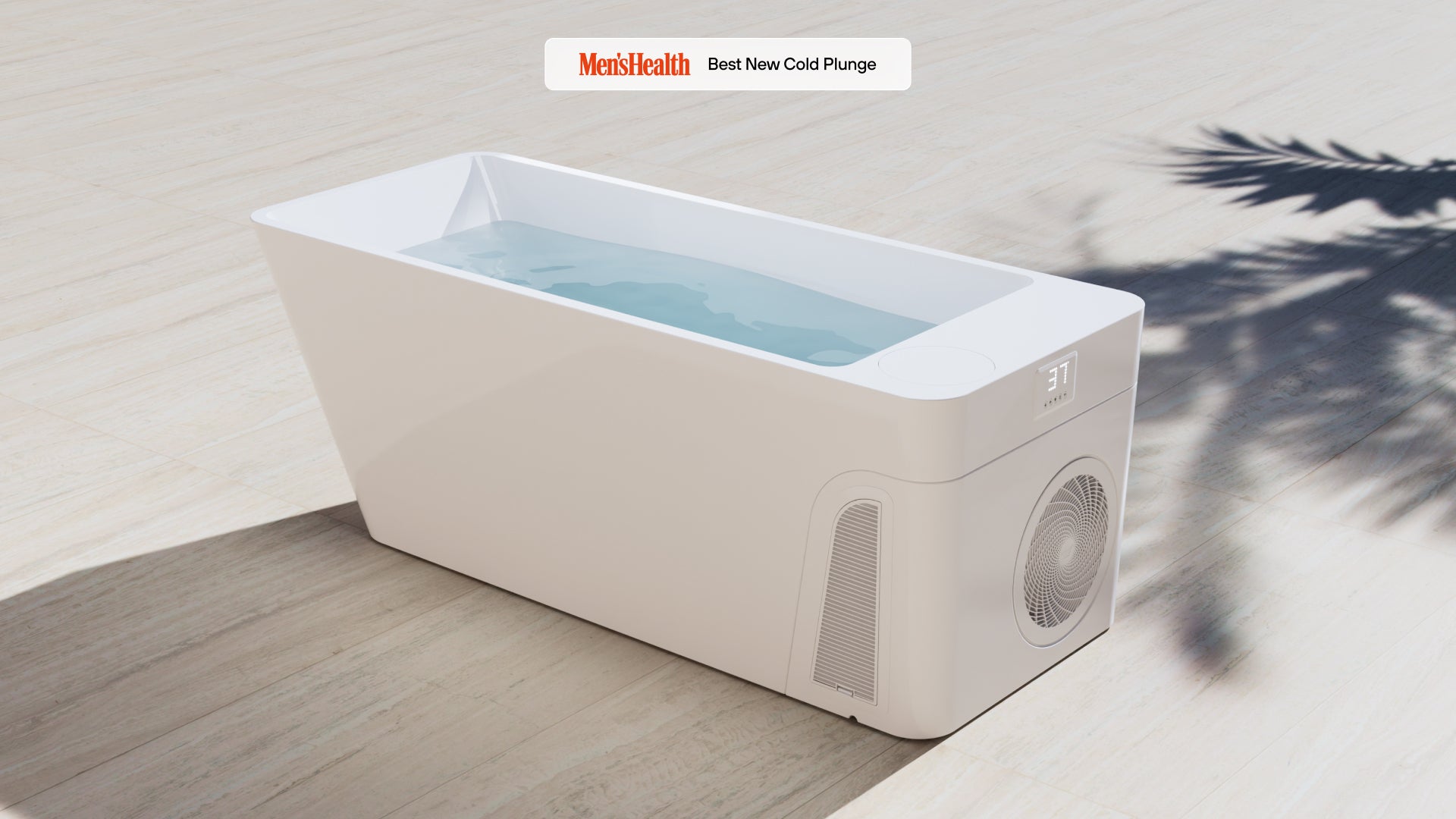
- The Plunge Original and All-In: tubs with built-in cooling. Plunge lists the Original at $8,990 and the All-In at $10,490 with a heater.
Combos
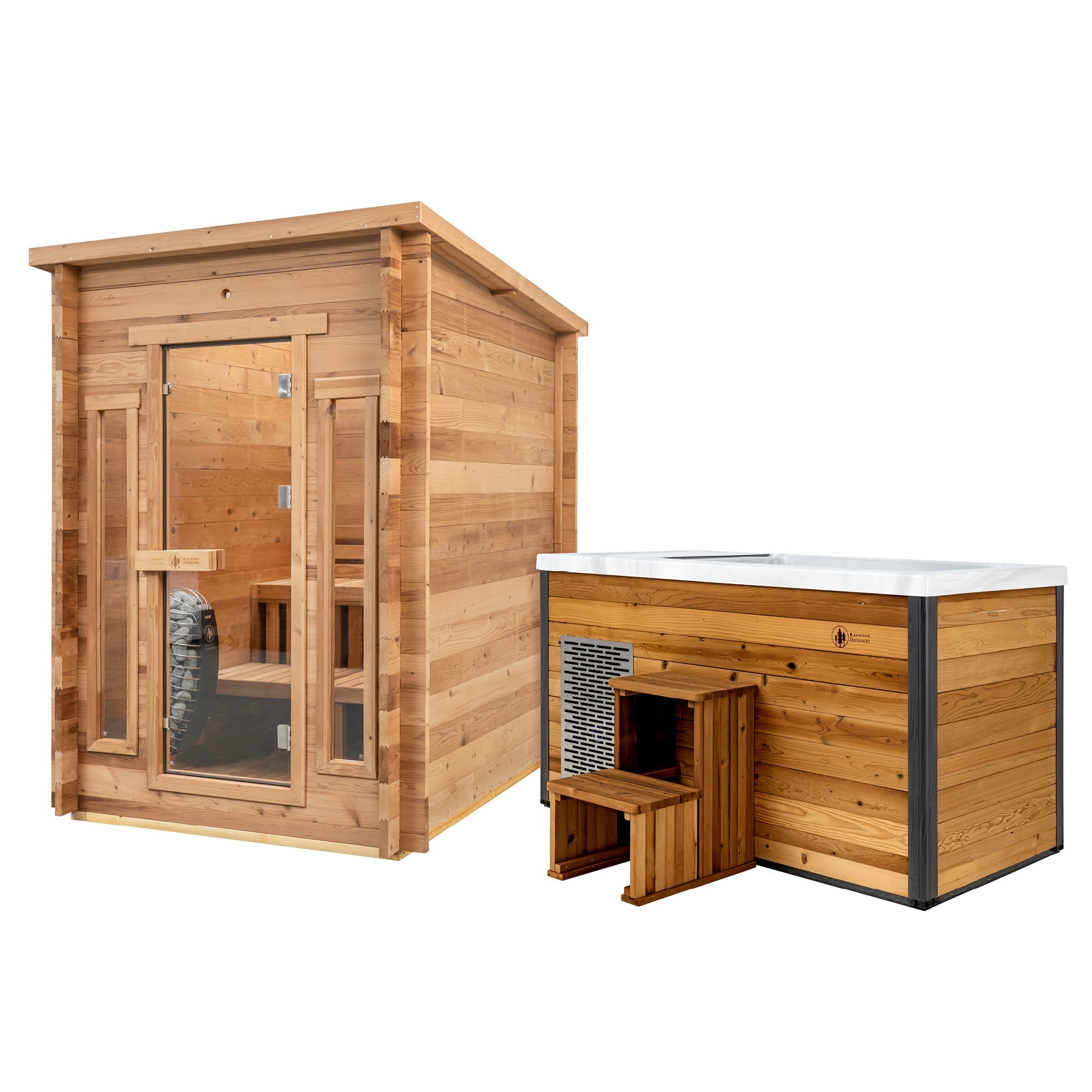
- Redwood Fire & Ice: sauna and cold plunge kits; the price range covers Redwood's kit options.
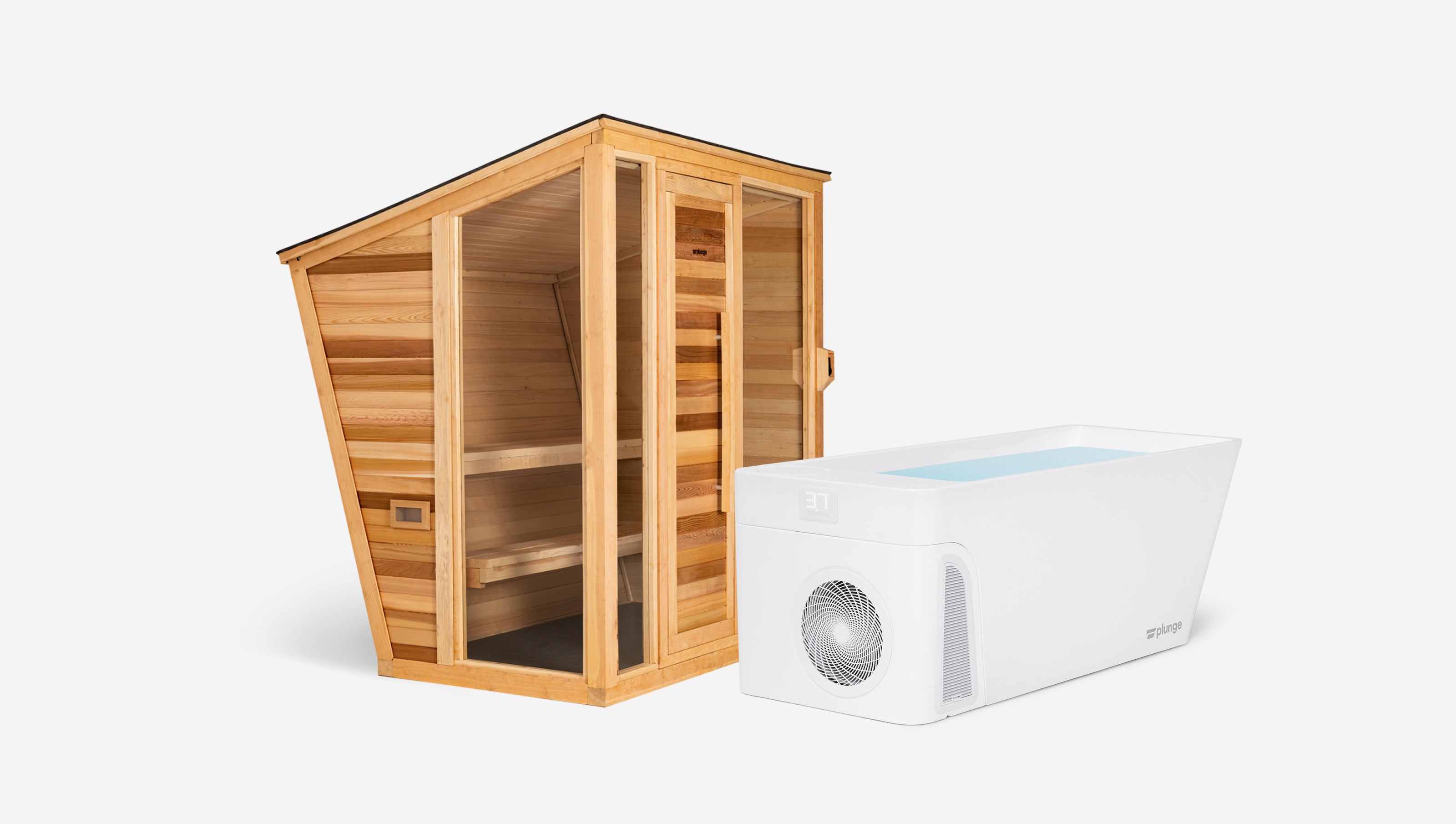
- Plunge All-In + The Sauna: Plunge's bundle, listed at a sale price.
- Polar Monkeys Contrast Edition: a hot and cold system.
Before you buy a plunge, check chiller or ice only, lowest temperature, sanitation and footprint. For a sauna, check heater type, power needs, and EMF figures with a measurement distance if the brand makes low-EMF claims. Our WHOOP vs Oura comparison covers HRV tracking, and Sleepmaxxing covers evening routines.
FAQ
Is it good to do sauna then cold plunge?
It is a common and, for healthy adults, generally well tolerated routine. No trial shows that adding the cold plunge beats the sauna alone. The largest wearable dataset we found, a company-run, observational analysis that isn't peer-reviewed, did not show extra benefit from adding cold on these measures.
Should you do sauna or cold plunge first?
A common order is heat to cold, but no trial has compared the two orders. Pick the order that feels safe and comfortable for you, and step out of the cold slowly if you feel lightheaded.
What is contrast therapy?
Contrast therapy means alternating heat and cold. In research it usually means contrast water therapy: switching between hot and cold baths after exercise. A sauna followed by a cold plunge is a home or spa version of the same idea.
Does contrast therapy work?
A 2013 meta-analysis of 18 trials found contrast water therapy reduced muscle soreness and strength loss compared with resting. It found little evidence that it beats cold water alone, warm water, compression, active recovery or stretching. All 18 trials had a high risk of bias.
How cold should a cold plunge be, and for how long?
There is no standard dose. A 2016 meta-analysis on post-exercise soreness found the best results at 11 to 15°C (about 52 to 59°F) for 11 to 15 minutes, based on low-quality studies. Beginners usually start warmer and shorter.
Should I cold plunge after lifting weights?
If muscle growth is your goal, avoid cold plunging right after lifting. A 12-week trial and a 2024 meta-analysis both found that cold water immersion straight after strength training reduced gains. Researchers don't know yet how long a gap is enough.
How often should you do a sauna and cold plunge?
There is no evidence-based frequency for the combination. In the Finnish cohort study, men reported one, two to three, or four to seven sauna sessions a week, and more frequent use was linked with lower cardiovascular death rates. That is an association, not proof.
Who should not do sauna and cold plunge?
Talk to a clinician first if you have heart disease, an arrhythmia, high or low blood pressure, Raynaud's, are pregnant, or take medicines that affect heat or cold tolerance. Nobody should use either after drinking alcohol, and nobody should cold plunge alone.
Disclaimer: This article is for information only and is not medical advice. Saunas and cold plunges put real stress on your heart and blood vessels. Talk to a clinician first if you have heart or blood pressure problems, are pregnant, have Raynaud's, or take medicines that affect heat or cold tolerance. Don't use either after drinking alcohol, don't cold plunge alone, and stop if you feel dizzy or unwell. BiohackList may earn commissions from qualifying purchases in the future.
Affiliate note: There are no affiliate links on this page at launch. No listing is paid or sponsored. See our disclosure.
How we researched this: We read the studies and official pages listed below. We did not test these products hands-on. We linked only products with a live BiohackList listing and checked prices on official pages.
Last checked: Oct 13, 2026.
Sources
- Terra Research. Stacking Sauna and Cold Plunge, or? (Jun 23, 2026; company-run observational analysis, not peer-reviewed)
- Bieuzen F, Bleakley CM, Costello JT. Contrast water therapy and exercise induced muscle damage, systematic review and meta-analysis, PLoS One 2013 (PMID 23626806)
- Laukkanen T et al. Association between sauna bathing and fatal cardiovascular and all-cause mortality events, JAMA Intern Med 2015 (PMID 25705824)
- Roberts LA et al. Post-exercise cold water immersion attenuates acute anabolic signalling and long-term adaptations in muscle to strength training, J Physiol 2015 (PMID 26174323)
- Piñero A et al. Throwing cold water on muscle growth, systematic review with meta-analysis, Eur J Sport Sci 2024 (doi 10.1002/ejsc.12074)
- Machado AF et al. Can water temperature and immersion time influence the effect of cold water immersion on muscle soreness? Sports Med 2016 (PMID 26581833)
- Datta A, Tipton M. Respiratory responses to cold water immersion, J Appl Physiol 2006
- US National Weather Service. Cold Water Hazards and Safety
- The Plunge
- HigherDose Infrared Sauna Blanket
- SaunaSpace Firelight
FAQ
Is it good to do sauna then cold plunge?
It is a common and, for healthy adults, generally well tolerated routine. No trial shows that adding the cold plunge beats the sauna alone. The largest wearable dataset we found, a company-run, observational analysis that isn't peer-reviewed, did not show extra benefit from adding cold on these measures.
Should you do sauna or cold plunge first?
A common order is heat to cold, but no trial has compared the two orders. Pick the order that feels safe and comfortable for you, and step out of the cold slowly if you feel lightheaded.
What is contrast therapy?
Contrast therapy means alternating heat and cold. In research it usually means contrast water therapy: switching between hot and cold baths after exercise. A sauna followed by a cold plunge is a home or spa version of the same idea.
Does contrast therapy work?
A 2013 meta-analysis of 18 trials found contrast water therapy reduced muscle soreness and strength loss compared with resting. It found little evidence that it beats cold water alone, warm water, compression, active recovery or stretching. All 18 trials had a high risk of bias.
How cold should a cold plunge be, and for how long?
There is no standard dose. A 2016 meta-analysis on post-exercise soreness found the best results at 11 to 15°C (about 52 to 59°F) for 11 to 15 minutes, based on low-quality studies. Beginners usually start warmer and shorter.
Should I cold plunge after lifting weights?
If muscle growth is your goal, avoid cold plunging right after lifting. A 12-week trial and a 2024 meta-analysis both found that cold water immersion straight after strength training reduced gains. Researchers don't know yet how long a gap is enough.
How often should you do a sauna and cold plunge?
There is no evidence-based frequency for the combination. In the Finnish cohort study, men reported one, two to three, or four to seven sauna sessions a week, and more frequent use was linked with lower cardiovascular death rates. That is an association, not proof.
Who should not do sauna and cold plunge?
Talk to a clinician first if you have heart disease, an arrhythmia, high or low blood pressure, Raynaud's, are pregnant, or take medicines that affect heat or cold tolerance. Nobody should use either after drinking alcohol, and nobody should cold plunge alone.
Products in this article
Cold plunge
The Plunge (Original)
Plunge
Residential acrylic cold plunge tub with chiller, filtration, and Plunge app temperature control.
Home sauna
Clearlight Sanctuary 1 Infrared Sauna
Clearlight
One-person full-spectrum infrared home sauna cabin from Clearlight.
Home sauna
Clearlight Sanctuary 2 Infrared Sauna
Clearlight
Two-person full-spectrum infrared home sauna cabin from Clearlight.
Home sauna
Sunlighten mPulse Aspire
Sunlighten
One-person mPulse infrared sauna with separately controlled red, near-, mid-, and far-infrared.
Home sauna
SaunaSpace FireLight Infrared Sauna
SaunaSpace
Portable near-infrared and red light sauna enclosure using FireLight incandescent bulbs.
Home sauna
HigherDOSE Infrared Sauna Blanket
HigherDOSE
Portable far-infrared sauna blanket designed for home plug-in heat sessions.

Cold plunge
Ice Barrel 300
Ice Barrel
Upright, insulated barrel-style cold tub from Ice Barrel, used with ice or connected to a chiller through its chiller-ready ports (no chiller included); holds 77 gallons (292 L), 35.5 x 30.5 x 35.5 in, 61 lb empty, fits most users up to 6 ft per Ice Barrel; made in the USA from recycled materials, limited lifetime warranty. Price: $1,149.99 plus $300 shipping to the contiguous US, checked Oct 13, 2026. US availability: sold on icebarrel.com, in stock. Directory: Cold & Heat > Cold plunges & ice baths.

Cold plunge
Plunge Air
Plunge
Inflatable, insulated and UV-resistant portable cold plunge from Plunge sold with a chiller (Plunge's comparison table lists 39°F max cooling, 1/2 HP, 110V/15A), with 20-micron filtration and ozone; 61 x 32 x 28 in, about 105 gallons, 28 lb empty, and includes a pump, cover lid and carry pack. Optional heater variant to 104°F. Warranty: 1 year on the chiller, 90 days on the tub. Price: $5,490 with chiller, checked Oct 13, 2026; the tub alone (no chiller or filtration) is $1,190. US availability: sold on plunge.com, in stock. Directory: Cold & Heat > Cold plunges & ice baths.

Cold plunge
Ice Barrel 500
Ice Barrel
Larger insulated cold tub from Ice Barrel with an upright seated position, for ice or an optional chiller via chiller-ready ports (no chiller included); holds 94 gallons (356 L), 30.7 x 42.1 x 57.6 in, 104 lb empty, fits users up to 6'9" per Ice Barrel; R16 polyurethane foam insulation, made in the USA from recycled BPA-free material, limited lifetime warranty. Price: $1,749.99, checked Oct 13, 2026. US availability: sold on icebarrel.com, in stock. Directory: Cold & Heat > Cold plunges & ice baths.
Home sauna
Almost Heaven Salem 2-Person Barrel Sauna
Almost Heaven
Outdoor traditional barrel sauna from Almost Heaven in rustic red cedar, seating two, with a 6 kW electric heater (240V, 30A, hard-wired) and stones included; assembled size 78 x 47 x 75.4 in; made in the USA. Window and smart-heater options change the price. Price: $4,485 (glass door, no window, 6 kW KIP heater with dials), checked Oct 13, 2026; up to $7,105 with other options. US availability: sold on almostheaven.com, in stock. Directory: Cold & Heat > Traditional / Finnish saunas.
Cold plunge
Plunge All-In (Gen 2)
Plunge
Residential fiberglass-reinforced acrylic cold plunge from Plunge with the chiller built into the unit (0.75 HP per the spec list), cooling to 37°F, onboard ozone sanitation and filtration, and app control; 105 gallons, 76.75 x 31.5 x 28.75 in, fits users up to 6'9" per Plunge. An optional heater variant goes to 104°F. Needs a dedicated 120V 15A circuit. 1-year warranty (the current sale adds a complimentary 2-year extended warranty). Price: $7,990 on sale (Plunge's 'comp. value' $9,990; Add Heater variant $10,490 before discount), checked Oct 13, 2026. US availability: sold on plunge.com, in stock; in-home delivery included. Directory: Cold & Heat > Cold plunges & ice baths.
Home sauna
Redwood Outdoors Fire & Ice Sauna + Cold Plunge Kits
Redwood Outdoors
Redwood Outdoors' Fire & Ice line: 14 kits pairing one of its outdoor saunas (Duo, Cove, Vista, Horizon, Cabin, Garden or Extra-Wide Barrel) with either the Alaskan all-in-one or the Denali cold plunge. Price: $12,199-$16,699 on sale across kits and variants, checked Oct 13, 2026; the Alaskan All-In-One cold plunge alone is $6,999. US availability: sold on redwoodoutdoors.com. Directory: Cold & Heat > Traditional / Finnish saunas.
Home sauna
Plunge All-In + The Sauna Bundle
Plunge
Hot/cold bundle from Plunge pairing the Plunge All-In cold plunge with The Sauna, Plunge's app-controlled traditional sauna that Plunge says heats to 230°F (Standard size for 4-5 people; XL for 6-7). The sauna needs an electrician-installed outlet. Price: $18,030 on sale (comp. value $22,980) for the Standard configuration, checked Oct 13, 2026. US availability: sold on plunge.com, in stock. Directory: Cold & Heat > Traditional / Finnish saunas.

Cold plunge
Polar Monkeys Contrast Edition
Polar Monkeys
Hot/cold contrast system from Polar Monkeys: one vertical barrel and one horizontal tub, each with its own ChillX unit operating from 32°F to 107°F, in 316 marine-grade stainless steel with automatic ozone filtration; tub footprint 90.75 x 33.75 x 41.54 in, 213 gallons total, 573 lb empty; each side needs its own 110V 15A outlet. 2-year limited warranty, white-glove delivery. Price: $28,880, checked Oct 13, 2026. US availability: sold on polarmonkeys.com. Directory: Cold & Heat > Cold plunges & ice baths.