VO2 Max Test: Cost, Where to Go, and Watch Accuracy
On this page
- What a VO2 max test is and how it works
- VO2 max test cost: 2026 US prices
- VO2 max test near me: where to get tested
- Lab test vs wearable estimate: how accurate is your watch or ring?
- The big picture
- Device by device
- Fitness level matters
- Conditions matter too
- What to do with your wearable number
- At-home VO2 max test: when a breath analyzer is worth it
- Field tests (free, predicted)
- Portable gas analyzers
- What actually raises VO2 max
- Good VO2 max by age
- FAQ
- What is a VO2 max test?
- How much does a VO2 max test cost?
- Is VO2 max testing covered by insurance?
- Is VO2 max testing worth it?
- How accurate is my watch's VO2 max?
- Can you test VO2 max at home?
- What is a good VO2 max by age?
- How do you increase VO2 max?
- Sources
Disclaimer: This article is for information only and is not medical advice. A VO2 max test is a maximal-effort exercise test. If you have heart or lung disease, chest pain, dizziness on exertion, or other risk factors, get medical clearance first, and ask about a physician-supervised clinical test (CPET) instead. Wearable VO2 max numbers are estimates, not diagnoses. BiohackList may earn commissions from qualifying purchases in the future.
A VO2 max test measures how much oxygen you use at your hardest effort, by analyzing every breath through a mask while you run or cycle to exhaustion. In the US, listed prices we checked run from $85 (a university student rate) to $400, with most between $125 and $315. Your watch or ring gives an estimate. It is often close on average but can be well off for you, and it tends to read low if you are very fit.
In 30 seconds
- A lab VO2 max test measures the oxygen you breathe in and out on a treadmill or bike. US prices we checked: $85 to $400.
- Watch and ring numbers are estimates. They work for trends, but a 2022 meta-analysis found one person's reading can be off by about 10 mL/kg/min, and they often read low in very fit people.
- A home breath analyzer only makes sense if you will test often, and the cheapest one did poorly in independent testing.
- What raises VO2 max is training, mainly intervals and endurance work.
No listing on this page is paid or sponsored.
What a VO2 max test is and how it works
VO2 max is the highest rate at which your body can take in and use oxygen, written in milliliters per kilogram of body weight per minute (mL/kg/min). A lab test measures it directly.
What happens. You wear a mask connected to a metabolic cart that measures the oxygen and carbon dioxide you breathe. On a treadmill or bike, the workload rises every minute or so until you can't continue. The hard part lasts about 8 to 15 minutes. Plan on roughly an hour in total.
How labs check you went all out. Testers look for signs of a true maximum, such as oxygen use leveling off as the workload rises and a respiratory exchange ratio (carbon dioxide out divided by oxygen in) above a set cutoff.
What you get. VO2 max in mL/kg/min, ventilatory thresholds (where your breathing shifts as effort climbs), heart rate training zones, and often fat and carb use by intensity.
Fitness test vs clinical CPET. A clinical cardiopulmonary exercise test (CPET) is ordered by a physician to investigate symptoms or disease, usually with ECG monitoring in a hospital. A fitness test does not diagnose heart disease. If you have symptoms, see a doctor.
Treadmill vs bike. In FRIEND data, treadmill results averaged about 22% higher than cycle results (FRIEND 2022). Retest on the same mode.
VO2 max test cost: 2026 US prices
Checked on official pages October 14, 2026. Confirm before you book.
| Provider | Type | Listed price |
|---|---|---|
| University of Alaska Anchorage, Human Performance Lab | University lab | $135 community, $110 employee, $85 student |
| University of Minnesota, ICEPL | University lab | $150 |
| DexaFit | Franchise studio | $125 (Scottsdale), $135 (Kansas City), $170 (Orange County), $175 (Seattle), $179 (Dallas, $99 first visit) |
| Fitnescity | Booking platform with partner sites | $205 (Anchorage) to $315 (Chicago); $400 when bought through Quest |
| HSS Performance & Wellness, New York | Hospital performance center | $315 (VO2 max only) |
| UVA Exercise Physiology Core Laboratory | CPET | $389 ($305 repeat) |
- Quest and Fitnescity. Quest sells a "Fitnescity VO2 Max Test" for $400. Quest says Fitnescity is the provider, purchases happen on Fitnescity.com, and Quest does not perform the test or receive your results. Booking directly was cheaper in the cities we checked.
- Packages. Fitnescity's two-test packs worked out to $195 (Anchorage) to $300 (Chicago) per test on its city pages.
- Insurance. A fitness test is usually paid out of pocket. A physician-ordered clinical CPET can be covered when medically necessary; a Medicare local coverage determination (L33444) lists indications such as unexplained shortness of breath and certain heart and lung conditions. Ask your insurer first.
- FSA and HSA. DexaFit Kansas City lists its test as FSA and HSA eligible. Check with your plan.
VO2 max test near me: where to get tested
- University exercise physiology labs. Often the cheapest. Search "[your city] university VO2 max testing."
- Franchise studios. DexaFit has studios in many US cities.
- Booking platforms. Fitnescity books tests at partner hospitals, diagnostic centers and academic labs.
- Gyms. Life Time says its mask-based Active Metabolic Assessment is available at all its North American clubs. We could not confirm a price on an official Life Time page.
- Hospitals. HSS and UVA are examples. Hospitals also run clinical CPETs.
Checklist before you book:
- Is oxygen measured? You should breathe through a mask into a gas analyzer. Cooper Clinic's CooperFit test in Dallas ($95), for example, reports a "predicted max VO2" from a walk or run, not a measured one.
- Treadmill or bike? Pick the one you train on.
- Report and retest price. Ask for thresholds and zones, and the repeat price.
Lab test vs wearable estimate: how accurate is your watch or ring?
Wearables don't measure oxygen. Exercise-based estimates compare your heart rate with GPS pace or cycling power. Resting-based estimates use resting heart rate, heart rate variability, age, sex and body size.
The big picture
A 2022 meta-analysis by Molina-Garcia and colleagues (INTERLIVE network, Sports Medicine) pooled 14 studies with 403 people.
- Exercise-based estimates were about right on average (bias of -0.09 mL/kg/min), but the limits of agreement ran from about -9.9 to +9.7 mL/kg/min. For one person, a reading could be roughly 10 points too high or too low.
- Resting-based estimates overestimated by about 2.2 mL/kg/min on average, with wider limits of about -13.1 to +17.4.
- 11 of the 14 studies had a high risk of bias.
For men aged 40 to 49 in FRIEND, 10 points is about the gap between the 50th (35.3) and 80th (45.2) percentiles.
Device by device
| Device | How it estimates | Accuracy vs lab | Who measured it |
|---|---|---|---|
| Apple Watch | Heart rate and motion during outdoor walks, runs and hikes | Underestimated by 6.07 mL/kg/min on average, MAPE 13.3% (n=30). A separate study of Series 7 found MAPE 15.8% | Independent (PLOS One 2025; JMIR Biomedical Engineering 2024) |
| Garmin Forerunner 245 | Heart rate vs GPS pace on outdoor runs | MAPE 7.2 to 7.9% overall, underestimated by about 4 to 5 mL/kg/min; 2.8 to 4.1% in moderately trained athletes; underestimated highly trained athletes by about 6.3, MAPE 9.4 to 10.4% (n=35) | Independent (European Journal of Applied Physiology 2025) |
| Polar V800 | Resting heart rate, HRV and profile | MAPE 13.2% | Independent (IJERPH 2019) |
| WHOOP 5.0 | Passive model from sleep, activity and profile; optional GPS runs; optional lab value | Mean absolute error 3.7 (passive) and 3.3 (GPS) mL/kg/min, MAPE 8.0% and 7.1% (n=248) | Company-reported, internal testing, not peer-reviewed |
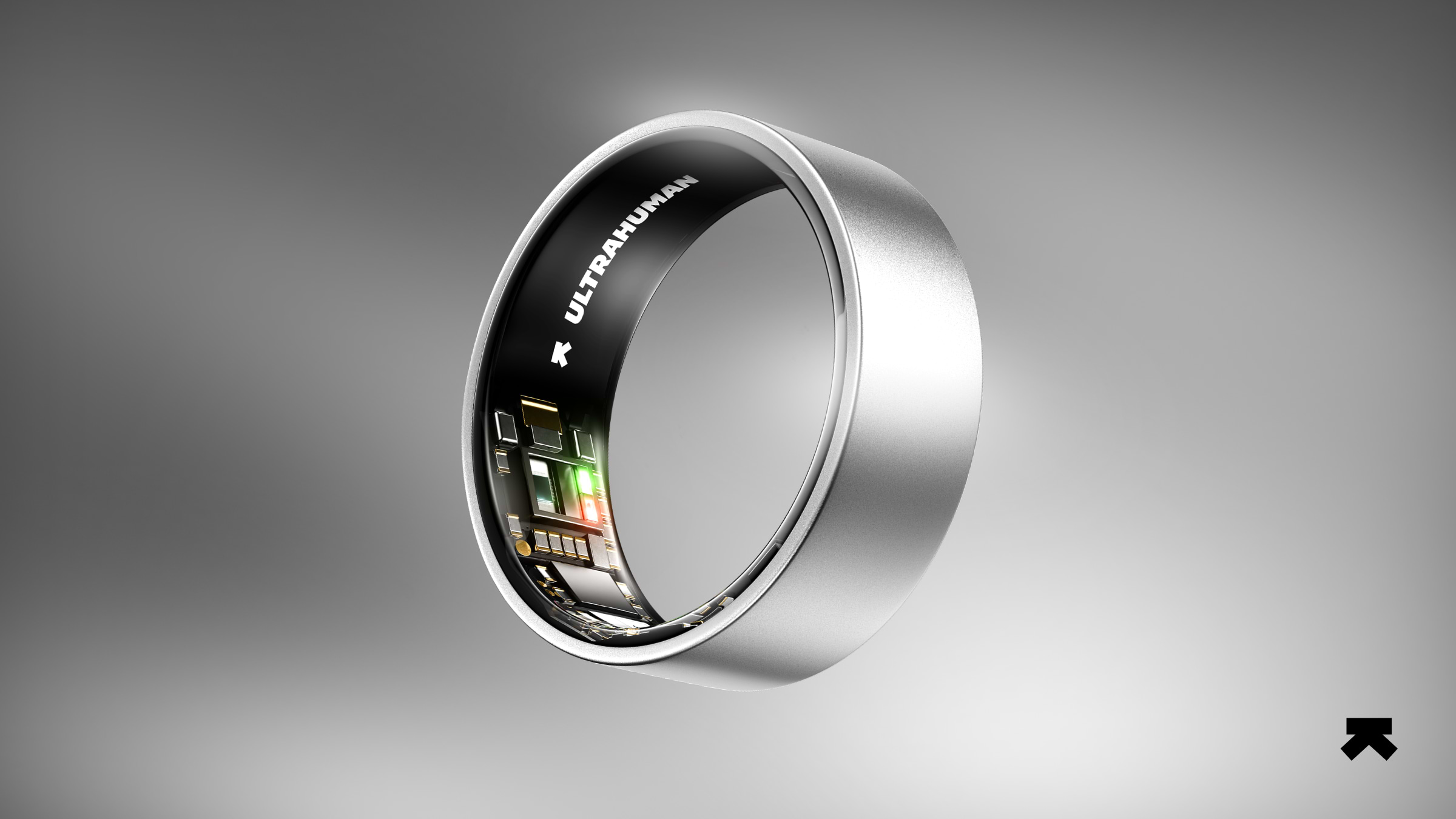
| Ultrahuman Ring AIR | Passive signals plus published equations, with optional self-reported fitness | Mean absolute error 4.68 mL/kg/min, r 0.79, slope 0.71 (n=101) | Company-reported: preprint by Ultrahuman employees, not peer-reviewed |
| Oura Ring 4 (Cardio Capacity) | Profile data, refined by a six-minute outdoor walking test | No independent validation study found | None found |
MAPE is mean absolute percentage error, the average size of the miss in either direction.
Fitness level matters
The Garmin study's error was small in moderately trained athletes and larger in those averaging about 67 mL/kg/min (Engel 2025). Ultrahuman's company-reported slope of 0.71 means its estimates spread less than lab values. Very fit people may see low readings.
Conditions matter too
Apple's estimate uses outdoor walks, runs and hikes only. Oura's walking test needs GPS on a level route.
What to do with your wearable number
- Use it for trends, not as a precise score.
- For an accurate anchor, do one lab test. WHOOP and Oura both let you enter a lab value.
- Don't read much into a change of 1 to 3 points.
More on these devices: WHOOP vs Oura and Garmin Cirqa vs WHOOP. For other wearables and gear, see our best biohacking products guide.
At-home VO2 max test: when a breath analyzer is worth it
Field tests (free, predicted)
A one-mile walk or 12-minute run predicts VO2 max from your time or distance.
Portable gas analyzers
| Device | Who it's for | Price | Independent testing |
|---|---|---|---|
| Calibre | Consumers | $549 on Calibre's site | Mixed. A 2023 Maastricht study found low error. A 2026 follow-up by the same group, after firmware updates, found average oxygen uptake errors above 20% during cycling and large day-to-day swings. A Duke trial vs a COSMED cart (NCT07596108) was listed as not yet recruiting as of October 2026. |
| VO2 Master Analyzer | Coaches, clinics, researchers | $6,895 or $7,595 (kits) | Alma College researchers (2020, no conflicts declared): about 9 to 12% mean absolute difference vs a Parvo cart during cycling. Maastricht group (2026): about 7.9% oxygen uptake error on a simulator. |
| PNOĒ | Clinics and coaches; providers can order a home kit | Not listed publicly | Harokopio University and Rutgers authors (2019): r = 0.98 vs a COSMED cart on a bike; one author had advised PNOĒ's maker, ENDO Medical, in 2016 to 2018. Hong Kong Polytechnic University (2025, no conflicts declared): r = 0.60 to 0.79 vs a COSMED K5 when walking. |
A simple rule:
- Testing once or twice a year: book a lab test. It costs far less than a pro analyzer.
- Coaching several athletes or testing often: a pro analyzer can pay off.
- A consumer analyzer costs about as much as two to four lab tests, but given the 2026 results, we'd wait for more independent data.
What actually raises VO2 max
- Interval and endurance training (strong evidence). A 2015 meta-analysis in Sports Medicine by Milanović and colleagues pooled 28 controlled trials with 723 healthy adults aged 18 to 45. Compared with no exercise, high-intensity interval training raised VO2 max by about 5.5 mL/kg/min and continuous endurance training by about 4.9. In head-to-head comparisons, intervals beat continuous training by about 1.2 points.
- Sleeping at simulated altitude, for athletes (moderate evidence, small effect). A 2026 Sports Medicine meta-analysis of intermittent hypoxic training (62 studies) found that in athletes, its "live high, train low" subgroup (sleeping in low-oxygen air, training normally; 10 comparisons) added about 2.2 mL/kg/min over control. Most studies had bias concerns. Low-oxygen exposure carries risks, so talk to a clinician first.
- Breathing trainers (no evidence for VO2 max). A 2013 meta-analysis in athletes (HajGhanbari and colleagues) found no effect on VO2 max across 13 studies, though time trials and endurance time improved. A 2012 review (Illi and colleagues) also found endurance performance gains in healthy people.
- Training masks (no evidence for altitude effects). In a small 2016 trial (Porcari and colleagues), VO2 max rose about equally with or without an "elevation" mask.
Good VO2 max by age
These reference values come from the US FRIEND registry (Mayo Clinic Proceedings, 2022): 16,278 treadmill tests in apparently healthy adults, with oxygen measured directly. Values are treadmill percentiles in mL/kg/min.
| Age | Men 20th | Men 50th | Men 80th | Women 20th | Women 50th | Women 80th |
|---|---|---|---|---|---|---|
| 20 to 29 | 35.2 | 46.5 | 54.5 | 27.2 | 36.6 | 44.8 |
| 30 to 39 | 29.8 | 39.7 | 50.0 | 21.9 | 28.3 | 37.0 |
| 40 to 49 | 26.7 | 35.3 | 45.2 | 19.7 | 25.7 | 33.0 |
| 50 to 59 | 22.2 | 29.2 | 38.3 | 18.5 | 22.9 | 28.4 |
| 60 to 69 | 18.5 | 24.6 | 32.0 | 15.4 | 19.6 | 24.3 |
| 70 to 79 | 15.9 | 20.6 | 25.9 | 14.0 | 17.2 | 20.8 |
| 80 to 89 | 14.8 | 17.6 | 21.4 | 12.6 | 15.4 | 18.4 |
Cycle results run lower, so compare a bike test with FRIEND's separate cycle table. These are US data, and the authors caution against applying them elsewhere.
FAQ
What is a VO2 max test?
A VO2 max test measures the most oxygen your body can use during hard exercise. You wear a mask connected to a metabolic cart and run or cycle while the effort ramps up until you can't continue. The hard part usually takes about 8 to 15 minutes, inside an appointment of roughly an hour.
How much does a VO2 max test cost?
In the US, listed prices we checked in October 2026 ran from $85 (a university student rate) to $400. University labs were cheapest at $85 to $150, DexaFit studios $125 to $179 by city, and Fitnescity $205 to $315 by city, or $400 through Quest.
Is VO2 max testing covered by insurance?
A fitness VO2 max test is usually paid out of pocket. A physician-ordered clinical cardiopulmonary exercise test can be covered when it is medically necessary, for example under Medicare local coverage rules for specific heart and lung indications. Some providers, such as DexaFit Kansas City, list the test as FSA and HSA eligible.
Is VO2 max testing worth it?
It is useful if you want an accurate baseline, heart rate training zones, or a check on your wearable's number. Retesting after a training block makes more sense than testing every month, because normal day-to-day variation can hide small changes.
How accurate is my watch's VO2 max?
On average, exercise-based watch estimates land close to lab values, but a 2022 meta-analysis found individual readings can be off by about 10 mL/kg/min either way. Independent studies found Apple Watch underestimated by about 6 mL/kg/min, and a Garmin model underestimated highly trained athletes.
Can you test VO2 max at home?
You can estimate it at home, but a true measurement needs a gas analyzer. Field tests such as a one-mile walk or 12-minute run give a predicted value. Consumer breath analyzers exist, but independent testing of the cheapest one found large errors.
What is a good VO2 max by age?
In the US FRIEND registry, the median treadmill VO2 max was 46.5 mL/kg/min for men and 36.6 for women aged 20 to 29, falling to 24.6 and 19.6 at ages 60 to 69. Cycle tests run lower, so compare your result with the table for the same test type.
How do you increase VO2 max?
Training is what moves it. A meta-analysis of 28 trials found interval training raised VO2 max by about 5.5 mL/kg/min and continuous endurance training by about 4.9, compared with no exercise. Sleeping at simulated altitude added about 2 in athletes.
Disclaimer: This article is for information only and is not medical advice. A VO2 max test is a maximal-effort exercise test. If you have heart or lung disease, chest pain, dizziness on exertion, or other risk factors, get medical clearance first, and ask about a physician-supervised clinical test (CPET) instead. Wearable VO2 max numbers are estimates, not diagnoses. BiohackList may earn commissions from qualifying purchases in the future.
Affiliate note: There are no affiliate links on this page at launch. No listing is paid or sponsored. See our disclosure.
How we researched this: We read the studies and official pages listed below. We did not test these devices or services hands-on. We linked only products with a live BiohackList listing and checked prices on official pages.
Last checked: Oct 14, 2026.
Sources
- Molina-Garcia P et al. Wearable VO2max validity meta-analysis (INTERLIVE), Sports Med 2022
- Apple Watch VO2 max vs indirect calorimetry, PLOS One 2025
- Caserman P et al. Apple Watch Series 7 VO2max accuracy, JMIR Biomed Eng 2024
- Engel FA et al. Forerunner 245 VO2max validity, Eur J Appl Physiol 2025
- Passler S et al. Wrist-worn trackers and VO2max, IJERPH 2019 (doi 10.3390/ijerph16173037)
- WHOOP. How Accurate Is WHOOP VO2 Max? (Apr 22, 2026; company-reported internal testing)
- Ultrahuman. Smart-ring VO2max vs CPET, medRxiv preprint 2026 (company-authored, not peer-reviewed), doi 10.64898/2026.07.16.26358226 (medRxiv's own listed DOI)
- Oura. Cardio Capacity (VO2 Max)
- Apple. Track your cardio fitness levels
- Kaminsky LA et al. Updated FRIEND reference standards, Mayo Clin Proc 2022
- Van Hooren B, Souren T, Bongers BC. Accuracy of 15 CPET systems, Scand J Med Sci Sports 2024 (online 2023)
- Van Hooren B et al. Reliability and validity of five CPET systems, Scand J Med Sci Sports 2026
- ClinicalTrials.gov. Calibre vs. COSMED (NCT07596108)
- Montoye AHK et al. VO2 Master Pro validity, Int J Exerc Sci 2020
- Tsekouras YE et al. PNOE validity and reliability, Front Sports Act Living 2019
- PNOĒ vs COSMED K5 during treadmill walking, 2025
- Milanović Z, Sporiš G, Weston M. HIT and endurance training for VO2max, Sports Med 2015
- Kohlbrenner D, Ghaith A et al. Intermittent hypoxic training and VO2max, Sports Med 2026
- HajGhanbari B et al. Respiratory muscle training in athletes, J Strength Cond Res 2013 (PMID 22836606)
- Illi SK et al. Respiratory muscle training in healthy people, Sports Med 2012 (PMID 22765281)
- Porcari JP et al. Elevation training mask trial, J Sports Sci Med 2016
- CMS. LCD L33444, Pulmonary Stress Testing
- University of Alaska Anchorage, VO2 max test
- University of Minnesota ICEPL, Testing services
- DexaFit city pages: https://www.scottsdale.dexafit.com/pricing; https://www.kc.dexafit.com/pricing; https://www.oc.dexafit.com/vo2-max; https://www.seattle.dexafit.com/vo2-max; https://www.dallas.dexafit.com/pricing
- Fitnescity: https://www.fitnescity.com/vo2-max-test-in-chicago-il; https://www.fitnescity.com/vo2-max-test-in-anchorage-ak
- Quest. Fitnescity VO2 Max Test
- HSS Performance & Wellness, Metabolic testing
- UVA Exercise Physiology Core Laboratory, Rates
- Life Time. metabolic testing rollout (Apr 16, 2026)
- Cooper Aerobics. CooperFit
- Calibre Biometrics
- VO2 Master quote generator
FAQ
What is a VO2 max test?
A VO2 max test measures the most oxygen your body can use during hard exercise. You wear a mask connected to a metabolic cart and run or cycle while the effort ramps up until you can't continue. The hard part usually takes about 8 to 15 minutes, inside an appointment of roughly an hour.
How much does a VO2 max test cost?
In the US, listed prices we checked in October 2026 ran from $85 (a university student rate) to $400. University labs were cheapest at $85 to $150, DexaFit studios $125 to $179 by city, and Fitnescity $205 to $315 by city, or $400 through Quest.
Is VO2 max testing covered by insurance?
A fitness VO2 max test is usually paid out of pocket. A physician-ordered clinical cardiopulmonary exercise test can be covered when it is medically necessary, for example under Medicare local coverage rules for specific heart and lung indications. Some providers, such as DexaFit Kansas City, list the test as FSA and HSA eligible.
Is VO2 max testing worth it?
It is useful if you want an accurate baseline, heart rate training zones, or a check on your wearable's number. Retesting after a training block makes more sense than testing every month, because normal day-to-day variation can hide small changes.
How accurate is my watch's VO2 max?
On average, exercise-based watch estimates land close to lab values, but a 2022 meta-analysis found individual readings can be off by about 10 mL/kg/min either way. Independent studies found Apple Watch underestimated by about 6 mL/kg/min, and a Garmin model underestimated highly trained athletes.
Can you test VO2 max at home?
You can estimate it at home, but a true measurement needs a gas analyzer. Field tests such as a one-mile walk or 12-minute run give a predicted value. Consumer breath analyzers exist, but independent testing of the cheapest one found large errors.
What is a good VO2 max by age?
In the US FRIEND registry, the median treadmill VO2 max was 46.5 mL/kg/min for men and 36.6 for women aged 20 to 29, falling to 24.6 and 19.6 at ages 60 to 69. Cycle tests run lower, so compare your result with the table for the same test type.
How do you increase VO2 max?
Training is what moves it. A meta-analysis of 28 trials found interval training raised VO2 max by about 5.5 mL/kg/min and continuous endurance training by about 4.9, compared with no exercise. Sleeping at simulated altitude added about 2 in athletes.
Products in this article
Wearables
WHOOP 5.0
WHOOP
Screenless wearable membership device for continuous sleep, strain, and recovery tracking.

Wearables
Oura Ring 4
Oura
Smart ring from Oura that tracks sleep, activity, heart rate and HRV, temperature trends and blood oxygen, with insights in the Oura app (iOS and Android). Titanium, with up to 5-8 days of battery per Oura. Oura Ring 5, a smaller successor, launched in May 2026 (see Oura Ring 5); Ring 4 is still sold. Price (checked Oct 3, 2026): Silver and Stealth $349; Gold $399; Oura Ring 4 Ceramic $399 (Stealth, Gold and Ceramic were shown marked down from higher list prices). Oura Membership costs $5.99/month or $69.99/year in the US (first month free for new members) and unlocks most insights. US members with an active membership can also order Oura Health Panels, a 50-biomarker Quest blood test, in the Oura app (usually $99; not available in every state). HSA/FSA eligible. Directory: Wearables & Tracking > Smart rings.
Wearables
Ultrahuman Ring AIR
Ultrahuman
Lightweight titanium smart ring from Ultrahuman for sleep, movement and recovery tracking, with insights in the Ultrahuman app; Ultrahuman says there is no recurring subscription fee for ring data. Price: $349 on Ultrahuman's global store (checked Oct 3, 2026). US availability: Ring AIR is not currently sold in the US. In August 2025 the US International Trade Commission found that Ultrahuman's smart rings infringed an Oura patent and issued an exclusion order and cease-and-desist orders (investigation 337-TA-1398), which bar importing the infringing rings and selling imported stock in the US. Ultrahuman says it believes Ring AIR does not infringe and is challenging the ruling in federal court (TechCrunch, Mar 24, 2026). Ultrahuman's US store now sells the redesigned Ring PRO instead (see Ultrahuman Ring PRO). Directory: Wearables & Tracking > Smart rings.