Best Sleep Trackers 2026: By Type, With Accuracy Data
On this page
- How accurate are sleep trackers?
- Which type should you choose?
- What no tracker can tell you
- Sleep tracker types compared
- Best sleep trackers by type
- Smart ring
- Screenless band
- Smartwatch
- Under-mattress sleep tracker
- Sleep headband (EEG)
- Total cost of ownership (2 years)
- How to use a sleep tracker without obsessing
- FAQ
- Are sleep trackers accurate?
- What is the most accurate sleep tracker?
- Is a smart ring or a watch better for sleep?
- Do under-mattress sleep trackers work?
- Can a sleep tracker detect sleep apnea?
- Is there a sleep tracker without a subscription?
- Should I trust my deep sleep score?
- Are sleep trackers less accurate in older adults?
- Sources
Disclaimer: This article is for information only and is not medical advice. Consumer sleep trackers are not diagnostic devices. If you snore loudly, stop breathing during sleep, or feel very sleepy in the day, talk to a doctor about a sleep study. BiohackList does not accept paid or sponsored placements. We may earn commissions from qualifying purchases in the future.
The best sleep tracker is the one you'll wear or use every night, because no consumer device is clearly the most accurate. A 2026 meta-analysis against lab sleep studies found wearables overestimate how long you sleep and underestimate how long you're awake, with large differences between devices and no consistent winner. Pick a type first: a smart ring for comfort, a screenless band for recovery data, a watch for daytime features, an under-mattress pad for nothing on your body, or an EEG headband for brain-signal data.
In 30 seconds
- Choose a type first: ring, band, watch, under-mattress pad or EEG headband.
- All consumer trackers tend to overestimate sleep and underestimate time awake. Sleep stages are rough estimates.
- Some trackers cost $70 to $359 a year after you buy them. Others have no required plan.
- A tracker can't diagnose a sleep disorder. A few have FDA-cleared features that flag possible sleep apnea.
No listing on this page is paid or sponsored.
How accurate are sleep trackers?
The reference test is polysomnography (PSG), an overnight lab study that records brain waves, eye and muscle movements, and breathing. Most consumer trackers estimate sleep from movement and heart rate instead.
The 2026 meta-analysis. Agostinho and colleagues, in Behavioral Sleep Medicine, reviewed 16 studies of healthy adults who wore a tracker during a lab sleep study, and pooled 10 of them. Its PubMed record lists no funding source, and we couldn't access the full text to check. They found:
- Wearables overestimated total sleep time and sleep efficiency and underestimated wake after sleep onset.
- Results varied a lot between devices, and no device was consistently superior.
- In individual studies, the third-generation Oura Ring agreed most closely for time to fall asleep and sleep efficiency, and some Fitbit models for deep and REM sleep.
- The authors concluded wearables give reasonable estimates of overall sleep and suit long-term self-tracking, but are not stand-alone diagnostic tools or reliable for detailed sleep stages.
Wrist devices. A 2025 meta-analysis in the Journal of Clinical Sleep Medicine (Lee and colleagues) pooled 24 studies with 798 people wearing Fitbit, Garmin, Apple Watch, WHOOP and other wrist devices. Total sleep time, efficiency, time to fall asleep and time awake all differed significantly from PSG. The authors said the devices are still useful for general patterns. The study was funded by Soonchunhyang University, and the authors reported no conflicts of interest.
Older adults. A 2026 study in Sleep Advances (Searles and colleagues) compared a Fitbit Sense 2, a third-generation Oura Ring, a Withings Sleep mat and a bedside sensor with PSG for one night in 13 young and 19 older adults. Accuracy was worse in the older group. Devices performed poorly at identifying individual stages, especially deep sleep. In older adults, the Oura Ring overestimated deep sleep by about 72 minutes and the Withings mat by about 97 minutes. It was a small, single-night study, funded by the US National Institute on Aging, and the authors reported no financial disclosures.
What this means:
| Metric | How far to trust it |
|---|---|
| Bedtime, wake time, sleep timing | Fairly well |
| Total sleep time | Roughly; often overestimated |
| Time awake during the night | Often underestimated |
| Deep, light and REM sleep | Rough estimates; weakest metric |
| Night-to-night trends | Most useful use |
Companies publish their own accuracy figures. We don't repeat them here, because the independent studies above are the fairer comparison.
Which type should you choose?
Start with how you sleep, not with a brand.
- You hate wearing anything at night: an under-mattress pad. You give up daytime data, and a partner or pet on the bed can muddy the readings.
- You want the least to wear and don't mind a fee: a smart ring. Rings sit on a finger, so they suit people who find wrist straps annoying in bed. Check the sizing kit before you buy.
- You train and care about recovery: a screenless band. You get heart rate and recovery data all day without notifications on your wrist.
- You already want a smartwatch: use it for sleep too, if you can find a charging slot that doesn't fall overnight.
- You want brain-signal data or a sleep aid: an EEG headband. Comfort varies more than with other types, and validation data are thinnest here.
- You suspect a sleep disorder: skip the shopping and see a doctor. A home sleep test or lab study is the right tool.
What no tracker can tell you
A consumer tracker can't diagnose insomnia, sleep apnea or any other sleep disorder. It can't tell you how rested you feel, and its sleep score is a company formula, not a medical measure. Each company builds its score its own way, so scores aren't directly comparable across brands. If your score and how you feel disagree, how you feel is usually the better guide.
Sleep tracker types compared
| Type | Worn where | What it senses | Main trade-off | Required subscription? | Typical price (Oct 30, 2026) |
|---|---|---|---|---|---|
| Smart ring | Finger | Heart rate, movement, skin temperature | Comfortable; no screen; sizing matters | Depends on brand | $399 to $499 (Oura Ring 5) |
| Screenless band | Wrist or upper arm | Heart rate, movement | No screen; strap must be snug | Depends on brand | $169.99 to $199.99 to buy, or $199 to $359 a year |
| Smartwatch | Wrist | Heart rate, movement, more | Frequent charging; bulkier in bed | No | From $399 (Apple Watch Series 12) |
| Under-mattress pad | Under the mattress | Movement, breathing, heart rate, sound | Nothing to wear; can mix up two sleepers | No | $199.95 (Withings Sleep) |
| EEG headband | Head | Brain signals (EEG) plus movement | Closest to how labs score sleep; less comfortable | Optional | $399 to $474.99 |
EEG headbands measure the same kind of signal that sleep labs use to score stages. That doesn't make any given headband accurate, and we didn't find independent PSG validation for the headbands below.
Best sleep trackers by type
These are research-based picks. We didn't test them hands-on.
Smart ring
Oura Ring 5 is $399 in Silver or Black and $499 in other finishes, plus a membership of $5.99 a month or $69.99 a year for US members. In individual studies included in the 2026 meta-analysis, the third-generation Oura Ring had the closest agreement with PSG for time to fall asleep and efficiency, but the meta-analysis itself found no consistently best device. We found no independent PSG study of Ring 5 yet, so treat the algorithm's newer versions as unvalidated. Our WHOOP vs Oura comparison covers the older Oura Ring 4 and its app, and our blood pressure ring explainer covers what rings can and can't measure beyond sleep.
Suits: people who want the least to wear in bed and don't mind a yearly fee.
Screenless band
- WHOOP 5.0 is sold only as a membership that includes the device: $199 a year (One), $239 (Peak) or $359 (Life, with the MG device). It is aimed at recovery and training.
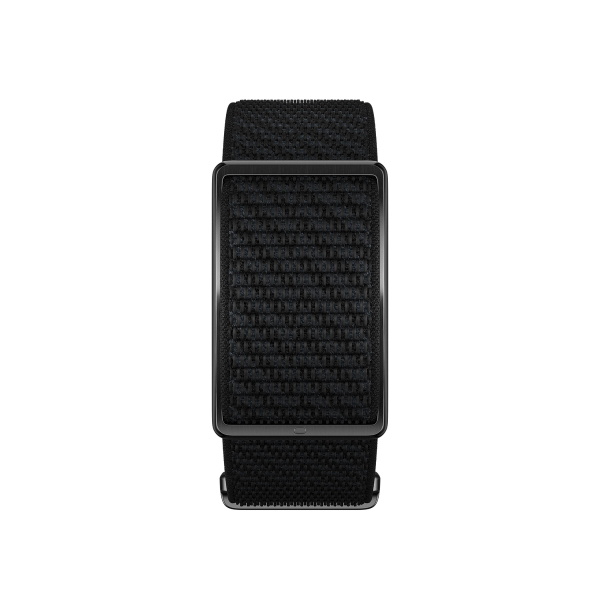
- Garmin Cirqa is $199.99 with no required plan.
- Polar Loop is $199.99 and Polar describes it as subscription-free.
- Garmin Index Sleep Monitor is $169.99, a band Garmin built for sleep tracking, with no required plan.
WHOOP appeared in the wrist-device meta-analysis; we found no independent PSG validation for Cirqa, Polar Loop or Index Sleep Monitor. Our Garmin Cirqa vs WHOOP comparison covers battery, features and cheaper bands.
Suits: people who want 24/7 recovery data without a screen.
Smartwatch
Apple Watch Series 12 starts at $399, with sleep tracking and no paid plan required. On supported models, Apple's Sleep Apnea Notification Feature is FDA-cleared (510(k) K240929) to flag breathing patterns suggestive of moderate to severe sleep apnea over 30-day windows. The cleared feature is a notification, not a diagnosis. Apple Watch was among the devices in the 2025 wrist meta-analysis.
Suits: people who already want a smartwatch and will charge it at a time that doesn't miss the night.
Under-mattress sleep tracker
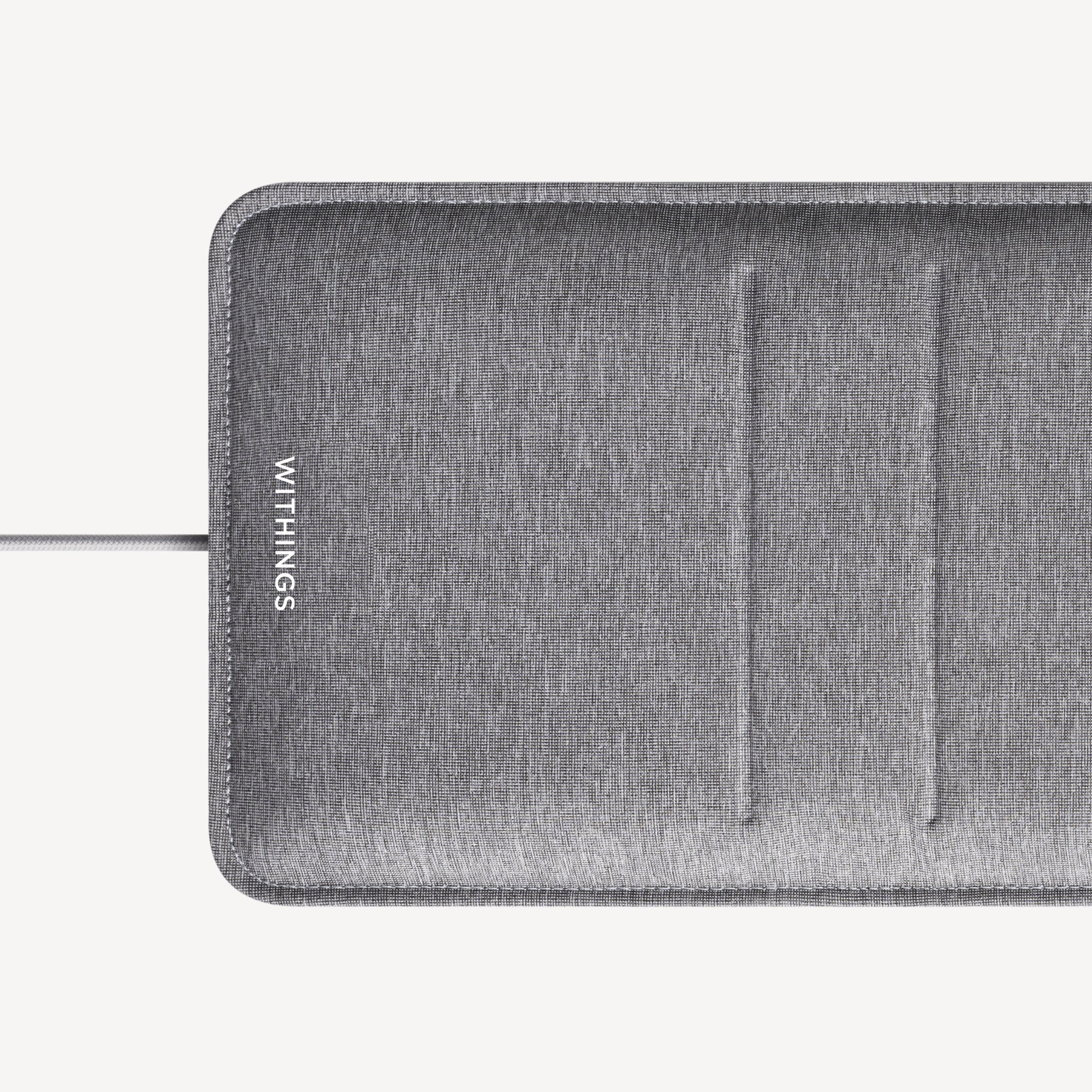
Withings Sleep is a pad that goes under your mattress and stays plugged in, so there's nothing to wear or charge. Withings says it tracks sleep cycles, heart rate and snoring. It costs $199.95, and Withings+ is optional at $9.95 a month or $99.50 a year. In the 2026 older-adult study, the mat overestimated deep sleep by about 97 minutes in older participants.
Withings also sells a separate version, Sleep Rx, which is FDA-cleared (K231667) as an aid in diagnosing obstructive sleep apnea, with results reviewed by a healthcare professional. The consumer Sleep pad is a different product.
Suits: people who hate wearing anything in bed. It may confuse your data with a partner's or a pet's.
Sleep headband (EEG)
- Elemind is $399. Elemind says it measures EEG and plays timed sounds meant to help you fall asleep, which is a sleep aid claim rather than a tracking feature. After 30 days, premium is optional at $6.99 a month billed annually or $12.99 a month, and the basic features stay without it. See our Elemind headband review for what its studies show.
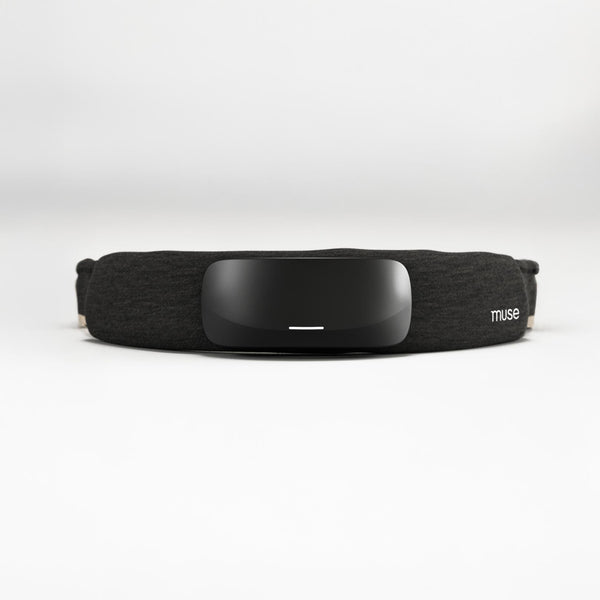
- Muse S Athena is an EEG headband for meditation and sleep, $474.99, with Muse Premium sold at $109.99 a year. We didn't confirm which sleep features need Premium.
Suits: people curious about brain-signal data who can sleep comfortably in a headband. If you'd rather block noise, see our sleep headphones guide.
Total cost of ownership (2 years)
List prices on official US pages, October 30, 2026. Taxes and accessories excluded.
| Tracker | Upfront | Required plan | 2-year total |
|---|---|---|---|
| Garmin Index Sleep Monitor | $169.99 | None | $169.99 |
| Withings Sleep | $199.95 | None (Withings+ optional) | $199.95 ($398.95 with Withings+ yearly) |
| Garmin Cirqa | $199.99 | None | $199.99 |
| Polar Loop | $199.99 | None | $199.99 |
| WHOOP One | Included | $199 a year | $398 |
| Elemind | $399 | None (premium optional) | $399 ($566.76 with premium billed annually*) |
| Apple Watch Series 12 | From $399 | None | From $399 |
| WHOOP Peak | Included | $239 a year | $478 |
| Muse S Athena | $474.99 | None confirmed | $474.99 ($694.97 with Premium) |
| Oura Ring 5 (Silver or Black) | $399 | $69.99 a year | $538.98 |
| WHOOP Life | Included | $359 a year | $718 |
*Elemind's first 30 days include premium free. Billed annually, two years still means two yearly charges ($83.88 each), so the free month doesn't change this total. Paying $12.99 a month for the remaining 23 months would bring the total to $697.77.
How to use a sleep tracker without obsessing
- Watch trends, not nights. A single night's score can be off by a lot. Weekly averages usually tell you more.
- Use it to test one change at a time, such as a new bedtime or a supplement (our sleep stack review covers one popular combination), for a few weeks. Our sleepmaxxing fact check and bed cooling guide cover changes worth testing.
- Don't let the score override how you feel. Sleep researchers have described "orthosomnia," where people became preoccupied with perfecting tracker data and their sleep complaints got worse (Baron and colleagues, 2017 case series).
- Know when to see a doctor. Loud snoring, gasping or pauses in breathing, or heavy daytime sleepiness call for a medical evaluation and possibly a sleep study, whatever your tracker says.
FAQ
Are sleep trackers accurate?
Reasonably, for total sleep and timing, and less so for time awake and sleep stages. A 2026 meta-analysis against lab sleep studies found wearables overestimated total sleep time and efficiency and underestimated time awake after falling asleep, with large differences between devices.
What is the most accurate sleep tracker?
No device was consistently best in the 2026 meta-analysis. In individual studies, the third-generation Oura Ring agreed most closely with lab results for time to fall asleep and sleep efficiency, and some Fitbit models for deep and REM sleep. These are study findings, not a guarantee for your wrist or finger.
Is a smart ring or a watch better for sleep?
For sleep alone, a ring is usually more comfortable and lasts longer between charges, while a watch adds a screen, apps and daytime features. Accuracy depends more on the specific model and algorithm than on the form.
Do under-mattress sleep trackers work?
They track sleep timing and heart rate without anything to wear. In a small 2026 study, an under-mattress mat and wearables were all less accurate in older adults, and the mat overestimated deep sleep by about 97 minutes in that group.
Can a sleep tracker detect sleep apnea?
Some devices have FDA-cleared features that flag possible sleep apnea, such as Apple's Sleep Apnea Notification Feature (K240929). These are screening aids, not a diagnosis. If you snore loudly, gasp at night or are very sleepy in the day, ask a doctor about a sleep study.
Is there a sleep tracker without a subscription?
Yes. The Garmin Index Sleep Monitor, Garmin Cirqa, Polar Loop, Apple Watch and the Withings Sleep mat don't require a paid plan. Oura charges a membership of $69.99 a year, and WHOOP is sold only as a membership.
Should I trust my deep sleep score?
Treat it as a rough estimate. Independent studies found stage estimates are the weakest part of consumer trackers, especially deep sleep in older adults. Look at trends over weeks rather than any single night.
Are sleep trackers less accurate in older adults?
One small 2026 study of 32 adults says yes. Accuracy was wider-ranging in adults aged 56 to 80 than in young adults, and devices performed poorly at identifying deep sleep. The authors advise caution when older adults interpret their data.
Disclaimer: This article is for information only and is not medical advice. Consumer sleep trackers are not diagnostic devices. If you snore loudly, stop breathing during sleep, or feel very sleepy in the day, talk to a doctor about a sleep study. BiohackList does not accept paid or sponsored placements. We may earn commissions from qualifying purchases in the future.
Affiliate note: There are no affiliate links on this page at launch. No listing is paid or sponsored. See our disclosure.
How we researched this: We read the meta-analyses, validation studies, FDA records and official product pages listed below. We didn't test these devices hands-on. We linked only products with a live BiohackList listing and checked prices on official pages.
Last checked: Oct 30, 2026.
Sources
- Agostinho M et al. Are wearable sleep-tracking devices reliable alternatives to polysomnography? A systematic review and meta-analysis. Behav Sleep Med 2026 (PMID 42175611)
- Lee YJ et al. Performance of consumer wrist-worn sleep tracking devices compared to polysomnography: a meta-analysis. J Clin Sleep Med 2025 (PMID 39484805)
- Searles ME et al. Performance evaluation of consumer sleep-tracking wearables and nearables in healthy young and older adults. Sleep Adv 2026 (PMID 41768372)
- Baron KG et al. Orthosomnia: are some patients taking the quantified self too far? J Clin Sleep Med 2017 (PMID 27855740)
- FDA 510(k) K240929, Apple Sleep Apnea Notification Feature
- FDA 510(k) K231667, Withings Sleep Rx
- Oura. Oura Ring 5 store page and membership: https://ouraring.com/store/rings/oura-ring-5; https://ouraring.com/membership
- WHOOP. Membership options
- Garmin. Index Sleep Monitor: https://www.garmin.com/en-US/p/1650098; https://www.garmin.com/en-US/p/1989182
- Polar. Polar Loop
- Withings. Sleep
- Elemind
- Muse. Muse S Athena
- Apple. Buy Apple Watch
FAQ
Are sleep trackers accurate?
Reasonably, for total sleep and timing, and less so for time awake and sleep stages. A 2026 meta-analysis against lab sleep studies found wearables overestimated total sleep time and efficiency and underestimated time awake after falling asleep, with large differences between devices.
What is the most accurate sleep tracker?
No device was consistently best in the 2026 meta-analysis. In individual studies, the third-generation Oura Ring agreed most closely with lab results for time to fall asleep and sleep efficiency, and some Fitbit models for deep and REM sleep. These are study findings, not a guarantee for your wrist or finger.
Is a smart ring or a watch better for sleep?
For sleep alone, a ring is usually more comfortable and lasts longer between charges, while a watch adds a screen, apps and daytime features. Accuracy depends more on the specific model and algorithm than on the form.
Do under-mattress sleep trackers work?
They track sleep timing and heart rate without anything to wear. In a small 2026 study, an under-mattress mat and wearables were all less accurate in older adults, and the mat overestimated deep sleep by about 97 minutes in that group.
Can a sleep tracker detect sleep apnea?
Some devices have FDA-cleared features that flag possible sleep apnea, such as Apple's Sleep Apnea Notification Feature (K240929). These are screening aids, not a diagnosis. If you snore loudly, gasp at night or are very sleepy in the day, ask a doctor about a sleep study.
Is there a sleep tracker without a subscription?
Yes. The Garmin Index Sleep Monitor, Garmin Cirqa, Polar Loop, Apple Watch and the Withings Sleep mat don't require a paid plan. Oura charges a membership of $69.99 a year, and WHOOP is sold only as a membership.
Should I trust my deep sleep score?
Treat it as a rough estimate. Independent studies found stage estimates are the weakest part of consumer trackers, especially deep sleep in older adults. Look at trends over weeks rather than any single night.
Are sleep trackers less accurate in older adults?
One small 2026 study of 32 adults says yes. Accuracy was wider-ranging in adults aged 56 to 80 than in young adults, and devices performed poorly at identifying deep sleep. The authors advise caution when older adults interpret their data.
Products in this article

Wearables
Oura Ring 5
Oura
Smart ring from Oura and the successor to Oura Ring 4; Oura says it is 40% smaller. It tracks sleep, activity, heart rate and HRV, respiration, temperature trends and blood oxygen, with insights in the Oura app (iOS and Android). Titanium, waterproof to 100 m, and up to 6-9 days of battery per charge, per Oura. Price: $399 (Silver, Black) or $499 (Gold, Stealth, Brushed Silver, Deep Rose), checked Oct 3, 2026. Oura Membership costs $5.99/month or $69.99/year in the US (first month free for new members) and unlocks most insights. Comes with a size-specific charger and USB-C cable; the charging case is sold separately. Released May 28, 2026. US members can also order Oura Health Panels, a 50-biomarker Quest blood test, in the Oura app (usually $99; not available in every state). HSA/FSA eligible. Evidence grade: C (sleep). An earlier Oura model (Gen3) agreed well with lab sleep studies (polysomnography) for total sleep time in a 96-person validation study; Ring 5 has no published independent validation yet, and there is no evidence that tracking alone improves sleep. Goals: sleep, recovery. Directory: Wearables & Tracking > Smart rings.

Wearables
Oura Ring 4
Oura
Smart ring from Oura that tracks sleep, activity, heart rate and HRV, temperature trends and blood oxygen, with insights in the Oura app (iOS and Android). Titanium, with up to 5-8 days of battery per Oura. Oura Ring 5, a smaller successor, launched in May 2026 (see Oura Ring 5); Ring 4 is still sold. Price (checked Oct 3, 2026): Silver and Stealth $349; Gold $399; Oura Ring 4 Ceramic $399 (Stealth, Gold and Ceramic were shown marked down from higher list prices). Oura Membership costs $5.99/month or $69.99/year in the US (first month free for new members) and unlocks most insights. US members with an active membership can also order Oura Health Panels, a 50-biomarker Quest blood test, in the Oura app (usually $99; not available in every state). HSA/FSA eligible. Directory: Wearables & Tracking > Smart rings.
Wearables
WHOOP 5.0
WHOOP
Screenless wearable membership device for continuous sleep, strain, and recovery tracking.

Wearables
Garmin CIRQA Smart Band
Garmin
Screenless smart band from Garmin that automatically detects activities and offers 24/7 health monitoring and stress tracking with the Garmin Connect app; Garmin quotes up to 10 days of battery. It can be worn on the wrist or on an upper arm band sold separately. Price: $199.99, checked Oct 4, 2026; an optional Garmin Connect+ plan ($6.99/month or $69.99/year) adds premium features. US availability: sold on Garmin's US store (all colors shown in stock on Oct 4, 2026). Directory: Wearables & Tracking > Wristbands & watches.
Wearables
Polar Loop
Polar
Screen-free fitness band from Polar that tracks heart rate, activity, training, sleep, nightly HRV and recovery, with data in the Polar Flow app; Polar quotes up to about 8 days of battery and a WR30 water-resistance rating. Price: $199.99, checked Oct 4, 2026; no subscription (Polar says every feature is included). US availability: sold on Polar's US store (listed in stock on Oct 4, 2026). Directory: Wearables & Tracking > Wristbands & watches.
Sleep
Withings Sleep
Withings
Under-mattress sleep tracker that monitors sleep stages, heart rate, and snoring.

Wearables
Elemind Sleep Headband
Elemind
Soft headband that reads EEG brain signals (5 EEG electrodes) and plays acoustic stimulation through a bone-conduction driver timed to the wearer's brain rhythms, with sleep sessions and stats in the Elemind app; Elemind says it will not work for people who cannot hear the audio. Price: $399, checked Oct 4, 2026; after a 30-day trial of full features, premium membership is $6.99/month billed annually or $12.99/month, and a free tier keeps Start Sleep, Restart Sleep and basic daily sleep stats. Elemind offers a 30-day money-back guarantee less shipping and handling, and lists HSA/FSA reimbursement for qualifying customers through an eligibility check at checkout. US availability: sold in the US on elemindtech.com. Regulatory: Elemind describes it as a general wellness product, not a medical device. Directory: Wearables & Tracking > Neuro & nervous-system wearables.
Wearables
Muse S Athena
Muse
EEG and fNIRS headband for mental fitness training and sleep tracking with the Muse app.